Local Clinic Addresses Unique Health Needs
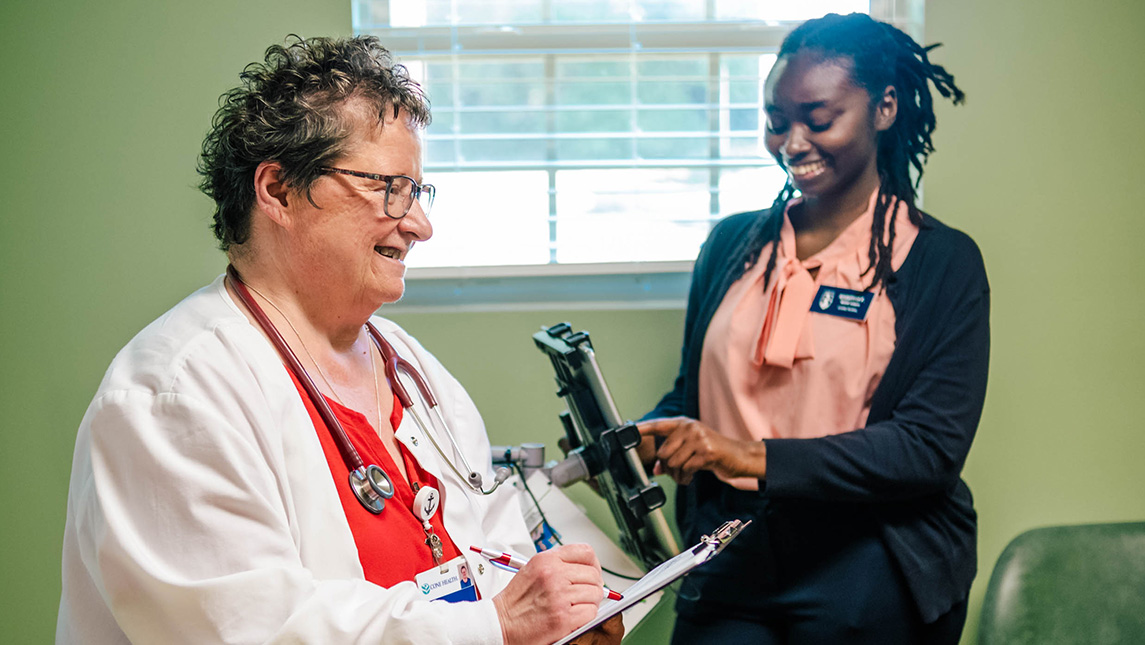
The Clara Gunn Community Clinic in Rockingham County, North Carolina, exemplifies how rural health providers cater to the particular needs of their communities. The clinic features a room filled with canned goods and non-perishable items, allowing patients who complete health screenings to take home nutritious food. This initiative highlights the broader approach rural health providers take, extending their services beyond conventional medical care.
This semester, students from the University of North Carolina at Greensboro (UNCG) are enhancing this network of support through a program named Integrated Community Access to Resources and Emotional Health and Well-Being, or iCARE Rural. Funded by a two-year grant of $200,000, these students dedicate 16 hours each week to assist residents in Rockingham County.
Johnette Walser, the program director and lead principal investigator for iCARE Rural, noted that many students have limited exposure to rural settings and often lack an understanding of the unique challenges these communities face. The program aims not only to provide psychoeducation but also to familiarize students with the existing services and resources in the area.
Students Provide Essential Services
In addition to social work students, psychology students from UNCG are also participating by connecting with clients in Rockingham County via telehealth services from the UNCG Psychology Clinic.
The faculty in the School of Health and Human Sciences were well-prepared to implement the program quickly when the UNC System announced the Rural Healthcare Transformation Grant. They were already engaged in internships in Rockingham County through the Congregational Social Work Education Initiative (CSWEI).
Rockingham County is classified as a Tier-1 underserved area, indicating a shortage of primary care providers, a significant elderly population, and high rates of homelessness and mortality. Residents, particularly older adults, often encounter transportation difficulties that hinder their ability to attend medical appointments. Additionally, limited access to mental and behavioral healthcare can lead individuals to seek non-emergency treatment in emergency departments, further burdening these facilities. CSWEI aims to alleviate these issues by offering mental health screenings and facilitating community placements.
The iCARE Rural initiative provides internships for six UNCG students at organizations in Rockingham County, including Clara Gunn and Lot 2540 ministry. Four of these students are pursuing bachelor’s or master’s degrees in social work, receiving valuable training from professionals affiliated with CSWEI and Cone Health’s Congregational & Community Nurse Program. Their responsibilities include conducting mental health screenings, offering supportive counseling, providing psychoeducation, and making referrals to community services.
Partnerships Strengthen Community Engagement
The program emphasizes the importance of partnerships, as highlighted by Professor Fran Pearson. She noted that when students remain engaged in a community for an extended period, they establish a sense of belonging and security, which can enhance their professional development and foster a desire to remain in that area.
Dr. Hermeet Kohli, the department chair of Social Work and co-principal investigator for iCARE Rural, pointed out that the collaboration between undergraduate and graduate students enriches the program. While undergraduate students focus on general practice skills, graduate students provide specialized services, including brief therapy and motivational interviewing.
“Our JMSW students, who are in training as clinicians, gain practical experience as they build community trust and establish networks,” Kohli stated.
The faculty involved are well-acquainted with the community, leveraging their extensive experience to facilitate connections with various local organizations. Pearson, who has dedicated two decades to improving service delivery and health literacy in Rockingham County, collaborates closely with community nurses and agencies. Kohli’s background includes interdisciplinary work with rural and immigrant populations, while Walser brings experience from her time as a school social worker in Reidsville.
Telehealth Expands Support for Clients
When clients require more comprehensive or ongoing care, psychology trainees are available through the UNCG Psychology Clinic. Dr. Kari Eddington, who oversees clinical training in psychology, manages this aspect of the iCARE Rural initiative. Two doctoral students conduct secure telehealth sessions, providing additional support for clients identified by social work students as needing extensive assessments or crisis intervention.
Eddington emphasized the importance of understanding the broader context of rural healthcare, such as addressing economic instability and stigma. She is also utilizing the grant to evaluate how the psychology program can better prepare students for rural practice and to identify gaps that need addressing for future cohorts.
By adopting a “junior colleague model,” these students contribute to shaping the program and its training methods for rural settings, which will benefit future students beyond those currently funded by the grant.
Future Prospects for Community and Students
The iCARE Rural initiative builds upon the existing strengths within Rockingham County, tapping into the expertise of local agencies and professionals. It enhances patient access to mental and behavioral health services, while simultaneously providing students with valuable career insights. Faculty also see this as an opportunity for new collaborative efforts within the community.
Walser expressed her deep commitment to the project, emphasizing the importance of leveraging the resources available in Greensboro and at UNCG to assist surrounding communities. Pearson echoed this sentiment, stating that the initiative aims to address the needs of often overlooked populations by improving access to essential services.
The iCARE Rural program is designed to create transformative opportunities not only for the students involved but also for the residents of Rockingham County.
Source: UNC Greensboro