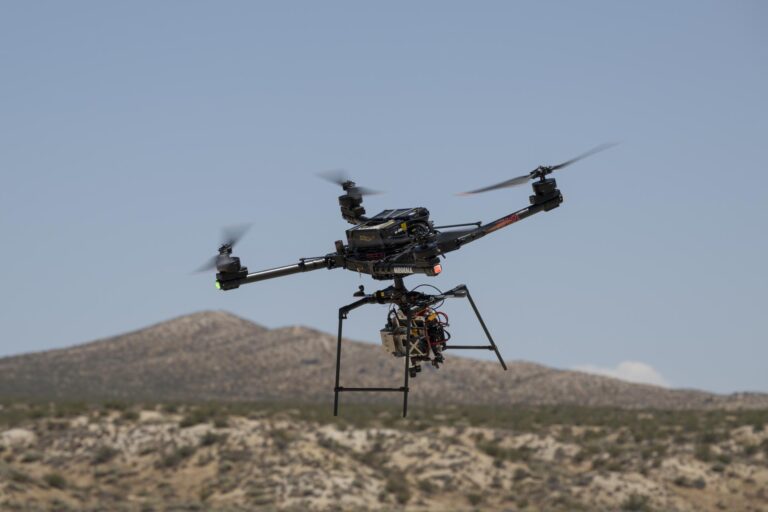
NASA Introduces X-70 Fractal Experimental Aircraft
NASA has revealed its latest experimental aircraft, the X-70 Fractal, at the UP.Summit held at the Kennedy Space Center in Florida on Wednesday. This innovative research platform is designed to enhance the development and testing of advanced aviation technologies.
Advanced Features of the X-70 Fractal
The crewed X-70 Fractal is equipped with cutting-edge, rapidly reconfigurable flight-control technology, allowing NASA to investigate aircraft maneuverability in unprecedented ways during crewed flights. The aircraft is capable of carrying up to 2,000 pounds of experimental payloads both internally and externally, broadening the scope for research and flight testing.
NASA Administrator Jared Isaacman emphasized the significance of the X-70, stating, “The X-70 Fractal gives NASA a crewed, high-performance platform to test advanced flight-control, maneuverability, and other cutting-edge technologies in real flight.” He also mentioned the aircraft’s modular design, which facilitates quick changes in payloads, thereby enabling continuous experimentation. The first flight under NASA’s banner is anticipated within the next two years.
Specifications and Capabilities
With a takeoff weight of 10,000 pounds, the X-70 is designed for cruising at Mach .75 and can ascend to altitudes of 45,000 feet, offering an operational range of approximately 1,726 miles (1,500 nautical miles). These features will enable NASA to conduct rigorous flight research across diverse operating conditions.
Laurie Grindle, director of the Aeronautics Division within NASA’s Research and Technology Mission Directorate, noted that the introduction of the X-70 Fractal continues NASA’s legacy of using X-planes to push aviation technology forward. “It’s exciting to bring on another X-plane to accelerate and drive aeronautics research,” she said.
Expanding Experimental Aviation Research
The X-70 Fractal joins a long line of experimental aircraft that have played a crucial role in establishing the United States’ position in aviation. From the historic Bell X-1, which first broke the sound barrier in 1947, to the X-15 hypersonic research platform and the current X-59 quiet supersonic demonstrator, NASA has a rich history of advancing flight technology.
With the addition of the X-70, NASA aims to enhance its capabilities for experimental flight research, expedite the testing of new technologies, and foster the next generation of aviation in the United States.
Source: NASA