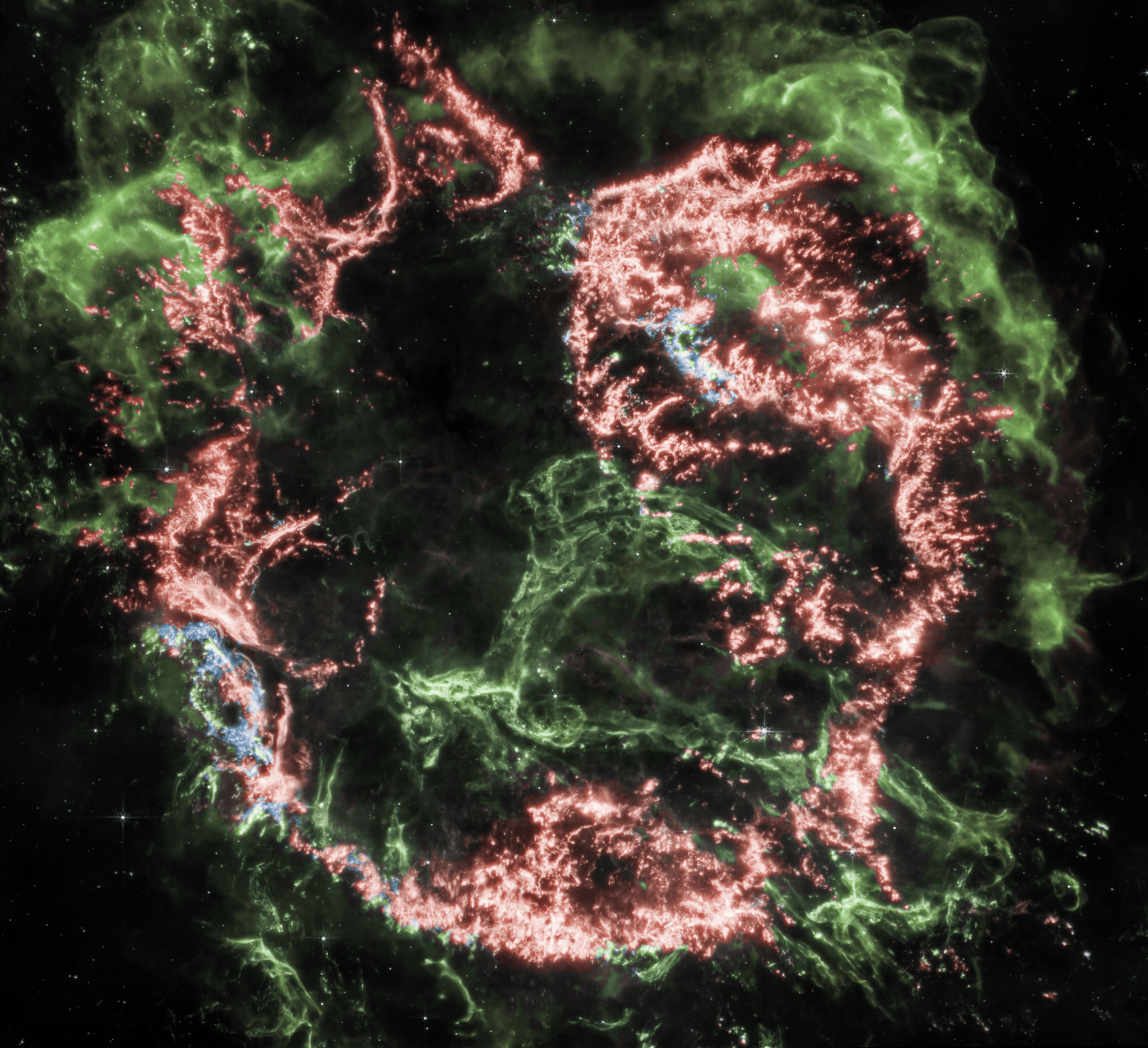
The James Webb Space Telescope has provided a detailed mid-infrared image of Cassiopeia A, showcasing the hot dust that constitutes this remnant of a massive stellar explosion. This significant observation was made public on November 23, 2026, and offers insights into the nature of the original star that met its end in a supernova.
Insights into Stellar Evolution
Cassiopeia A, often referred to as Cas A, is the remains of a massive star that exploded, leaving behind clouds of gas and dust. These remnants play a crucial role in the cosmic cycle, as they contribute to the formation of new stars and planets over time. The findings from the Webb telescope indicate that the star’s interior experienced substantial changes, likely occurring mere hours before the explosion.
Collaboration Among Leading Institutions
The research involved collaboration among various institutions, including NASA, the European Space Agency (ESA), the Canadian Space Agency (CSA), and the Space Telescope Science Institute (STScI). Noteworthy contributors to the study include scientists Tea Temim from Columbia University, Rick Arendt from the University of Maryland, Baltimore County (UMBC), and Dan Milisavljevic from Purdue University, with image processing carried out by Joseph DePasquale from STScI.
Source: NASA