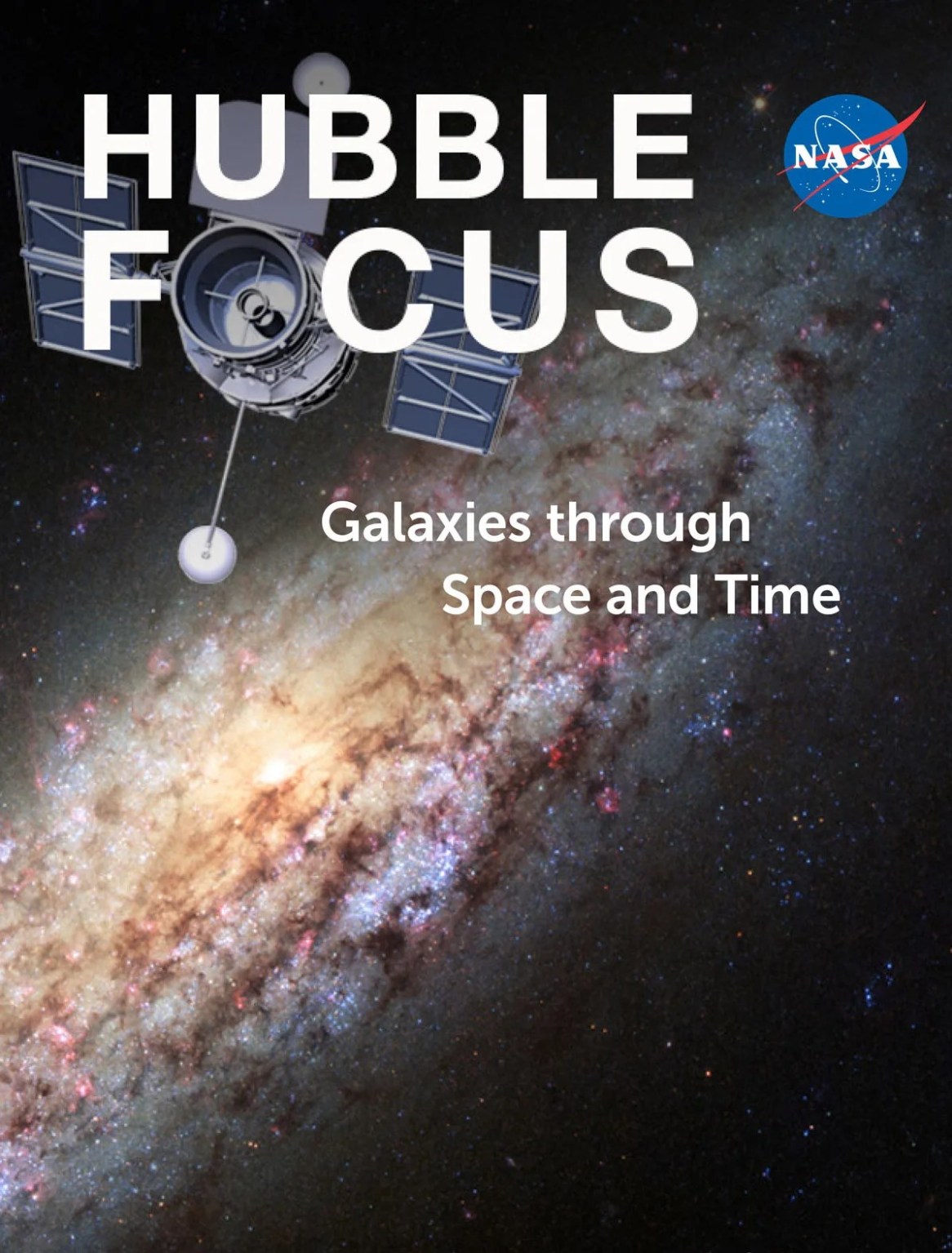
NASA’s Hubble Space Telescope has recently provided a stunning image of the galaxy NGC 4394, showcasing its prominent galactic bar. Located approximately 55 million light-years from Earth in the constellation Coma Berenices, NGC 4394 is among the closest galaxies to our own and is part of the Virgo Cluster, which includes over 1,000 galaxies.
The galaxy features elegant spiral arms and a distinct bar of stars, resembling scientists’ expectations of what the Milky Way might look like from a frontal viewpoint. In the vast cosmos filled with various spiral galaxies and nebulae formed through stellar processes, the straight arrangement of stars in NGC 4394’s bar is particularly striking. Astronomers believe that about 65% of nearby spiral galaxies possess such bars, and Hubble has captured images of numerous barred spiral galaxies, including NGC 5728 and NGC 613.
Formation of Galactic Bars
The formation of these galactic bars is typically linked to the instability of a galaxy’s stellar disk. This instability can arise from gravitational influences from nearby galaxies, interactions among stars, or other forces. As the stellar disk becomes unstable, the previously circular orbits of stars stretch into elongated shapes, resulting in the bar configuration visible in galaxies like NGC 4394. Observations suggest that galactic bars are currently more prevalent than they were several billion years ago; however, research indicates this trend may be temporary, as these bars may eventually become unstable as they gain mass.
In addition to their striking structures, NGC 4394 and the Milky Way may also share a crucial feature: a LINER, or low-ionization nuclear emission-line region. This area near a galaxy’s center exhibits specific ionized or neutral elements in its spectra. The exact formation process of LINERs remains unclear, though it is likely associated with either supermassive black holes or vigorous star formation.
Hubble’s Ongoing Research
Hubble has observed NGC 4394 multiple times, with a previous image of the galaxy released a decade ago as part of a study focused on its neighboring galaxy, Messier 85. During that observation, Hubble’s Advanced Camera for Surveys captured NGC 4394 while another instrument collected data on Messier 85’s unique star cluster composition.
The latest image of NGC 4394 incorporates data from a recent observational program aimed at understanding how star formation ceases in galaxies within dense clusters, compared to those in more isolated settings. Researchers utilized Hubble’s Wide Field Camera 3, which is sensitive to a wide range of wavelengths, to assess the ages of individual star clusters. NGC 4394 is one of the 40 galaxies included in this study.
Text credit: ESA/Hubble
Source: NASA