Hubble Telescope Reveals Oxygen Mystery in Dwarf Galaxies
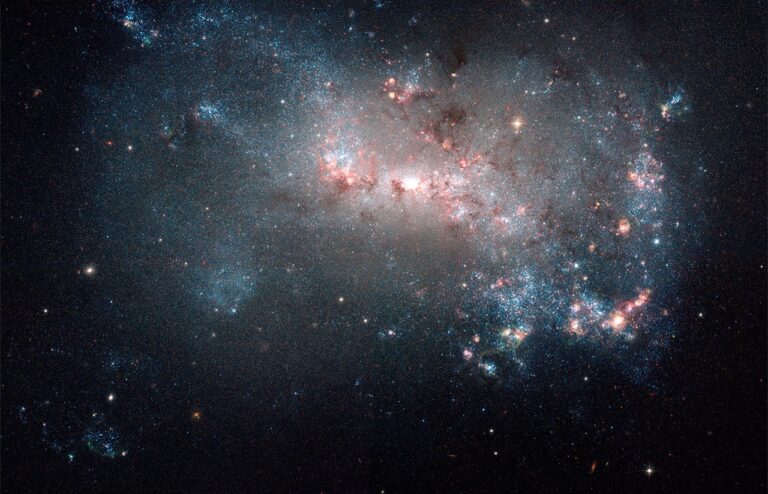
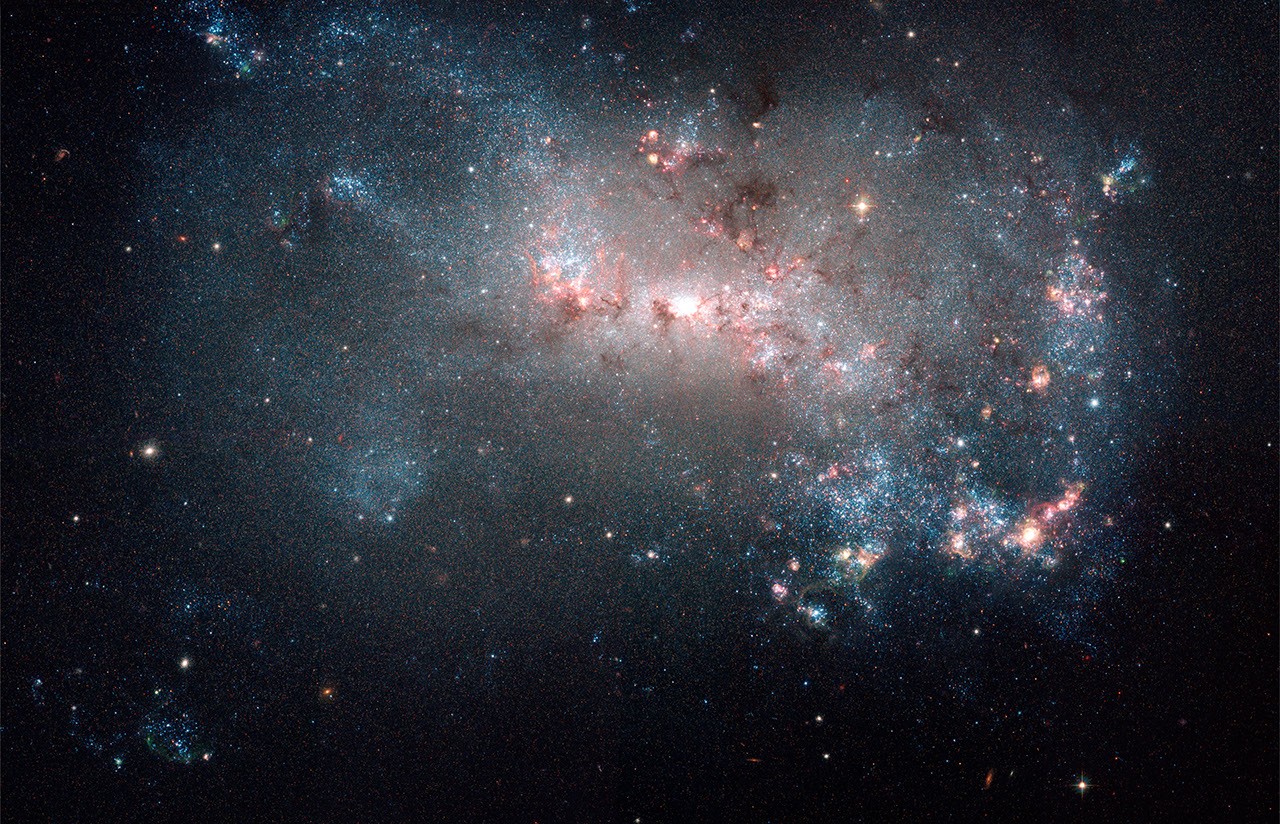
The Hubble Space Telescope has uncovered a puzzling phenomenon in nearby dwarf galaxies, revealing a significant absence of expected oxygen levels. A study, recently published in The Astrophysical Journal, examined 37 dwarf galaxies—small celestial bodies that contain anywhere from a few thousand to hundreds of millions of stars—and found that these galaxies retain only a fraction of the oxygen generated by their stars.
Researchers had anticipated that these dwarf galaxies would contain much more oxygen, a crucial indicator of a variety of heavy elements. The findings raise the question of what has happened to this missing oxygen. Co-investigator Grace Telford, an assistant professor at the University of Utah’s Department of Physics and Astronomy, stated, “Oxygen is produced by stars, which are inside of galaxies…so the oxygen must have been ejected.” She explained that processes such as massive stars and supernova explosions provide the necessary energy to expel materials from the galaxies into the intergalactic space.
Study Insights on Oxygen Distribution
The study suggests that galactic winds caused by supernovae are more efficient at removing oxygen from low-mass galaxies than previously thought. The research indicates that dwarf galaxies can only retain a minor portion of the oxygen produced within them. Conducted as part of the Galaxies Losing Oxygen via Winds (GLOW) project, which is supported by NASA and the National Science Foundation, this study traces the distribution of oxygen within stars, interstellar gas, and the vast spaces between galaxies.
Oxygen is the third most abundant element in the universe, following hydrogen and helium, making it relatively simple to detect and measure. Kristen Wingfield McQuinn, the GLOW principal investigator and mission head of NASA’s newly launched Nancy Grace Roman Space Telescope, highlighted the practical reasons for focusing on oxygen. She noted that tracing its production and distribution is essential to understanding galaxy evolution and the enrichment of the intergalactic medium.
Research Methods and Future Directions
The research team utilized archival optical imaging data from Hubble to investigate stellar populations and determine the formation histories of the galaxies involved. They also incorporated data from the retired Spitzer Space Telescope and ground-based observatories, including the Very Large Array and the Australian Telescope Compact Array. The dwarf galaxies selected for the study were close enough for Hubble to resolve their individual stars, which is not possible for many other known dwarf galaxies.
While previous studies had indicated that galaxies lose a significant amount of oxygen and other heavy elements, the precise fate of these elements remained uncertain. This current research builds on earlier findings that identified oxygen loss in Milky Way-like galaxies, which showed that some of the lost oxygen resides in the circumgalactic medium surrounding galaxies. The GLOW project expands this investigation to encompass low-mass galaxies across various environments.
Moving forward, McQuinn plans to explore even less massive galaxies in the nearby universe. She has a program approved to utilize the Roman Space Telescope to identify these faint galaxies across a broad area of the sky. By leveraging both Hubble and the James Webb Space Telescope for deeper observations, she aims to reconstruct the history of these galaxies and their star formation over cosmic time.
Telford also intends to use Hubble to focus on individual massive stars that produce and expel oxygen from their host galaxies, gaining detailed insights into how these massive stars differ in smaller galaxies.
The Hubble Space Telescope has been a pivotal instrument in astronomical research for over 30 years, continuously contributing to our understanding of the universe through groundbreaking discoveries. This project exemplifies the ongoing collaborative efforts between NASA and the European Space Agency to advance scientific knowledge.
Source: NASA