Webb Space Telescope Reveals Stellar Activity in NGC 7129
The James Webb Space Telescope (JWST) has unveiled stunning new imagery showcasing the dynamic environment of NGC 7129, a stellar nursery located approximately 3,300 light-years from Earth. This new observation highlights a multitude of stars and protostars previously obscured by dust clouds, allowing researchers to gain deeper insights into the star formation process.
In the captured image, hot, atomic hydrogen gas is depicted in a golden hue, while cooler, molecular hydrogen gas—affected by the presence of young protostars—is shown in red. The JWST’s advanced infrared sensitivity enables it to penetrate the dust that typically shrouds young stars, providing a clearer view of their formation stages.
Understanding Star Formation
The stars in NGC 7129 are at various points in their developmental cycles. The most notable is LkH(alpha) 234, a luminous pre-main-sequence star that is significantly more massive than our Sun. This star is nearing the end of its mass-gathering phase and is beginning to contract, leading to an increase in temperature as it prepares for hydrogen fusion.
A notable feature in the image is a large cavity, approximately 3.5 light-years across, created by the outflows from this central star during an earlier stage of its life. These outflows interact with the dense hydrogen cloud, energizing it and contributing to the conditions necessary for further star formation.
New Insights into Stellar Evolution
The image also reveals multiple younger protostars in a section colored red on the right side. These protostars are still accumulating mass and ejecting superheated material, which creates a textured appearance as these outflows collide with the surrounding gas. This chaotic environment reflects the dynamic processes occurring in star formation.
The JWST’s high spatial resolution has allowed scientists to observe intricate gas structures in NGC 7129, building upon previous findings from the now-retired Spitzer Space Telescope. The data collected from Webb will assist astronomers in understanding how these stars and protostars affect their surroundings and contribute to the evolution of molecular clouds over time.
Collaboration and Future Research
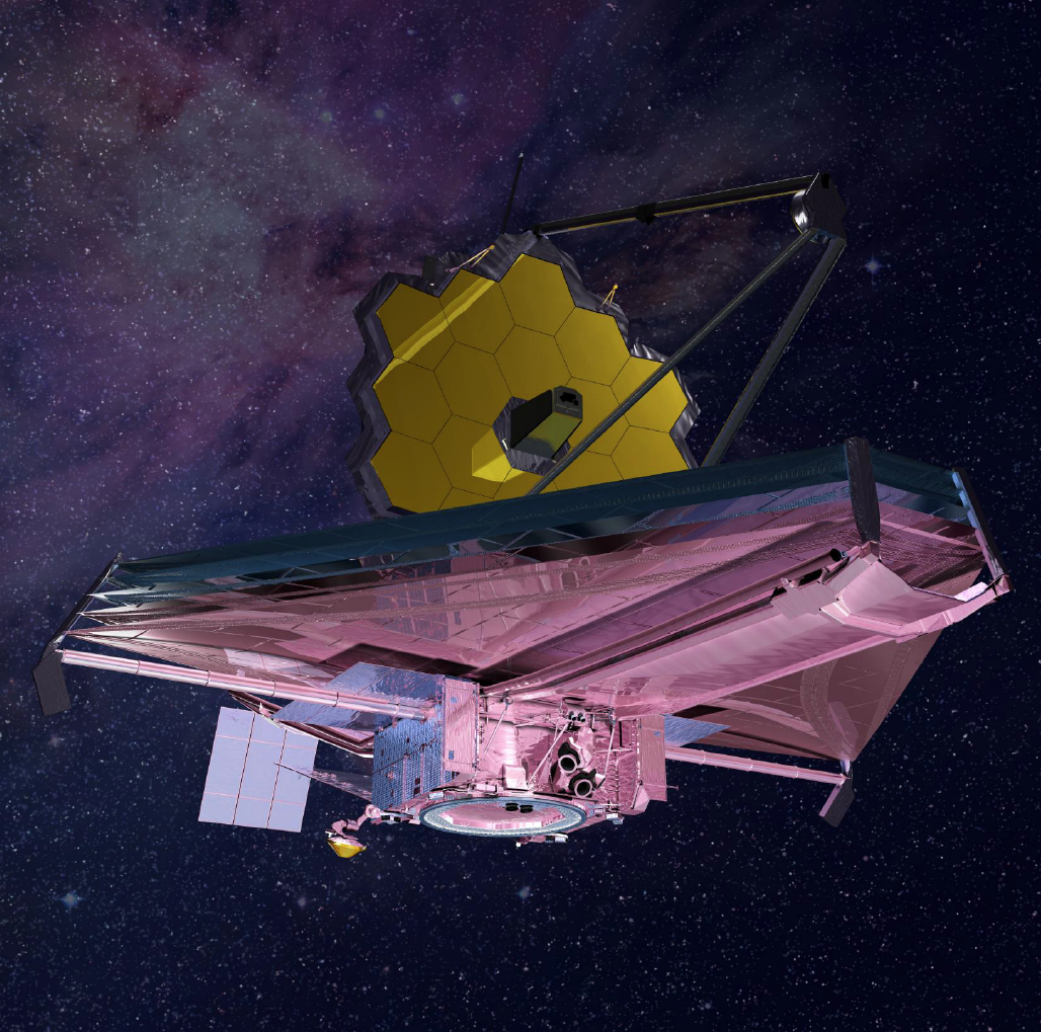
The James Webb Space Telescope represents an international collaboration led by NASA, alongside the European Space Agency (ESA) and the Canadian Space Agency (CSA). As the leading observatory for space science, Webb aims to address fundamental questions about our solar system, investigate distant worlds, and explore the origins of the universe.
Source: NASA