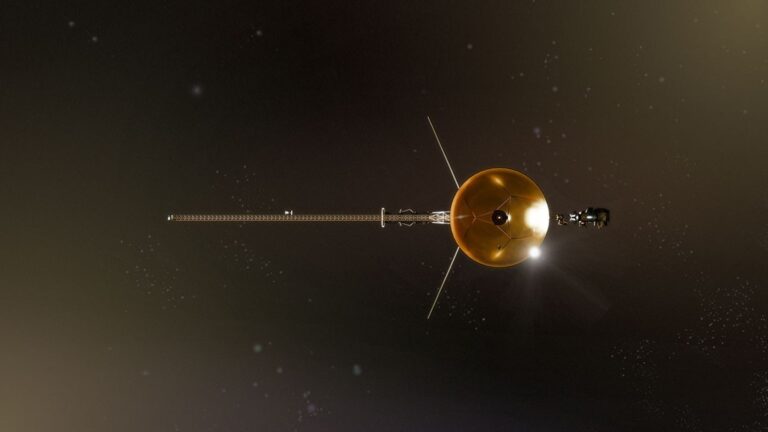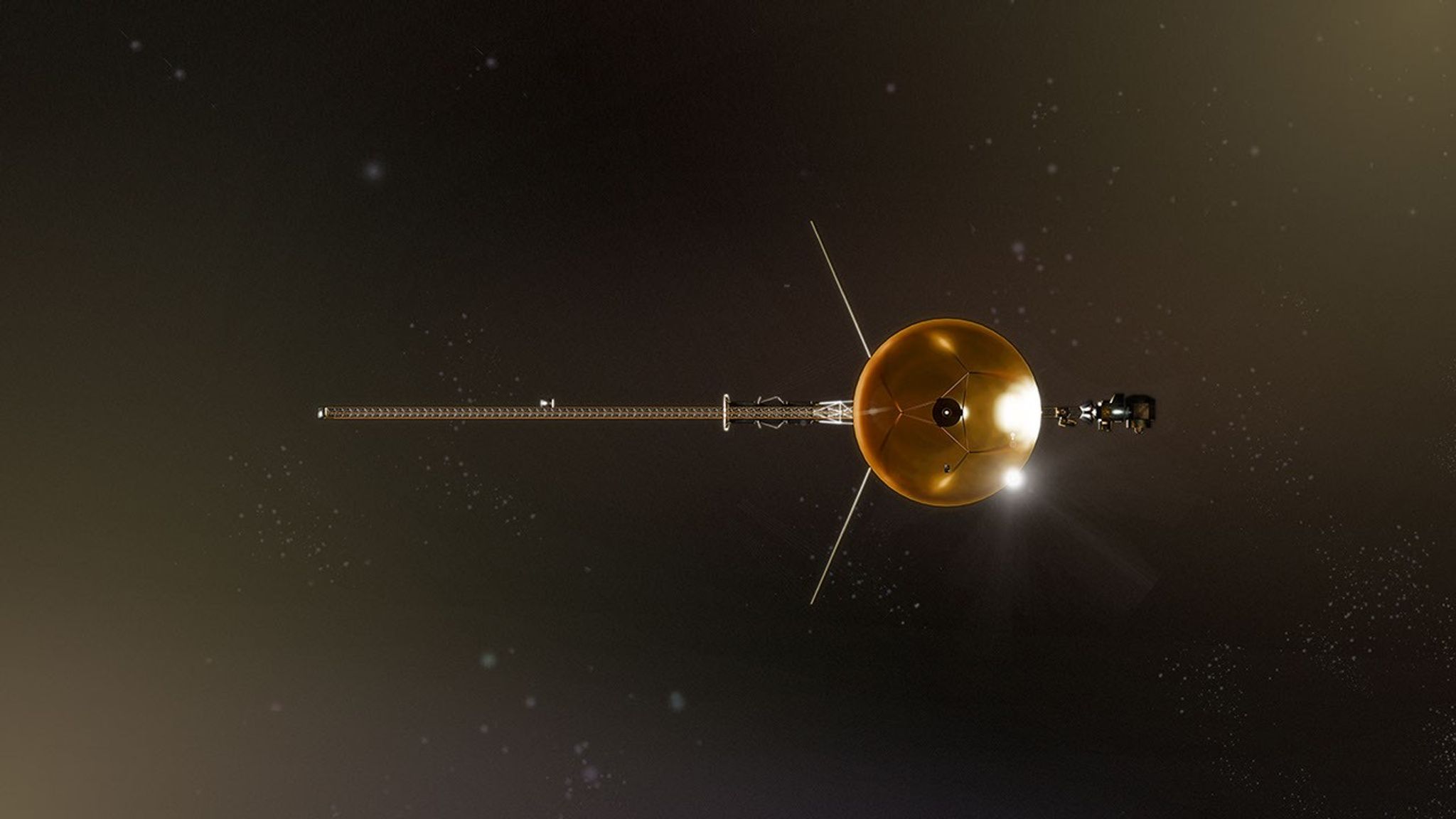
Voyager 1 Reaches Historic Distance from Earth
NASA’s Voyager 1 spacecraft, launched in 1977, is set to mark a significant milestone on November 18, having traveled one light-day from Earth, a distance exceeding 16 billion miles (25.9 billion kilometers). As the farthest human-made object in space, any light from Earth takes a full day to reach Voyager 1.
Global Participation Encouraged
To commemorate this achievement, NASA is inviting global participation in an event called “Shine Bright for Voyager’s Light-Day” on November 17. As part of this initiative, individuals are encouraged to create a wave of golden light across the globe after sunset. NASA has developed a resource that allows smartphones and tablets to flash “VGR,” Voyager’s call sign, in Morse code.
Panel Discussion on Voyager Missions
On November 19 at 12 p.m. EST, NASA’s Jet Propulsion Laboratory (JPL) will conduct a panel discussion featuring mission members and NASA officials. The conversation will cover the current status of both Voyager 1 and Voyager 2, the scientific data being collected in interstellar space, and the technical challenges of maintaining operations over such vast distances. Following the discussion, there will be a question-and-answer session for media and attendees. The event will also preview a documentary about the Voyager mission, set to premiere in 2027 for its 50th anniversary.
The panel will take place in the von Kármán Auditorium at JPL, the same venue used for previous Voyager briefings during the spacecraft’s exploration of the outer planets. Key participants will include Nicky Fox, Jonathan Lunine, Suzanne Dodd, Kareem Badaruddin, and Jamie Rankin.
Continuing Legacy of the Voyager Mission
For nearly five decades, the Voyager mission has provided invaluable insights into our solar system and beyond. Voyager 1 entered interstellar space in 2012, while Voyager 2 followed in 2018 on a different trajectory. Both spacecraft continue to send back unique scientific data regarding the environment outside the heliosphere, which is the protective bubble generated by the Sun.
Managed by Caltech, JPL is responsible for the construction and operation of the Voyager spacecraft, with support from NASA’s Deep Space Network to facilitate communication with these distant probes. Funding for the Voyager mission comes from NASA’s Heliophysics Division.
Source: NASA