Severe Fire Season Begins in Amazon Due to El Niño
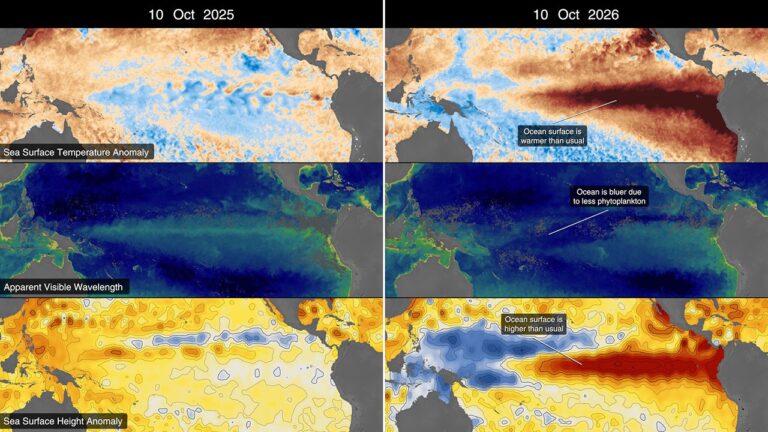
The Amazon rainforest is experiencing a significant uptick in fire activity this year, largely attributed to a drought associated with the El Niño weather phenomenon. Scientists have observed that the region has entered the initial phases of what is expected to be a prolonged and intense fire season.
Beginning in September 2026, satellite data indicated a marked increase in fire occurrences and smoke emissions across the central and eastern sections of the Amazon. Monitoring platforms such as NASA’s Fire Information for Resource Management System (FIRMS) and the Global Fire Emissions Database (GFED) recorded these developments. The area affected stretches from the forests surrounding the commercial hubs of Manaus and Santarém to the mouth of the Amazon River.
Health Effects in Manaus
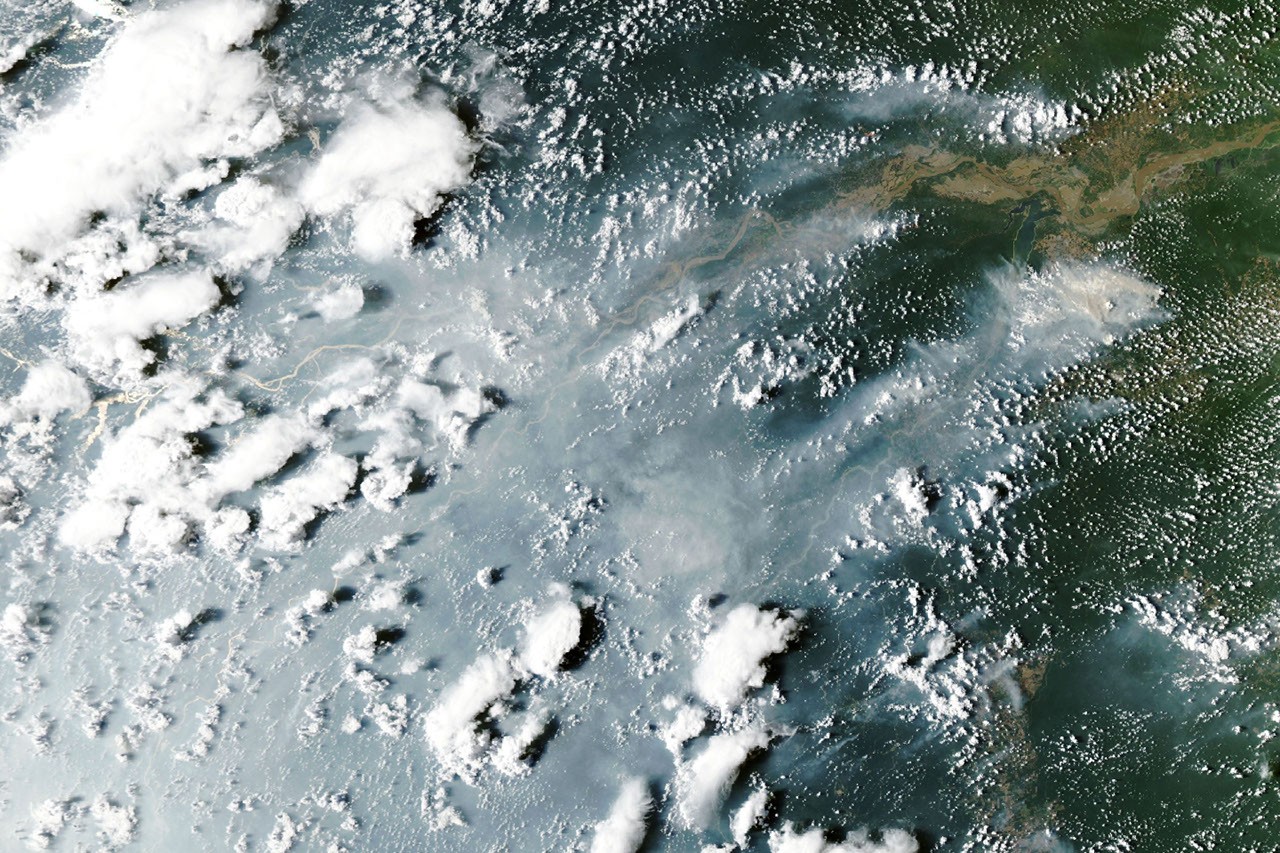
A recent image captured by NASA’s Aqua satellite on October 12, 2026, showed smoke affecting Manaus, the capital of Amazonas state. On that day, officials reported severely compromised air quality, with fine particulate matter (PM2.5) levels exceeding 135 micrograms per cubic meter, marking the second-worst rating on a regional air quality index. The hazardous conditions disrupted daily activities in the city of over two million residents, prompting school closures and the cancellation of various community events.
According to Douglas Morton, an Earth system scientist at NASA’s Goddard Space Flight Center, the fire activity in the Amazon is part of a broader “cascade” effect linked to El Niño, which disrupts rainfall patterns. This phenomenon begins with drought and peat fires in Indonesia, leading to increased fire activity in the Amazon. Morton noted that the current patterns mirror those observed during the previous El Niño events in 2015 and 2023.
Future Fire Projections
As the 2026 El Niño progresses, Morton predicts that fire activity will expand northward into the Brazilian states of Roraima, northern Pará, and Amapá, as well as into parts of Venezuela, Guyana, and Suriname by November and December. He anticipates that the peak fire risk will occur around August and September 2027 in southern regions of Brazil and Paraguay.
Morton expressed concern over the recurrence of fires in areas that have previously burned during past El Niño years. He highlighted that forest fires in tropical rainforests can lead to significant ecological damage since many species are ill-equipped to recover from such events. This year’s fires may be even more severe, he added, due to the degradation of the forest from earlier incidents.
Human-Caused Fires and Monitoring Efforts
The fires currently affecting the Amazon are primarily human-caused, as natural lightning strikes account for less than 1 percent of fire ignitions in this typically wet environment. The drought conditions exacerbated by El Niño have been particularly severe, with Manaus experiencing rainfall levels 95 percent below average in August and 60 percent below average in September, according to Brazil’s National Institute of Meteorology.
What began as controlled burns for agricultural management have escalated into uncontrolled wildfires, consuming the dry undergrowth of the rainforest. Satellite observations indicate that there are between 50 to 70 active uncontrolled fires in the Santarém region alone. Shane Coffield, an assistant research scientist at the University of Maryland, is working on a NASA Earth Action project to enhance fire tracking by utilizing data from the Visible Infrared Imaging Radiometer Suite (VIIRS). He noted that their analysis has identified approximately 40 percent more fires than those reported by standard monitoring systems.
The ongoing situation underscores the critical need for effective fire management strategies as the region braces for continued dry conditions and heightened fire risks.
Source: NASA