NASA Advances Lunar Landing Technology
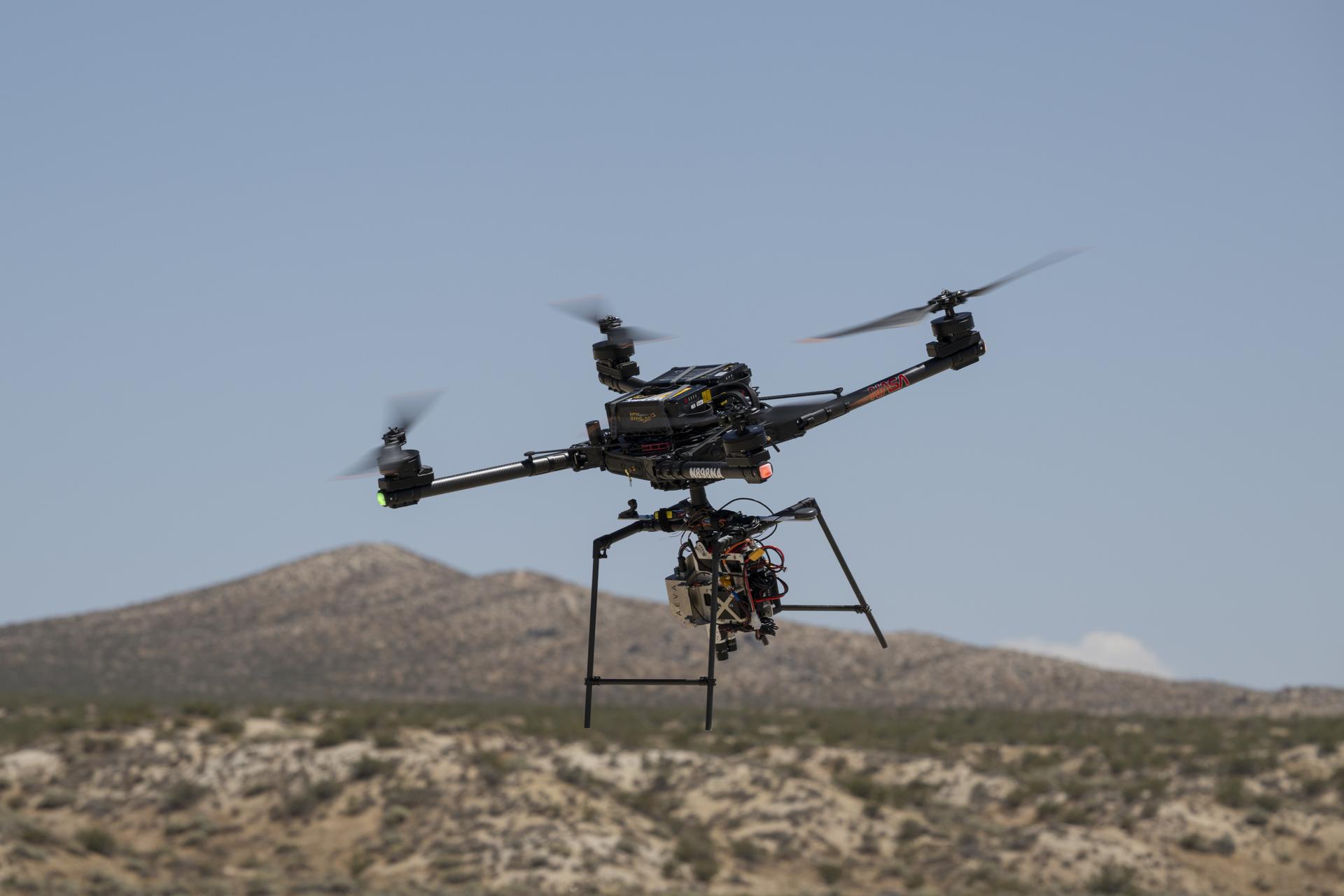
NASA has made significant progress in developing technology that aids spacecraft in autonomously reaching safe landing sites on the Moon and other celestial bodies. On August 27, an Alta-X drone, outfitted with the agency’s Safe and Precise Landing – Integrated Capabilities Evolution (SPLICE) system, successfully conducted simulated lunar descent maneuvers at Rogers Dry Lake, located near NASA’s Armstrong Flight Research Center in Edwards, California.
During the test flights, the SPLICE system utilized advanced guidance technology to create terrain maps and evaluate potential landing zones. If the system identifies a landing area as unsafe, it can redirect the drone to a safer location. This capability relies on high-resolution digital elevation maps generated from light detection and sensor data.
Collaboration and Testing
The SPLICE payload was developed by researchers at NASA’s Johnson Space Center in Houston, who collaborated with experts at NASA Armstrong for integration, testing, and flight operations involving the Alta-X drone in June and July. These preliminary tests confirmed the effectiveness of communications, data handling, telemetry, and command-control functionalities between the drone and SPLICE, setting the stage for comprehensive testing at Voyager Technologies in Mojave, California, later this month.
Davis Adams, the project manager for SPLICE, stated that this flight test represents nearly ten years of development work. He emphasized that the results enhance the technology’s readiness for inclusion in future robotic and crewed lunar missions, with applications that extend to descending and landing on Earth, the Moon, and Mars.
Future Applications and Industry Collaboration
NASA has partnered with various commercial lunar lander manufacturers to incorporate iterations of the SPLICE system into their vehicles. Several upcoming Moon Base missions will utilize data collected through SPLICE’s development to ensure soft landings on the lunar surface.
Adams noted that the agency is working with industry stakeholders to prepare for the system’s availability in NASA’s software catalog, which is projected for this fall. Companies are also exploring the navigation capabilities of the SPLICE system for precision landing applications and potential future uses in autonomous surface mobility.
The SPLICE project benefitted from NASA’s Flight Opportunities initiative, which facilitated early flight tests that laid the groundwork for advancing the technology’s readiness. Past flight tests included simulating descent altitudes and landing trajectories akin to those expected during lunar missions, as well as demonstrating two precision landing sensor systems developed by NASA in 2020.
Source: NASA