NASA Conducts Engine Test for Future Missions
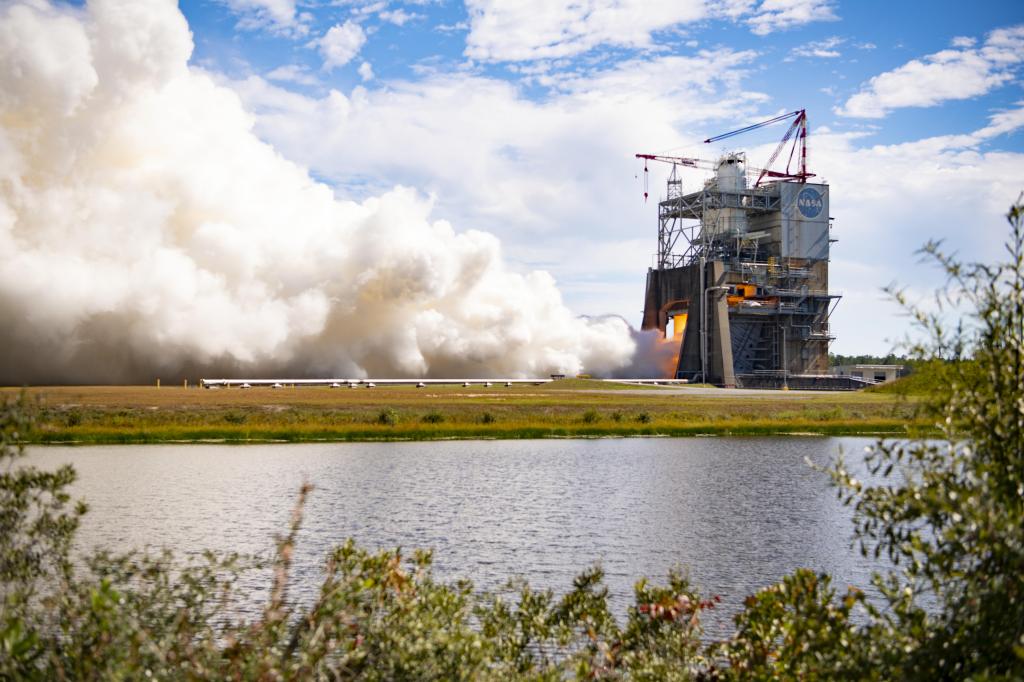
NASA recently executed a significant hot fire test of the RS-25 engine No. 10001 on October 21 at the Fred Haise Test Stand located at the Stennis Space Center, situated near Bay St. Louis, Mississippi. This test involved running the engine for approximately eight and a half minutes, equating to 500 seconds, which corresponds to the duration that RS-25 engines are active during the launch of the Space Launch System (SLS) rocket.
Engine Performance Validation
During the testing process, the RS-25 engine was pushed to an impressive 111% power level. This performance is essential for the new production engines that will facilitate the launch of both the SLS rocket and the Orion spacecraft into orbit. The primary goals of this test included validating components designed for flight in upcoming Artemis missions and assessing a new thermal protection system. This system is crucial as it safeguards the engine nozzle from the extreme heat experienced during the SLS launch.
Data Collection for Future Enhancements
Although this specific developmental engine will not be utilized in actual flights, the data gathered from the hot fire test is invaluable. It allows NASA and its primary contractor, L3Harris Technologies, to gather essential information aimed at enhancing engine performance and reliability for future missions. Each Artemis mission will rely on four RS-25 engines, collectively generating up to 2 million pounds of thrust to propel the SLS rocket.
Testing Protocols and Team Collaboration
Prior to their deployment, all RS-25 engines undergo rigorous testing to ensure they meet flight standards at NASA’s Stennis facility. This comprehensive testing process is conducted by a collaborative team comprising personnel from NASA, L3Harris, and Nova Space Solutions, emphasizing the importance of teamwork in the advancement of aerospace technology.
Source: NASA