NASA Advances Moon Base Preparations
NASA is making significant strides in its efforts to establish a Moon Base, with both crewed and robotic lunar rovers playing integral roles in the development process. These vehicles are set to assist in various tasks such as technology demonstrations, transporting astronauts, mapping terrain, conducting scientific research, and prospecting for resources. Insights gained from these early missions are expected to guide the creation of mobility systems and infrastructure necessary for long-term human habitation on the Moon.
On October 17, 2023, NASA shared an update on the progress of commercial lunar terrain vehicles and robotic rovers through a video presentation, highlighting their importance for surface mobility as the agency prepares to build humanity’s first outpost on the Moon.
Importance of Lunar Rovers
Robert Pickle, director of the Surface Mobility Office within NASA’s Moon Base Program, emphasized the critical role lunar rovers will play in the future of exploration. “Their performance will lay the groundwork for the mobility systems that will define the next era of exploration,” he stated.
NASA’s VIPER (Volatiles Investigating Polar Exploration Rover) is scheduled to launch in 2027 to explore the Moon’s South Pole, specifically targeting permanently shadowed craters to search for water and other essential resources for sustainable exploration. After being delivered by a Blue Moon Mark 1 lander, VIPER is expected to cover over 18 miles, gathering data on the thermal and lighting conditions, which will be vital for understanding the Moon’s history and potential for supporting human life.
Robotic and Crewed Lunar Vehicles
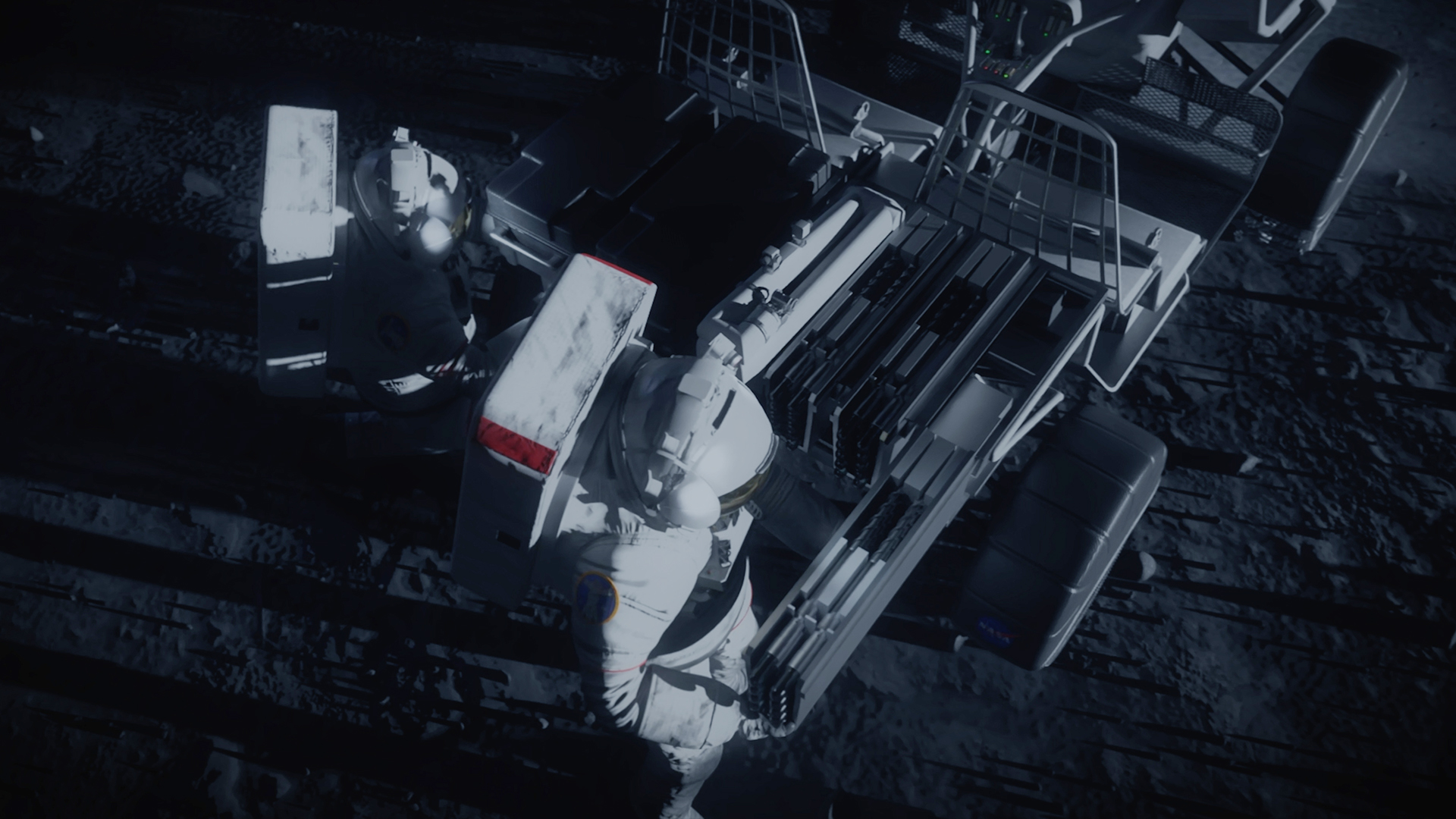
To enhance lunar surface mobility, NASA has contracted Astrolab and Lunar Outpost to develop the initial phase of lunar terrain vehicles (LTVs), which will transport crews to the Moon prior to manned Artemis missions. Blue Origin has been tasked with delivering these LTVs to the lunar South Pole by 2028 under NASA’s Commercial Lunar Payload Services initiative.
These vehicles will be remotely operated from Earth, capable of traveling up to 3.7 miles daily while mapping the lunar landscape. They will also collect crucial data regarding operational challenges in the Moon’s extreme environment, such as energy preservation and navigation in areas subjected to extreme cold.
During their missions, astronauts will utilize the LTVs to explore various geological sites in the South Pole region, collecting samples to return to Earth for further analysis. The LTVs will be engineered to support multiple moonwalks per mission, transporting significant amounts of lunar samples and equipment.
Progress of Astrolab and Lunar Outpost
Astrolab is developing its Crewed Lunar Vehicle 1 (CLV-1), based on the FLEX architecture. The company has delivered a mockup of CLV-1 to Axiom Space for testing with NASA astronauts, who evaluated the rover’s design and functionality. Before sending CLV-1 to the lunar surface, Astrolab will launch its first robotic rover, FLIP, in late 2026, which will assess the South Pole environment and help refine systems for CLV-1.
Meanwhile, Lunar Outpost’s Pegasus LTV is a lighter evolution of its Eagle LTV. The company has constructed several mockups and recently provided one to NASA for crew testing. In 2025, Lunar Outpost plans to deploy its MAPP (Mobile Autonomous Prospecting Platform) rover at the Moon’s South Pole to validate key technologies necessary for the Pegasus vehicle.
Both Astrolab and Lunar Outpost are set to conduct evaluations at NASA’s Glenn Research Center to assess their vehicles’ performance in simulated lunar conditions. Preliminary design reviews for both companies are scheduled for completion by the end of the year, with flight-ready hardware targeted for delivery to NASA in late 2027.
Future Exploration Goals
As NASA embarks on this new phase of innovation and exploration, the Artemis program aims to send astronauts on increasingly challenging missions to the lunar South Pole. These efforts are expected to not only promote scientific discovery and economic benefits but also facilitate a sustained human presence on the Moon, laying the groundwork for future crewed missions to Mars.
Source: NASA