Webb Identifies Host Galaxy of Distant Fast Radio Burst
NASA’s James Webb Space Telescope has successfully pinpointed the host galaxy of the farthest known fast radio burst (FRB), designated FRB 20240304B. This discovery, facilitated by the telescope’s Near-Infrared Camera (NIRCam), reveals that the burst originated from a small, star-forming dwarf galaxy. The findings were published in the journal Science on October 9, 2026.
Fast radio bursts are brief, intense flashes of radio waves from the far reaches of the universe, first identified in 2007. Their origins remain largely a mystery, with many bursts being detected only once. Researchers have long speculated about the nature of the events that generate these enigmatic signals. Manisha Caleb, a researcher at the University of Sydney and the lead author of the study, noted, “What makes fast radio bursts interesting is that we don’t know what generates them.”
The MeerTRAP project, utilizing the MeerKAT telescope, initially detected the burst on March 4, 2024. This observation indicated its great distance, prompting astronomers to investigate the galaxy from which it emanated. Despite precise location data, ground-based telescopes were unable to identify the associated galaxy, leading researchers to turn to Webb for further investigation.
Significant Discoveries About the Host Galaxy
Using NIRCam, Webb’s instruments successfully identified a galaxy at the expected coordinates of the FRB. The NIRSpec (Near-Infrared Spectrograph) provided a precise redshift measurement of 2.148, indicating that this galaxy existed approximately 3 billion years after the Big Bang. This is significant, as most previously recorded FRBs have been associated with galaxies that formed billions of years later.
The findings revealed that the host galaxy of FRB 20240304B is atypical compared to those associated with other FRBs. While most such galaxies are large, star-forming regions, this particular galaxy is about 1,000 times less massive than anticipated. Caleb remarked on the unexpected nature of the discovery, stating that researchers anticipated a larger, more developed galaxy instead of a smaller dwarf galaxy actively forming stars.
Co-author Ben Stappers from the University of Manchester expressed excitement about the collaboration between the MeerTRAP project and the Webb telescope to uncover these distant bursts and their host galaxies.
Implications for Understanding Fast Radio Bursts
The existence of the host galaxy during a peak period of star formation, known as “cosmic noon,” raises important questions regarding the origins of fast radio bursts. Two primary theories exist: one postulates that FRBs originate from the merger of two neutron stars, a process expected to occur in older galaxies, while the second theory suggests that they might come from young, highly magnetic neutron stars known as magnetars after a supernova explosion. The findings from FRB 20240304B lean toward the latter theory, as Caleb noted, “Our work suggests that it’s very unlikely that this FRB was produced by a merger.”
The study also allowed the team to explore the vast stretches of space between the FRB and Earth. The bursts act like cosmic beacons, illuminating the matter and structures they encounter along their path. Co-author J. Xavier Prochaska from the University of California, Santa Cruz, emphasized this aspect, stating that the FRB’s signal carried imprints of two cosmic structures, including an unknown galaxy cluster and the nearby Virgo Cluster.
Looking ahead, the researchers are optimistic about discovering additional distant FRBs. They estimate that the MeerKAT telescope could detect multiple FRBs annually at redshifts greater than 1.0, expanding the understanding of the universe’s early history. The James Webb Space Telescope will play a crucial role in characterizing these host galaxies.
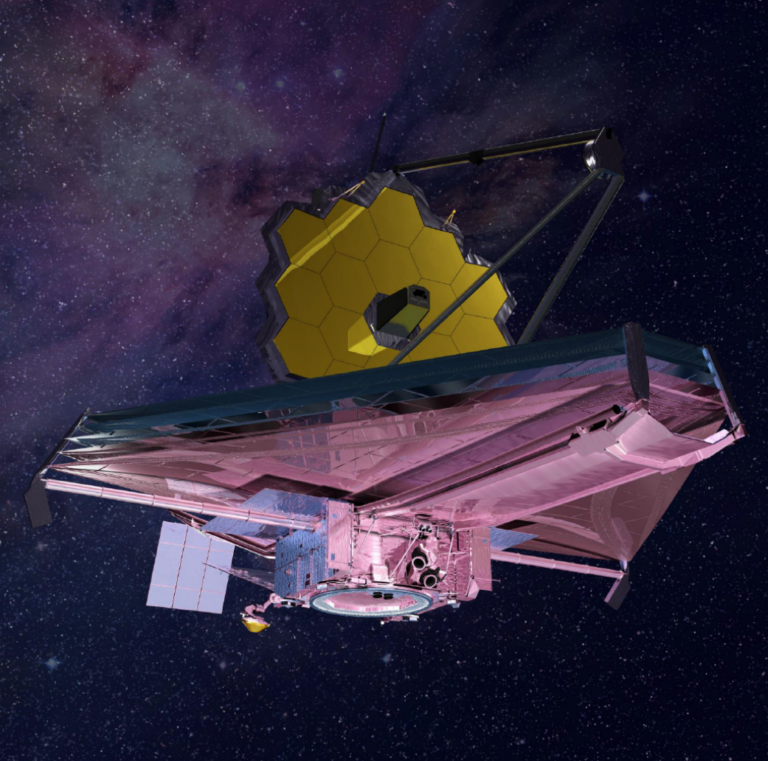
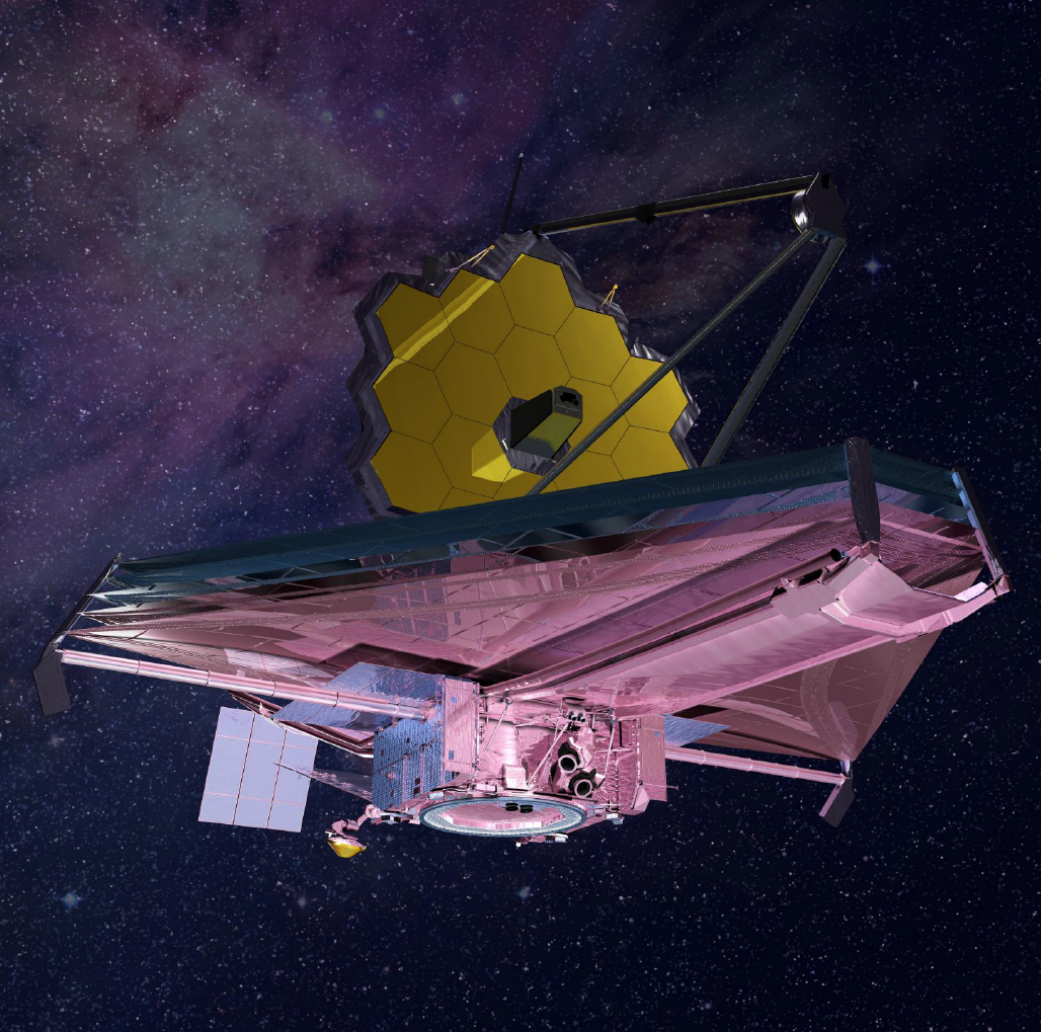
The James Webb Space Telescope is a premier international space science observatory, collaborating with NASA, the European Space Agency, and the Canadian Space Agency, dedicated to exploring the mysteries of the cosmos.
Source: NASA