Perseverance Rover Discovers Unique Silica-Rich Rocks on Mars
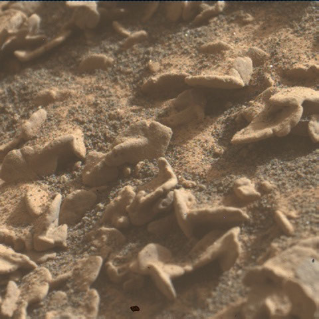
NASA’s Perseverance rover has made an intriguing finding in the “Idubi” region of Mars, known for its ancient crustal formations located near the “Lac de Charmes” area, just outside the Jezero crater. The rover team observed a striking cluster of bright, light-colored rocks that contrast sharply with the darker, dustier Martian landscape. These rocks are notably more luminous than previously studied igneous and impactite formations in the area.
Characteristics of the Findings
Upon further investigation, the team used data from the SuperCam instrument to analyze these light-toned rocks, confirming that they are not igneous in nature but are instead rich in hydrated silica. This type of silica is significant because it can form in various aqueous environments on Earth, such as those associated with hydrothermal activity and groundwater systems. Therefore, these deposits could offer insights into Mars’ hydrological history and the planet’s potential for supporting life.
The astrobiological importance of hydrated silica lies in its ability to preserve microfossils, raising the question of whether these remnants of an ancient water system might contain evidence of past life on Mars. Previous encounters with silica-rich rocks on the inner rim of Jezero Crater did not allow for extensive analysis due to their small size. However, the larger scale of the rocks at Idubi provides a more favorable opportunity for in-depth study, prompting the initiation of a detailed scientific campaign.
Next Steps in Exploration
Pursuing this line of research, Perseverance is equipped with advanced proximity science instruments that will enable further exploration of these intriguing rocks. A close-up image captured by the rover’s SHERLOC WATSON camera on October 29, 2026, showcases the silica-rich formations, highlighting the mission’s ongoing commitment to unraveling the geological and potentially biological history of Mars.
Source: NASA