Ancient Martian Meteorite Analyzed
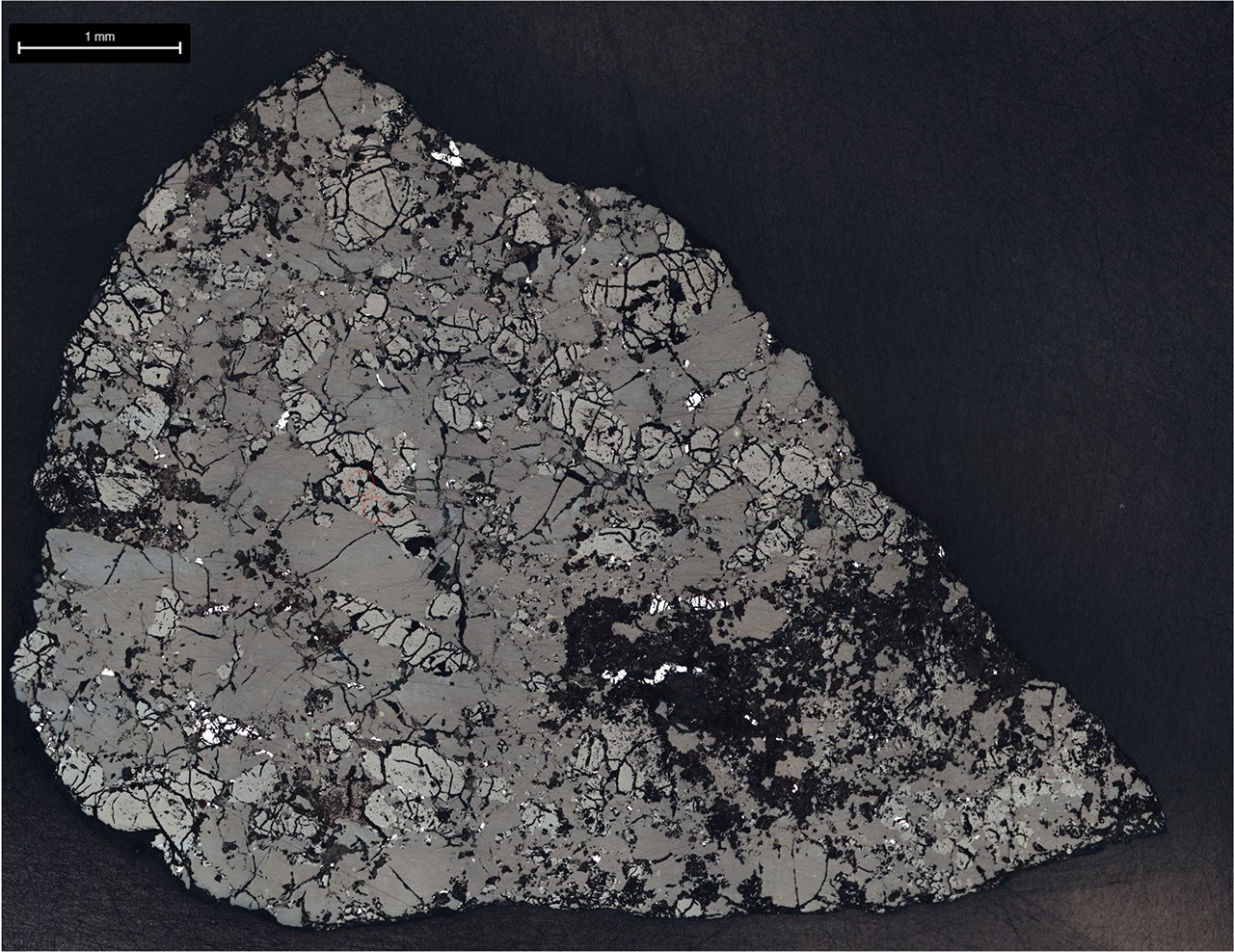
A slice of the Teghaza 001 meteorite, recognized as one of the oldest Martian meteorites discovered on Earth, has been utilized to determine its age. This meteorite provides valuable insights into the geological history of Mars.
Scientific Insights from Teghaza 001
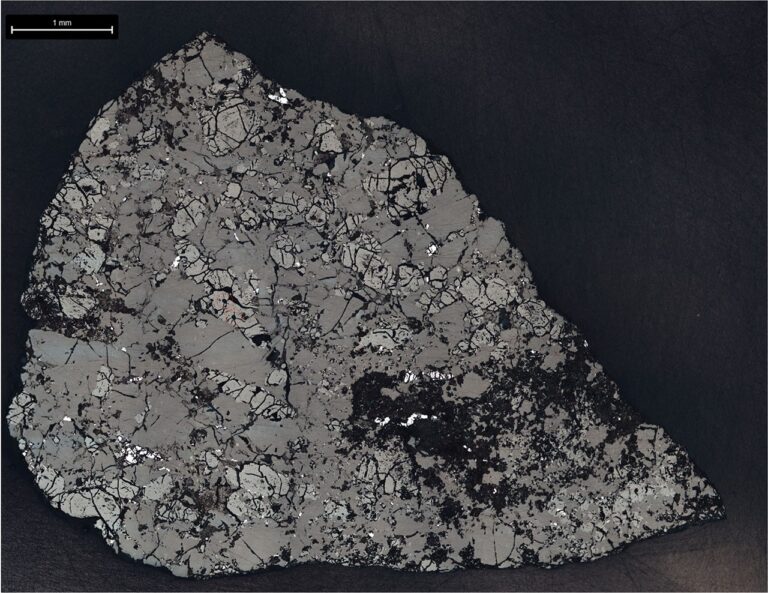
Reflected light images of Teghaza 001 act as a guide for scientists, enabling them to identify and analyze specific minerals of interest using various instruments. Among the notable minerals present in the meteorite are iron-titanium oxides, which appear as brighter grains, and pyroxene, which is depicted in medium gray. These minerals contribute to understanding the processes that shaped Mars’ crust and mantle.
Formation and Impact Evidence
The meteorite also contains shocked plagioclase, a mineral produced under extreme pressure from impacts, including the force that propelled Teghaza 001 from Mars to Earth. Additionally, alterations in the meteorite reveal fine-grained carbonate, sulfate, and clay minerals that formed after its arrival on our planet.
Source: NASA