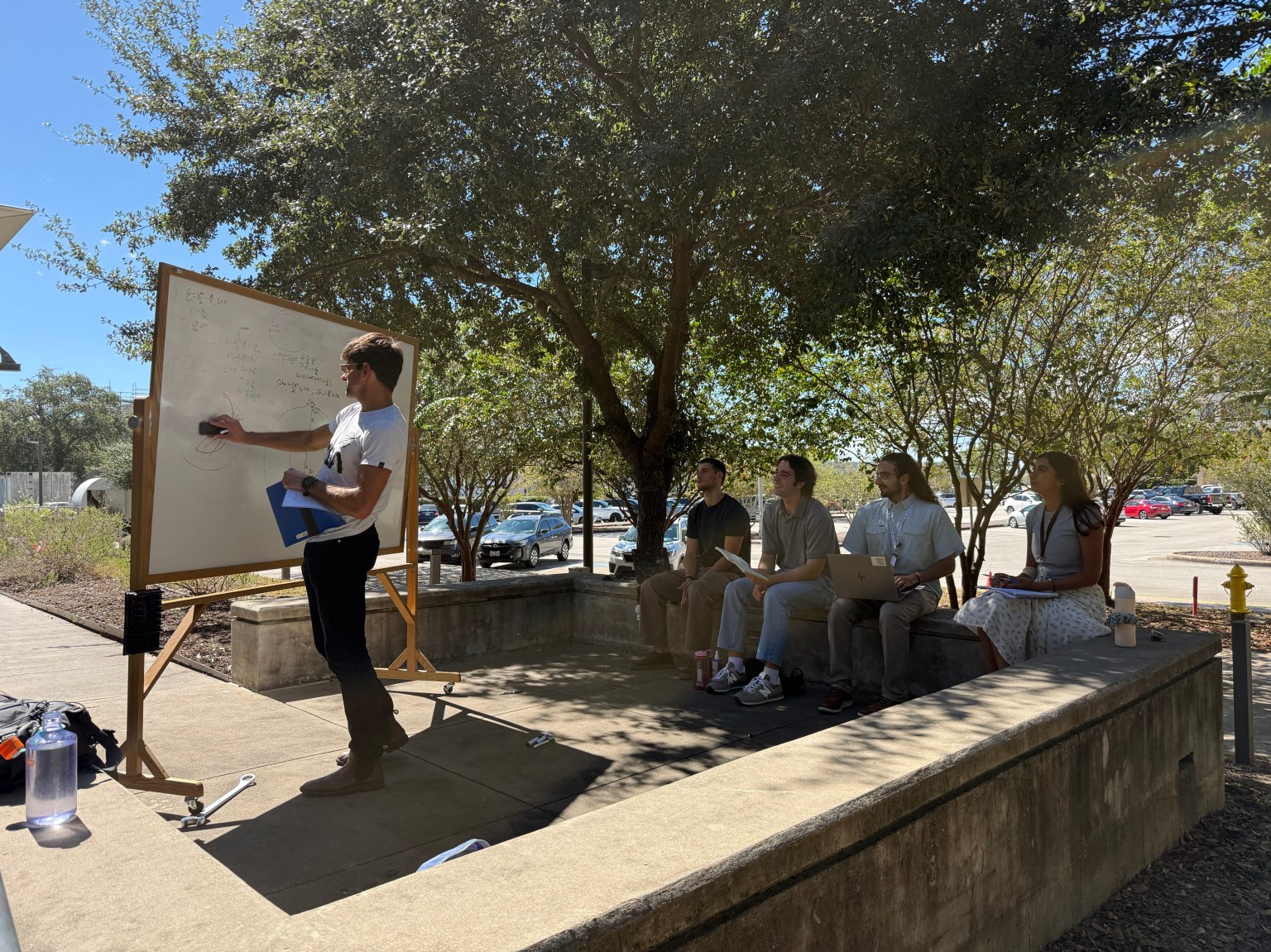
Daniel Cohen, a Guidance, Navigation & Control (GN&C) engineer at NASA’s Johnson Space Center, is actively mentoring interns, including Rice University student Malvika Bhardwaj. On October 9, 2026, Cohen led an outdoor lesson on orbital mechanics, emphasizing the importance of mentorship in shaping the next generation of talent in the aerospace sector.
In recognition of National Mentoring Day on October 27, Bhardwaj shared insights on how Cohen’s guidance has enriched her internship experience at NASA. She noted that when she inquired about his availability to teach interns amid his busy schedule, Cohen advised her, “You decide what’s important.”
Internship Experience at NASA
Interns like Bhardwaj participate in projects managed by NASA’s Office of STEM Engagement, where they gain practical experience and technical skills essential for careers in space exploration. Bhardwaj, who studies computational and applied mathematics, is contributing to the GN&C team, specifically working on tools to analyze thruster firings for the U.S. Deorbit Vehicle. This work is crucial for ensuring the safe deorbiting of the International Space Station at the conclusion of its operational lifespan. Additionally, she employs computer simulations to test the vehicle’s control systems, identifying potential failure conditions.
Reflecting on her time at Johnson, Bhardwaj expressed appreciation for the supportive culture fostered by Cohen and the team. She noted how he facilitated her integration into the group by introducing her to colleagues and involving her in discussions and meetings. “I saw how team members step up to help one another and keep the whole unit moving forward,” she remarked.
Cohen’s Path at NASA
Cohen, who holds a master’s degree in mechanical engineering from Rice University, began his journey at NASA as a flight operations intern in 2020. He subsequently completed internships focused on docking dynamics, propulsion systems, and GN&C analysis before joining the Johnson Space Center as a full-time engineer in August 2024. His current responsibilities include developing simulations and models for the U.S. Deorbit Vehicle and analyzing its control algorithms and performance. Additionally, he assesses the settings for the Orion spacecraft’s docking camera, which plays a pivotal role in navigation during Artemis missions.
Cohen dedicates a few hours each week to educate interns on subjects such as orbital mechanics and control systems, further enhancing their learning experience. His mentorship extends beyond technical instruction, providing Bhardwaj with insights into collaborative project work and idea-sharing among colleagues.
Lessons Learned and Advice for Future Interns
Bhardwaj has embraced Cohen’s perspective on time management, realizing that how she allocates her efforts reflects her priorities. Her internship has underscored the idea that problem-solving is typically a collective endeavor, requiring diverse viewpoints and an understanding of how individual contributions fit into the broader project framework.
In addition to her technical work, Bhardwaj’s interactions with peers in outreach, social media, and digital design have expanded her understanding of various STEM career paths. “No matter what interests you, there’s likely a role for you here,” she stated.
Completing her first project—developing a set of analysis tools from the ground up—was a significant achievement for Bhardwaj. She found the process of debugging and ultimately delivering a functioning product immensely gratifying.
For students considering internships at NASA, Bhardwaj advises them to apply even if they feel unprepared. “You’re probably never going to feel 100% ready, but so much of the learning happens on the job,” she said. “Trust in your ability to navigate new environments.”
Source: NASA