NASA Funds Innovative Technologies for Lunar and Mars Exploration
NASA is making significant strides in enhancing the U.S. space economy by awarding funding to small businesses that are addressing critical technological requirements for the exploration of the Moon and Mars. The agency’s Small Business Innovation Research/Small Business Technology Transfer (SBIR/STTR) program has recently chosen 302 innovative projects, allocating up to $171 million in seed funding.
This funding will support early-stage research and development on a wide range of topics, particularly those associated with the Artemis program and the establishment of a U.S. lunar base. Selected projects include advancements in battery technology, robotic systems equipped with sensing capabilities for the harsh lunar environment, and tools designed for constructing essential infrastructure, such as lunar landing pads.
Phased Support for Startups and Entrepreneurs
Through its SBIR/STTR program, NASA assists entrepreneurs, startups, and small businesses in advancing and commercializing technologies that align with the agency’s missions. The latest round of funding involves two phases of contracts.
Phase I contracts will offer up to $225,000 each to evaluate the merit and feasibility of proposed innovations. Some of these projects are part of the STTR awards, which are granted to small businesses collaborating with research institutions. Meanwhile, the Phase II awards, which include 98 contracts valued at up to $1.3 million each, will continue the work initiated in selected Phase I projects from 2025, focusing on demonstration and delivery of the technologies.
Highlighted Projects Fueling Lunar Exploration
Several notable projects have emerged from this funding initiative:
- Modular Solar Arrays: Opterus Research and Development Inc. received a Phase II award to develop a modular system of rollable solar arrays that can generate power on the Moon and Mars. These arrays can be managed robotically and are designed to function in dusty conditions, with a potential capacity of up to 50 kilowatts, providing a reliable energy source for NASA and commercial space ventures.
- Advanced Robotic Arms: The Intelligent Fiber Optic Systems Corporation is working on a 10-foot extendable robotic arm, funded by a Phase I award, to enhance the capabilities of lunar rovers. This arm features both vision and tactile sensing, enabling it to perform intricate tasks autonomously, such as cleaning solar panels and collecting scientific samples. The technology could also be applicable for inspecting infrastructure on Earth.
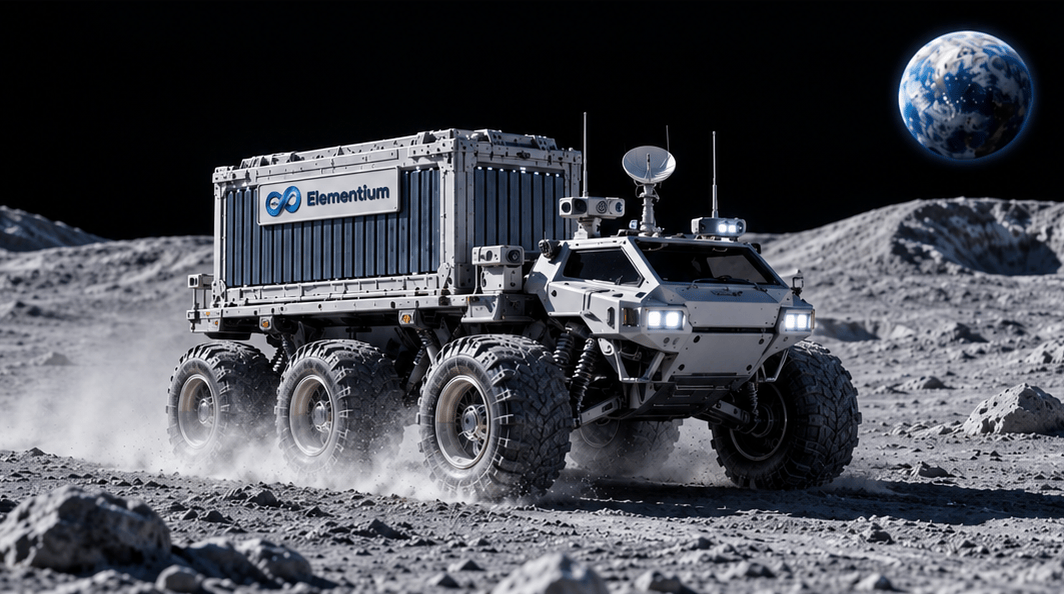
- Ultra-Cold-Tolerant Batteries: Elementium Materials Inc. is developing a battery module that can operate in extreme cold, receiving a Phase I award for its innovative design. This battery functions effectively at temperatures as low as minus 76 degrees Fahrenheit, eliminating the need for heating systems on the Moon. Such technology could support rovers and habitats during the long lunar night and potentially on Mars.
- Lunar Landing Pad Preparation: Slate Geotechnical Consultants Inc. is collaborating with the Colorado School of Mines on a project aimed at preparing lunar regolith to facilitate repeated landings. This STTR Phase I award project will explore methods to create durable landing pads that can withstand the forces generated by rocket landings, thereby protecting spacecraft and surrounding infrastructure.
This funding initiative reflects NASA’s commitment to fostering innovation in space exploration while supporting the growth of small businesses in the technology sector.
Source: NASA