Hubble Telescope Reveals Galactic Insights
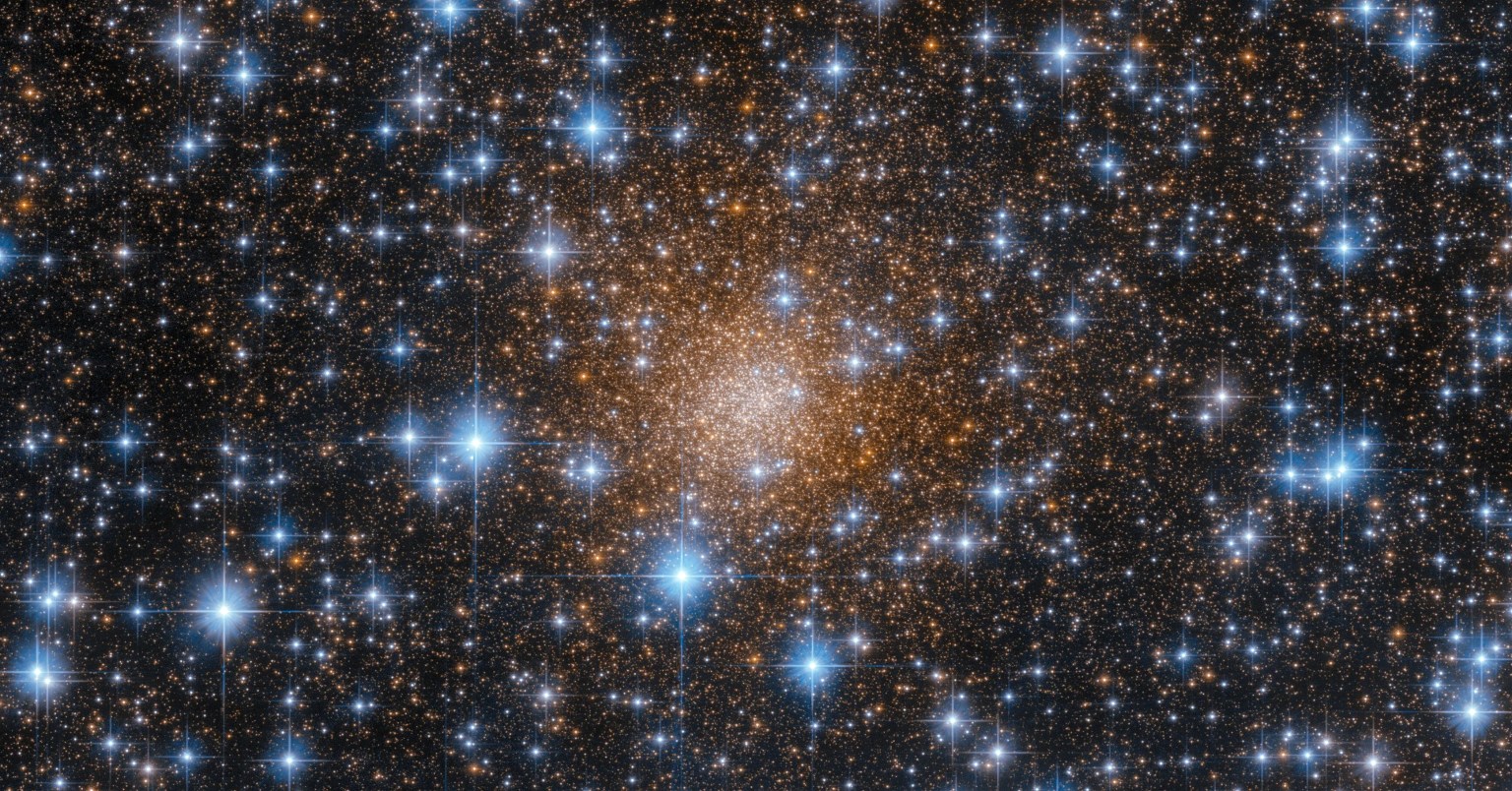
The Hubble Space Telescope continues to provide significant insights into the history of our galaxy through its observations of the globular star cluster Messier 30 (M30), also known as NGC 7099. This cluster, located approximately 27,500 light-years away in the constellation Capricornus, was cataloged by the French astronomer Charles Messier, who documented various celestial objects in the 18th century.
Understanding Globular Clusters
M30 is classified as a globular cluster, which typically consists of a dense, spherical aggregation of stars that can contain anywhere from tens of thousands to millions of individual stars. These clusters often orbit the outer regions of galaxies, residing in a vast area known as the halo. The Milky Way is home to at least 150 such globular clusters, with the closest being roughly 6,000 light-years from Earth. These clusters are ancient, with estimations of their ages ranging from 11.5 to 13.5 billion years, making them some of the oldest structures we can observe in the universe.
Globular clusters have historically contributed to our understanding of the Milky Way. For instance, early 20th-century astronomer Harlow Shapley used observations of variable stars in these clusters to determine their distances and locations, ultimately revealing that the Sun is not at the center of the galaxy. Although his distance calculations were later found to be inaccurate, his findings shifted the understanding of our galactic structure.
New Discoveries Through Hubble’s Observations
Modern astronomers continue to utilize globular clusters like M30 to glean information about the galaxy’s formation and evolution. Because these clusters are so ancient, they serve as time capsules that retain the chemical composition of the early galaxy. Recent studies have indicated that some globular clusters, including M30, might not have originated from the Milky Way. Observations show that M30 and others move in a direction opposite to the galaxy’s rotation, suggesting they may have been captured by the Milky Way from other regions of space.
Hubble has conducted multiple observations of M30 over the years. Initial studies were carried out with the Advanced Camera for Surveys, which provided data critical for identifying stars with lower masses. More recent investigations used Hubble’s Wide Field Camera 3 to observe M30 with different filters, allowing for the identification of unique stellar populations, such as “blue straggler” stars, within the cluster. A further observation program tracked the movements of various star populations over a 15-year span, showcasing Hubble’s capability to produce detailed views of celestial objects.
Comprehensive Data Collection
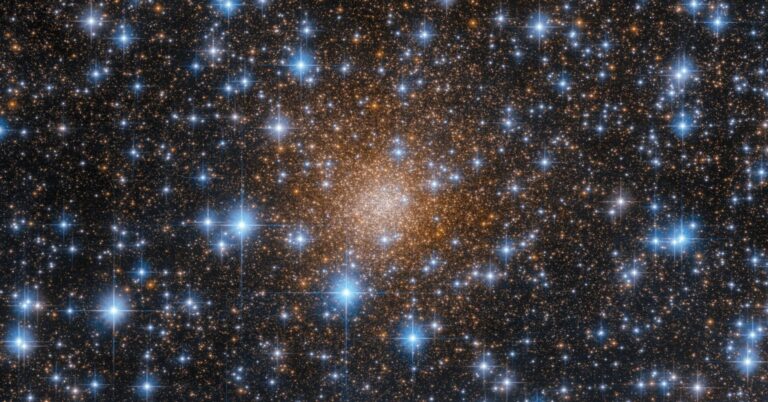
The latest image of M30 integrates data from several observing programs, capturing a broad spectrum of wavelengths, including ultraviolet, visible, and near-infrared light. Each wavelength provides valuable information regarding the formation and evolution of these star clusters, enhancing our understanding of their role in the galaxy.
The insights gained from Hubble’s ongoing observations underscore the telescope’s vital role in expanding our knowledge of the universe, while also highlighting the importance of globular clusters in studying the cosmos.
Text credit: ESA/Hubble
Source: NASA