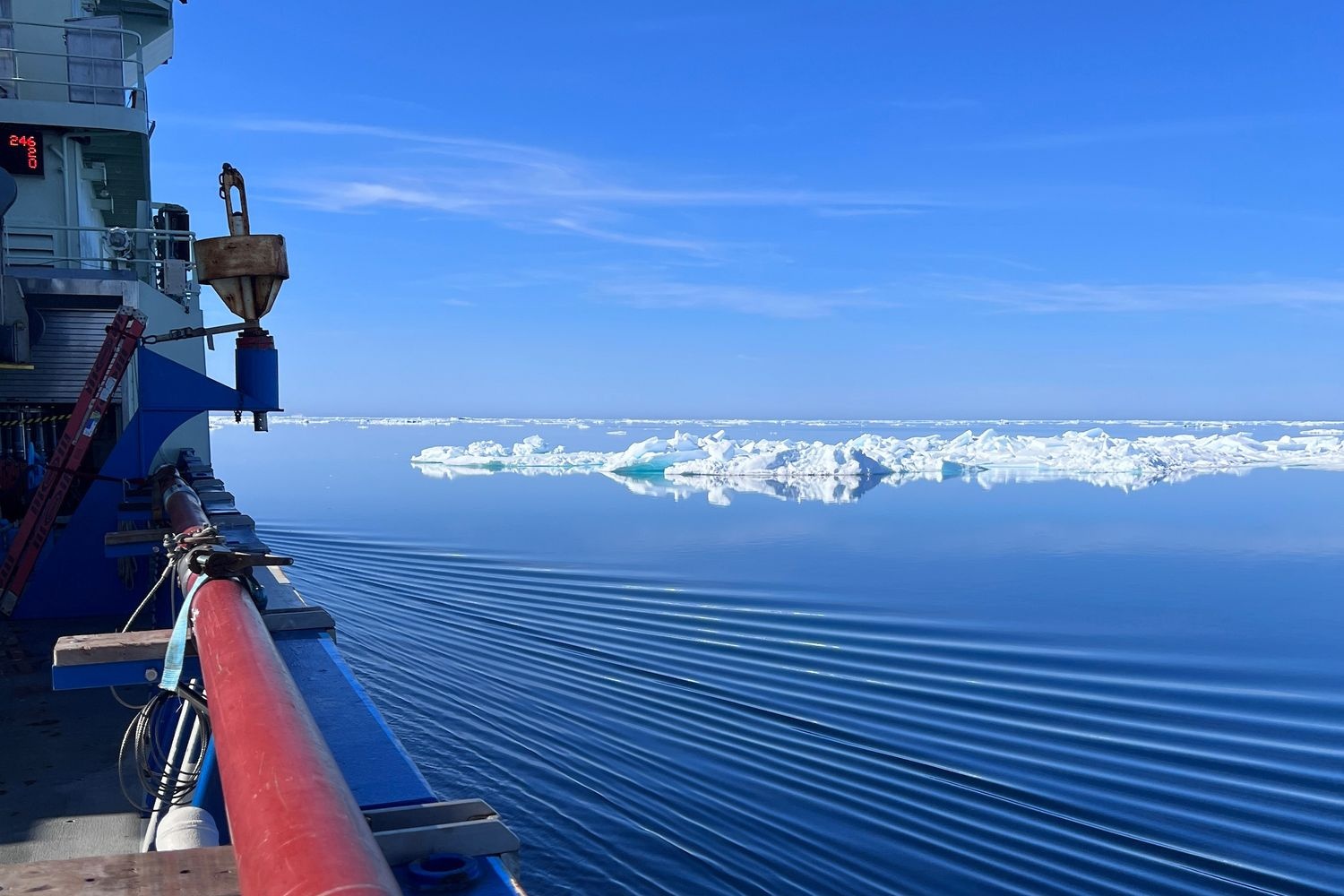
New Insights on Ancient Ice Shelf
Recent research led by Associate Professor Shannon Klotsko from the Department of Earth and Ocean Sciences has unveiled significant findings regarding an ancient ice shelf in Baffin Bay, which lies between Greenland and Canada. The study, published in Nature Geoscience, details the discovery of a previously unidentified feature on the seafloor that provides evidence of this ice shelf’s existence during the last ice age.
Details of the Baffin Bay Ice Shelf
The Baffin Bay Ice Shelf is believed to have covered an area of about 150,000 square kilometers and reached thicknesses ranging from 1,400 to 2,100 meters, surpassing the thickness of contemporary Antarctic ice shelves. Klotsko and her research team utilized seafloor bathymetric data to assess the extent and maximum depth of this ancient structure, concluding that it played a crucial role in stabilizing and promoting the thickening of the Laurentide, Innuitian, and Greenland ice sheets during the last glacial period.
“We didn’t set out to find an ice shelf this thick when we embarked on the research cruise for our project, the Baffin Bay Deglacial Experiment, so finding these imprints of ice on the seafloor at such great depths was a huge surprise,” Klotsko remarked.
Impact of Ice Shelf Collapse
The research also uncovered evidence suggesting that the collapse of the Baffin Bay Ice Shelf led to a rapid retreat of the surrounding ice sheets. These findings highlight the potential for significant changes in marine ice sheets following the loss of ice shelves, offering crucial insights into how current weakening ice shelves in Antarctica could influence future ice sheet retreat.
Klotsko noted that modern ice shelves play a vital role in preventing Antarctic ice sheets from quickly draining into the ocean, which could lead to substantial global sea level rise. She expressed concern over the implications of discovering a similarly large historical ice shelf that vanished within a span of 500 to 1,000 years.
Collaboration and Support
This research was made possible through support from a National Science Foundation grant and involved collaboration with Klotsko’s doctoral student, Erin Gregory, alongside researchers from various institutions, including the University of Florida, Columbia University, University of Colorado Boulder, Queen’s University Belfast, Oregon State University, and the University of Washington.
Source: UNC Wilmington