Curiosity Rover Prepares for Drilling at ‘Nazca’ Site
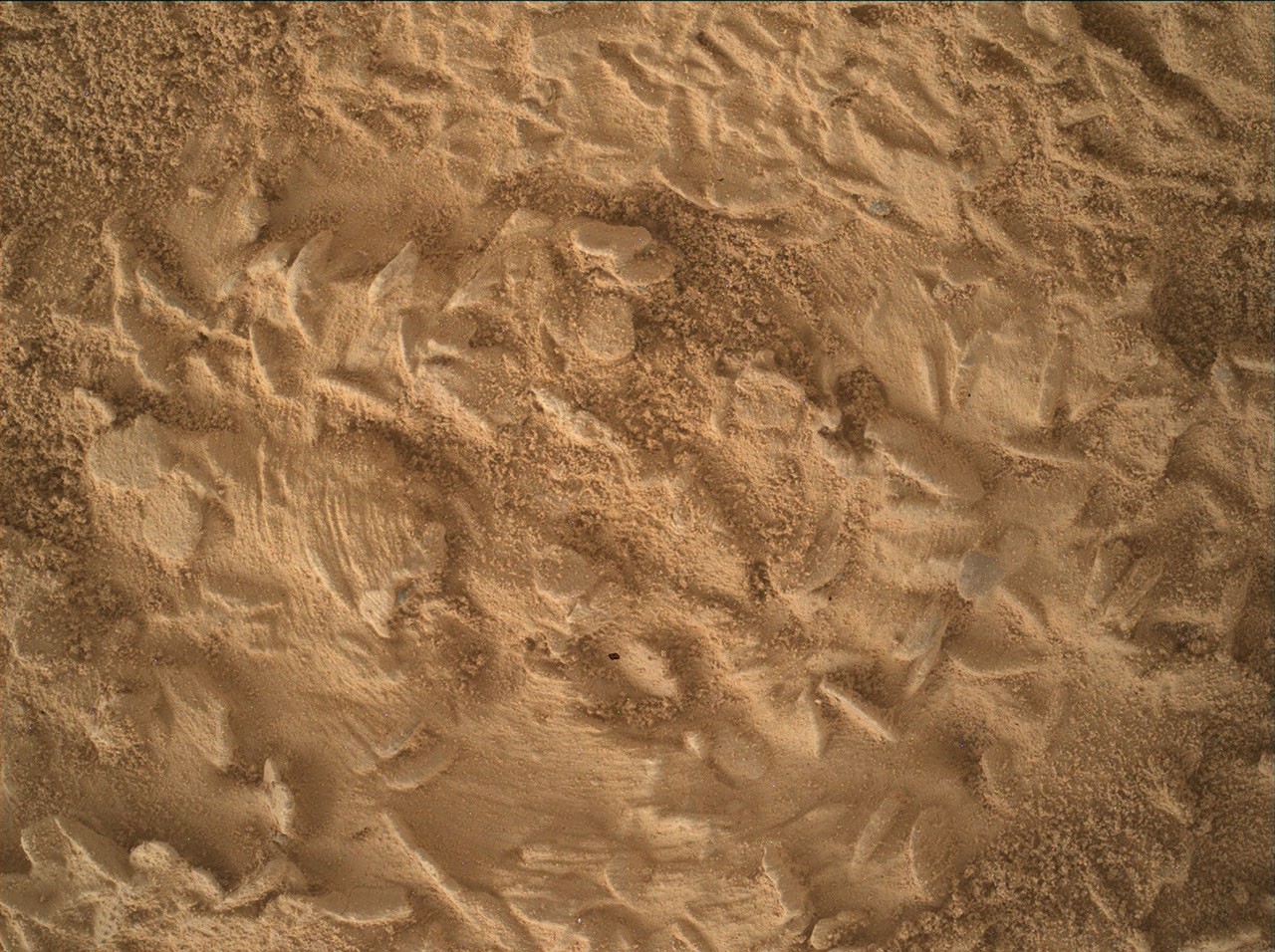
The NASA rover Curiosity has turned its attention to a new drilling target, informally called “Nazca,” located just a few meters from the “Chiu Chiu” block. After evaluating the area, scientists determined that the Nazca site presented a more favorable opportunity for drilling compared to Chiu Chiu, which was not deemed suitable for this operation. This decision was made following a successful imaging session that revealed an abundance of disc- and needle-shaped mineral formations in the vicinity.
On October 18, 2026, Curiosity utilized its Mars Hand Lens Imager (MAHLI) to capture detailed imagery of the potential crystal structures at Nazca. The images show the distinctive features created during the growth of crystals, hinting at past environmental conditions on Mars. The formation of these shapes is believed to be related to specific mineral growth processes, akin to the way salt crystals form in a home science experiment.
Investigating Crystal Composition
As part of the preparation for drilling, the team is set to perform a series of observations to analyze the crystal forms in detail. MAHLI will conduct a Quantitative Relief Model (QRM) observation, which involves taking five overlapping images from varied angles. This technique will facilitate the creation of a detailed three-dimensional model of the crystal structures. Additionally, MAHLI will enhance its imaging resolution by increasing the number of focus adjustments during the capturing process.
Meanwhile, the ChemCam laser system will execute a depth profile experiment on a nearby target, “Toucan.” This experiment will concentrate all 150 laser shots on a single point, allowing for a deeper analysis of the material composition compared to the standard observation method. This approach aims to uncover any variations between the surface composition and the deeper layers of the crystal formations, which may have been influenced by environmental factors over time.
Monitoring Martian Environment
In addition to its drilling preparations, Curiosity continues to monitor its surroundings as twilight cloud season approaches on Mars. The rover has scheduled nighttime imaging sessions of Phobos, one of Mars’ moons, to capture reflections of sunlight scattered by Martian clouds. This data will help scientists estimate the sizes of cloud particles in the Martian atmosphere, contributing to a better understanding of the planet’s climatic conditions.
The Curiosity rover remains a vital asset in the exploration of Mars, providing insights into the planet’s geology and environmental history. Its ongoing drilling campaign at Nazca is expected to yield valuable information about the composition and formation of Martian minerals.
Source: NASA