Exploring AI in PTSD Diagnosis
The process of diagnosing post-traumatic stress disorder (PTSD) necessitates a high level of clinical expertise and a structured assessment that can take up to an hour to complete, followed by additional time for interpretation. With many Veterans seeking assistance for PTSD annually, the Department of Veterans Affairs (VA) is investigating the potential of generative artificial intelligence (GenAI) to enhance the analysis of complex clinical data while ensuring that human judgment remains central to the decision-making process.
This exploration was a focus at a recent AI innovation workshop held at the VA Boston Healthcare System (VABHCS). During this event, healthcare providers, researchers, and technology specialists collaborated to create proof-of-concept solutions aimed at improving care for Veterans. VABHCS is the first VA medical center to conduct such enterprise workshops, playing a pivotal role in determining how AI can responsibly bolster clinical decision-making, enhance healthcare coordination, and improve service delivery throughout the VA system.
AI’s Role in Enhancing Clinical Expertise
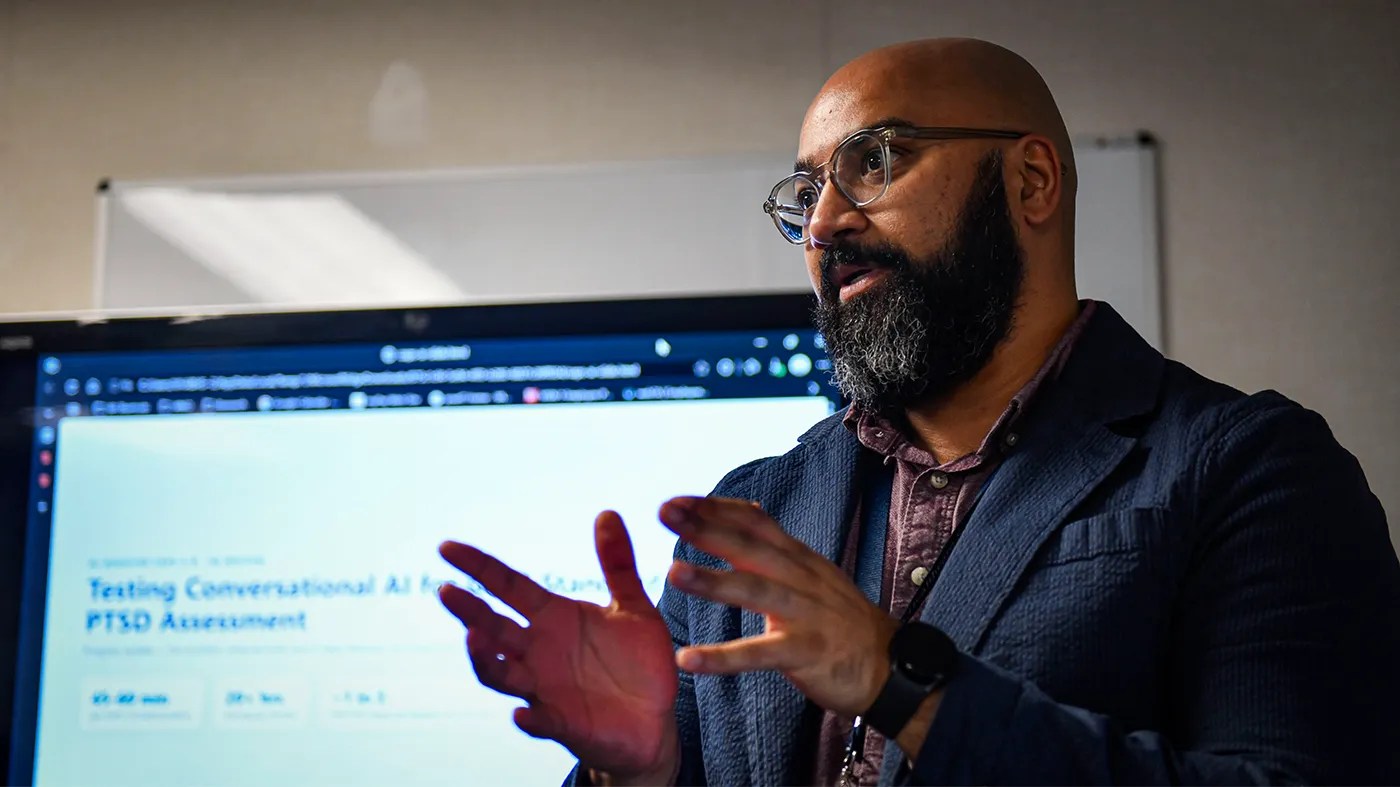
Dr. Amar Mandavia, a clinical psychologist and informatician with the VA’s National Center for PTSD, emphasized that the intention behind integrating AI is not to replace clinical expertise. “Our hope is that we can free up some clinician time and still be confident whether a Veteran meets diagnostic criteria,” Mandavia stated, noting that this could lead to more Veterans receiving necessary care.
The initial testing of this AI tool showed performance levels on par with human clinicians; however, the introduction of additional training data led to increased rigidity in the tool’s function, revealing limitations beyond the team’s initial aspirations. Mandavia noted, “We were able to get pretty far with what the current models offer,” emphasizing that testing was crucial to understanding the tool’s capabilities.
Efficiency and Clinical Decision-Making
The workshop highlighted AI’s potential to assist clinicians in utilizing existing information more effectively. PTSD assessments require the application of psychometrically validated tools, such as the Clinician-Administered PTSD Scale for DSM-5 (CAPS-5), which necessitates synthesizing extensive information while exercising clinical judgment. AI can streamline this process, allowing clinicians to prioritize direct patient interactions and high-quality care.
Dr. Kieran Warner, the chief health informatics officer for VABHCS, remarked on the transformative potential of AI in healthcare delivery. “AI gives us an opportunity to rethink how we deliver care,” he explained, adding that the focus is on innovations that create substantial value for Veterans.
Innovative Solutions Across VA
Other teams at the workshop explored various applications of AI, including improving operating room scheduling, enhancing Veteran transportation, supporting research, and refining clinical and administrative workflows. Each initiative originated from challenges identified by frontline staff and aimed to develop scalable, practical solutions for the VA.
Dr. Michael Charness, chief of staff at VA Boston, highlighted the importance of insights from those directly involved in Veteran care. “The people delivering care understand where the opportunities exist,” he said, pointing out that AI serves as a valuable tool to address persistent issues and optimize clinical workflows.
Evan Carey, Ph.D., acting director of the Veterans Health Administration’s National Artificial Intelligence Institute, noted that such workshops exemplify the VA’s proactive approach to AI development. “The most effective innovations begin with real needs from our VA care teams,” he explained, emphasizing collaboration with frontline employees to build AI that enhances decision-making and healthcare for Veterans.
Although the projects are still in the proof-of-concept phase, the workshops demonstrate the VA’s commitment to advancing AI in a responsible manner that supports clinicians and improves healthcare delivery and outcomes for Veterans across the nation.
Source: U.S. Department of Veterans Affairs. Photo: U.S. Department of Veterans Affairs.