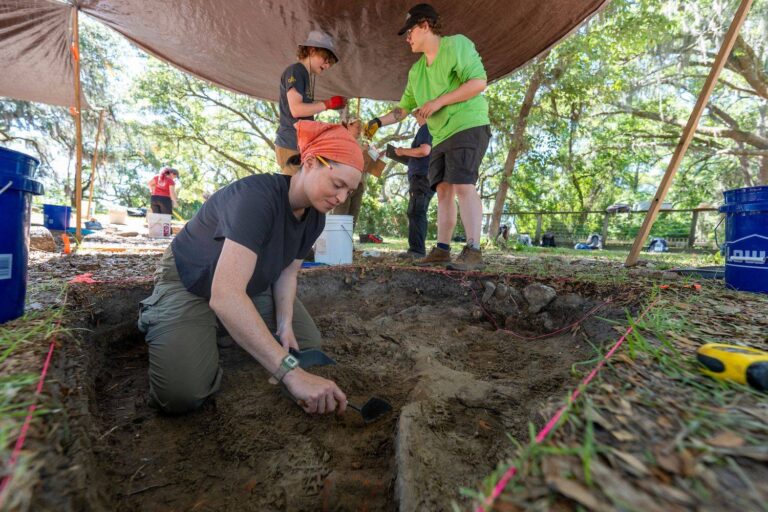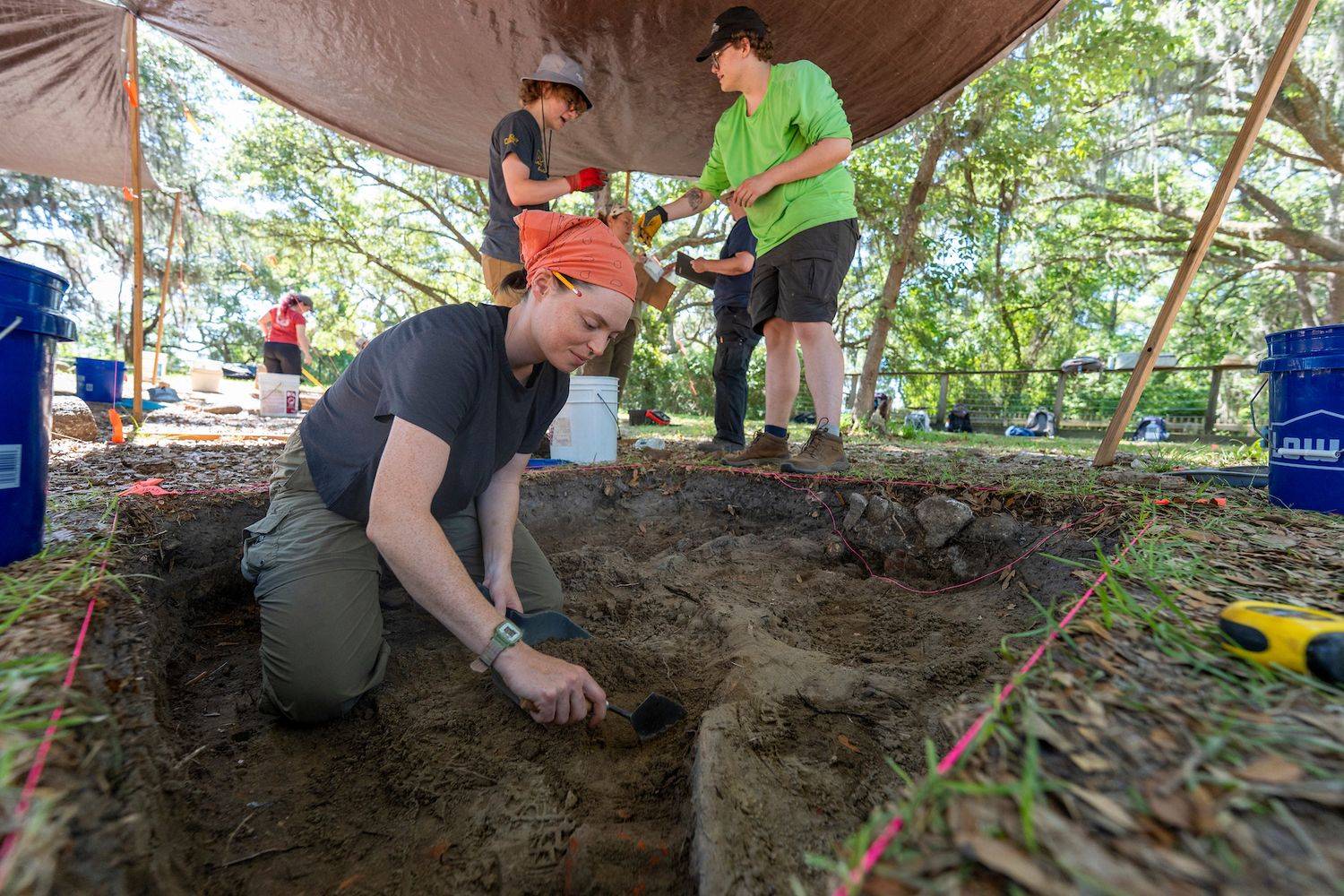
Students from the University of North Carolina Wilmington (UNCW) are engaged in an archaeological excavation at Brunswick Town/Fort Anderson, a site rich in history located 22 miles south of the university. Under the guidance of Professor Eleanora Reber, the field school aims to uncover artifacts that illuminate the lives of both colonial inhabitants and enslaved individuals who lived in the area.
Significance of Brunswick Town
Brunswick Town, situated along the Cape Fear River, served as a vital colonial port until it was destroyed by British troops in 1776. Later, during the Civil War, the Confederate army constructed Fort Anderson on the remnants of the town. Reber has been conducting archaeological projects in the lower Cape Fear region since 2011, with previous digs at various local sites, including River Park and the Orton Plantation.
Focus on Everyday Lives
Reber expressed her interest in researching the experiences of those often overlooked in historical narratives, such as laborers and enslaved individuals. The current field school concentrated on Lot 27, a location noted for yielding a significant amount of colonoware pottery, which was made by enslaved people in the 1700s. This lot was previously excavated by Stanley South, a notable figure in American archaeology.
“I thought excavating the other structure on the property would maybe help us figure out the purpose of the originally excavated structure,” Reber stated.
Findings and Future Plans
The excavation team has retrieved a variety of artifacts, including ceramic fragments, glass, brick, buttons, coins, and Native American pottery, as well as two pairs of cufflinks. They also discovered a second structure on the lot that had suffered fire damage and possibly water damage. The team is currently analyzing the artifacts in the lab and plans to conduct additional excavations to better understand the building’s function.
Student Experiences
Amber Shoulders, who leads UNCW’s Anthropology Club and participated in the excavation, emphasized the importance of understanding the daily lives of the residents of Colonial Brunswick Town, particularly the enslaved community. Fellow student Savannah McKeithan, now working as an interpreter at Brunswick Town, noted that her fieldwork provided her with a deeper connection to the site, enhancing her understanding of its history beyond what is available in written records.
Broader Impacts of the Research
Jim McKee, director of Brunswick Town, described the site as a hub for scholarly research, attracting graduate students from various disciplines. He likened Brunswick Town to Virginia’s Jamestown, highlighting its significance as an early English colonial settlement that offers insights into colonial life.
In addition to her work at Brunswick Town, Reber collaborates with the NC Rice Festival, an organization dedicated to preserving the Gullah Geechee heritage. The Gullah Geechee people are descendants of enslaved West Africans who labored on rice plantations in the region. Reber expressed her hope that these projects help people connect with the past in a tangible way.
Ongoing Discoveries
Despite decades of research that have revealed numerous artifacts, much of Brunswick Town remains unexamined. For Reber, her students, and the site’s staff, this means there is still a wealth of history waiting to be uncovered.
Source: UNC Wilmington