Breakthrough in Radiation Resistance for Electronics
Researchers have made significant strides in understanding how electronic devices fail when exposed to radiation. Their findings could lead to the development of electronics that are more resilient in extreme environments, with potential applications in fields such as nuclear energy and space exploration.
Understanding Single-Event Burnout
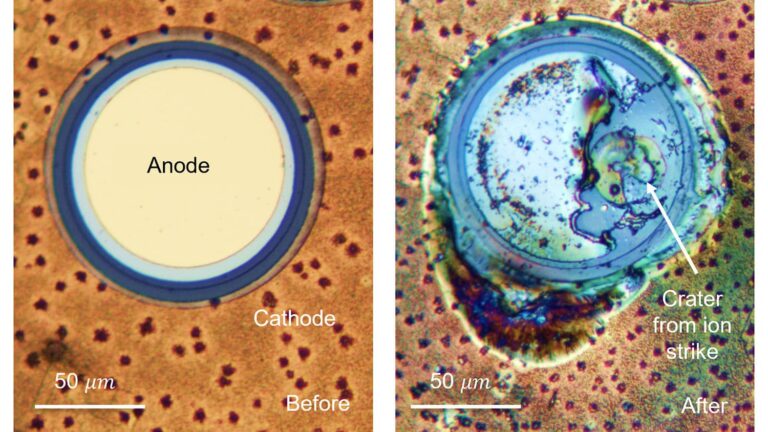
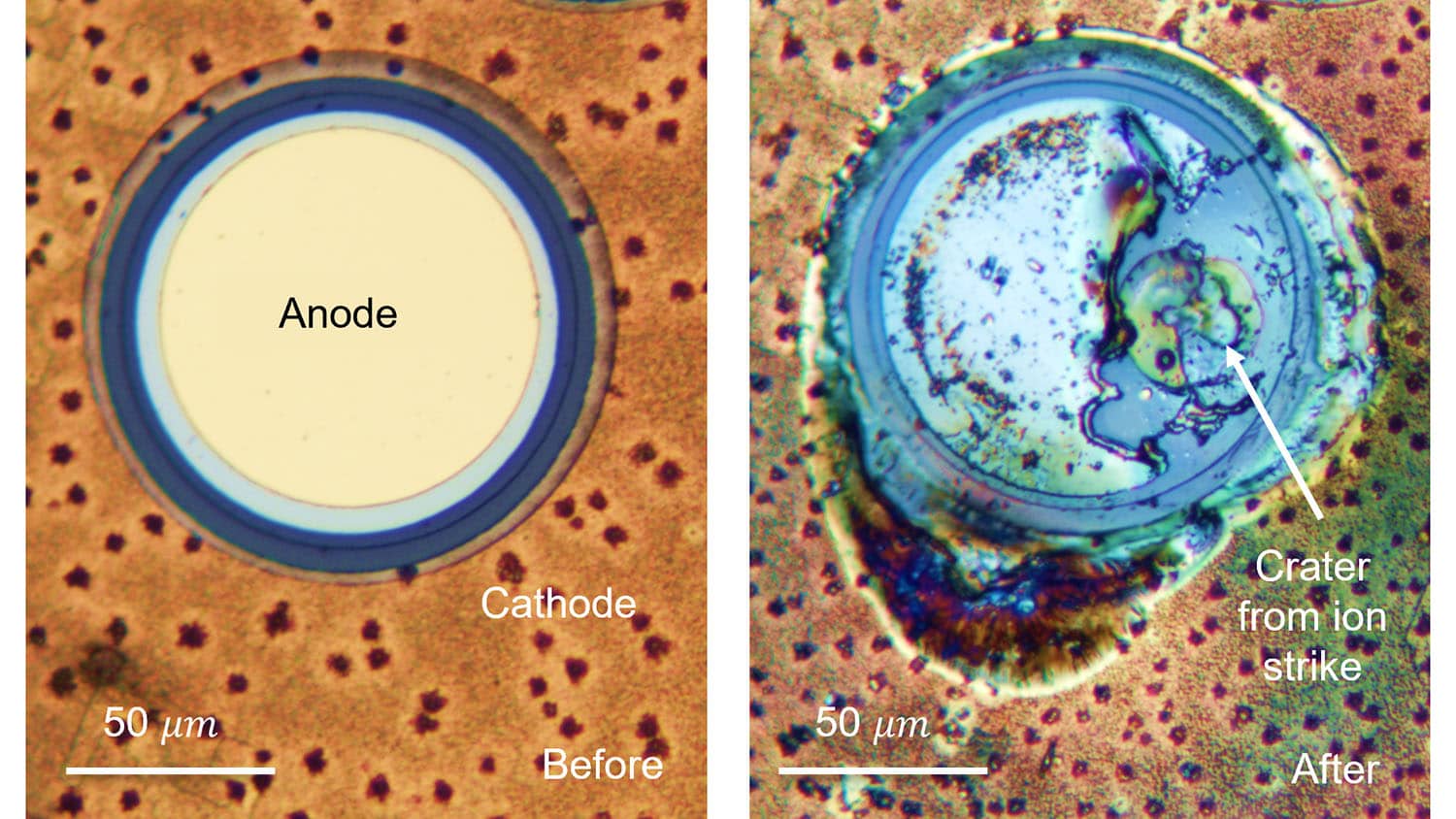
This discovery originated from investigations into aluminum nitride (AlN), a semiconductor known for its ability to handle high power loads. Researchers sought to explore a phenomenon known as single-event burnout (SEB), which occurs when radiation causes a single energetic particle to lead to severe failure in an electronic device, rendering it inoperable and causing structural damage. SEB typically arises when high voltage is applied to a device in a radiation-rich environment, with different devices exhibiting varying tolerances to voltage before experiencing SEB.
Cristyan Quiñones, a recent Ph.D. graduate from North Carolina State University and the lead author of the study, stated, “We wanted to characterize AlN electronics that we pioneered to see how much power the electronics could handle before SEB took place.” He emphasized the importance of examining electric fields rather than just voltage to compare the performance of different materials.
Analyzing Results and Developing Models
To deepen their understanding, the research team analyzed experimental data alongside existing information on SEB in other materials. They employed computational simulations to create an analytical model that elucidates the physics underlying SEB.
Quiñones explained, “Before, we knew SEB happened, and we could test a device’s capacity to withstand SEB. But now we know why.” The study revealed that heavy ions passing through a device when exposed to radiation generate charge carriers. With voltage applied, these charges separate, creating a localized electric field. Once this electric field reaches a critical threshold, it can trigger an avalanche of electrons, resulting in significant energy release and device failure.
Implications for Future Electronics
Ramón Collazo, a co-author and professor of materials science and engineering at NC State, highlighted the importance of understanding the physics of SEB. “This new understanding means we can develop design rules to harden devices against radiation and minimize the damage caused by SEB,” he said.
The researchers validated their analytical model against observed SEB data from various devices and found that it accurately explained their findings. “Our model was able to explain what we were seeing across the board,” said Quiñones, expressing excitement about the implications of this research.
Collazo noted that this model could be instrumental in designing devices for applications ranging from nuclear energy and space exploration to biomedical technologies and fusion research. The study titled “Single-event burnout of AlN diodes under heavy-ion irradiation” has been published in IEEE Transactions on Nuclear Science, co-authored by several contributors from North Carolina State University, NASA, and Adroit Materials, Inc.
This research received support from the Air Force Office of Scientific Research, the Army Research Office, the Defense Advanced Research Projects Agency, and NASA.
Source: NC State University