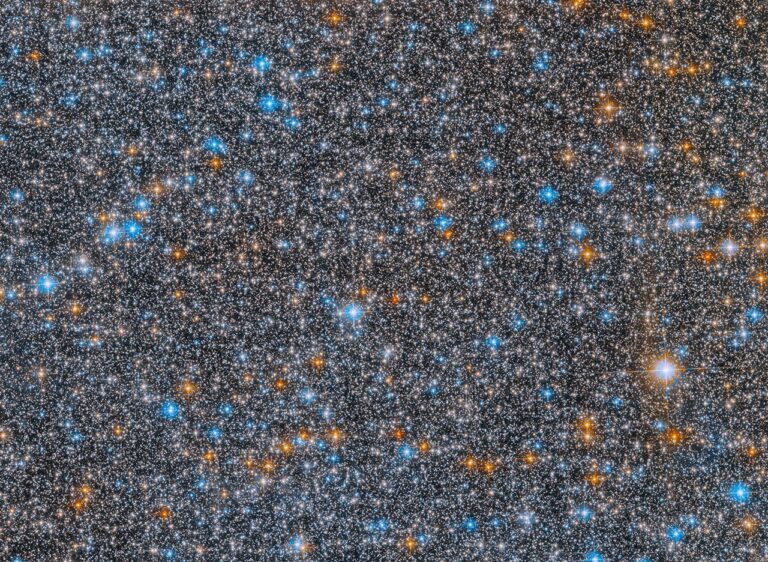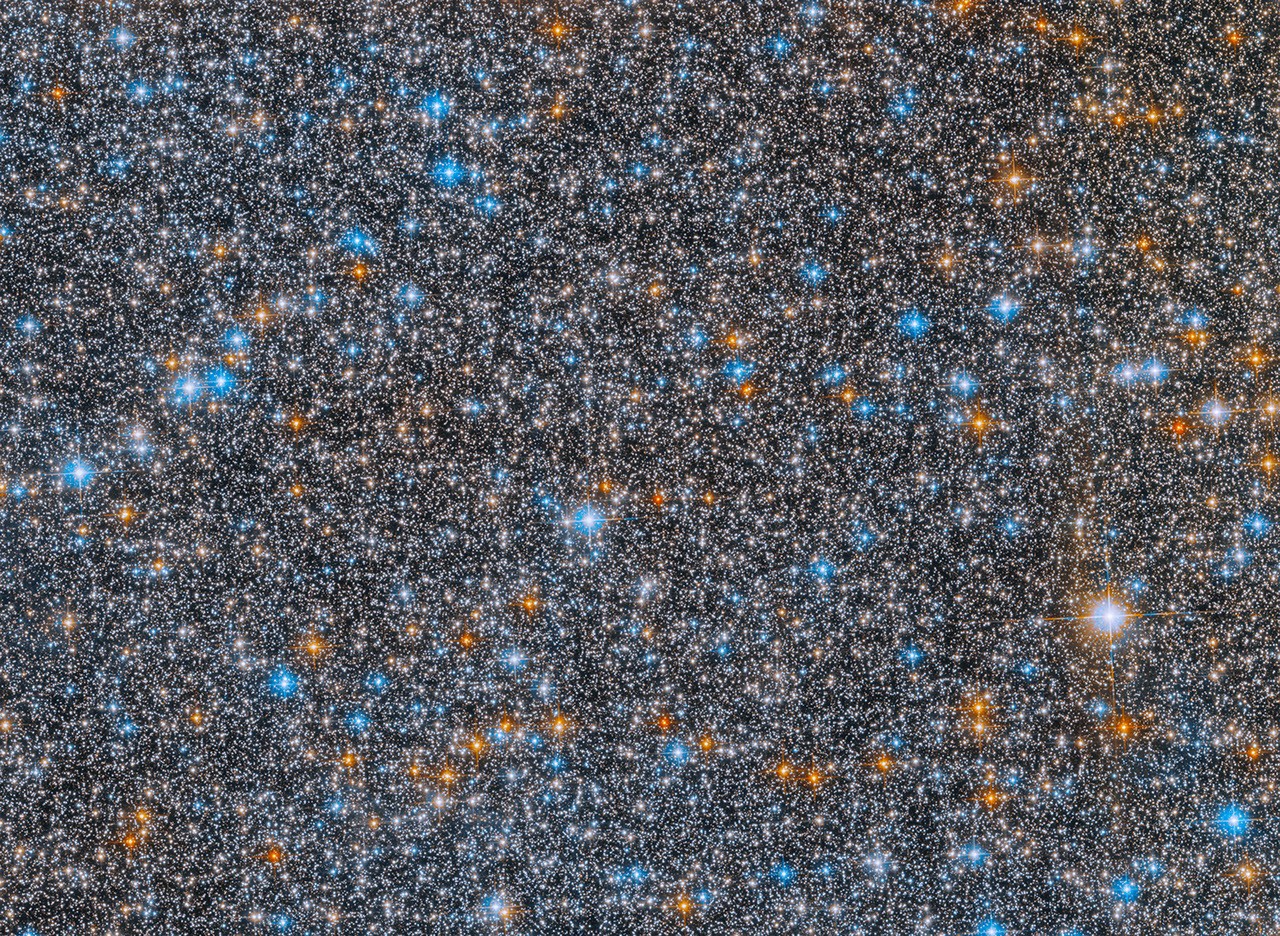
The NASA Hubble Space Telescope has captured stunning images of the Milky Way’s galactic bulge, revealing individual stars in this densely populated area near the center of our galaxy. These observations are crucial as they will support upcoming research by the Nancy Grace Roman Space Telescope, which aims to study the characteristics of stars and identify potential exoplanets within this bustling region.
Significance of the Galactic Bulge
Astronomers focus on the Milky Way’s galactic bulge because it contains approximately 25% of the galaxy’s stellar mass, allowing for detailed study. While similar regions in other galaxies are often too crowded and distant to resolve individual stars, our galaxy’s proximity enables researchers to analyze this area more thoroughly. Insights gained from these observations will contribute to a better understanding of galaxy formation, evolution, and interactions over vast timescales.
Complementary Observations by Hubble and Roman
Hubble primarily observes in ultraviolet, visible, and near-infrared light, whereas the Roman Space Telescope will gather data mainly in near-infrared and some visible light. To facilitate comparisons between the two telescopes, Hubble focused its observations on wavelengths that align with Roman’s sensitivity, particularly in the red end of the visible spectrum and near-infrared wavelengths. This strategic overlap is essential for future analysis.
Enhancing Exoplanet Research
The upcoming Roman mission will emphasize the detection of exoplanets through microlensing events, which occur when the gravitational field of a nearby object distorts and magnifies the light from a more distant star. Hubble’s current observations will help characterize stars in the bulge before they are involved in microlensing, enabling researchers to compare data from both telescopes and enhance their understanding of these events.
Legacy of Hubble’s Observations
Throughout its operational history, Hubble has made numerous observations of the galactic bulge, contributing to several legacy surveys. Notable programs include the WFC3 Galactic Bulge Treasury Program, which utilized the Wide Field Camera 3 to examine the brightness and movements of stars, and the Sagittarius Window Eclipsing Extrasolar Planet Search (SWEEPS), which analyzed 180,000 stars using the Advanced Camera for Surveys. The latest observations stem from a new program designed to assist Roman in its exploration of exoplanets, black holes, and neutron stars, further solidifying Hubble’s role in high-precision celestial research.
Source: NASA