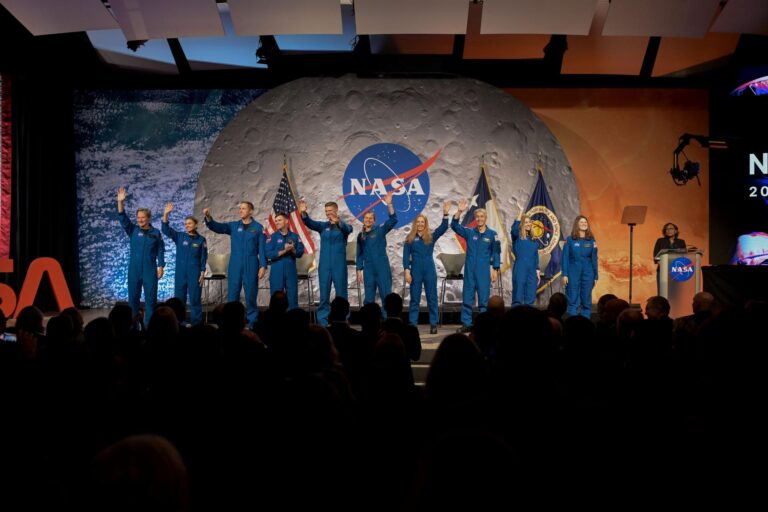
NASA Expands Moon Base Program
NASA has unveiled a series of awards and updates aimed at enhancing its Moon Base exploration and infrastructure initiatives. The announcement, made during the MAX POWER aerospace expo at Kennedy Space Center in Florida, emphasizes the agency’s commitment to establishing a sustained presence at the Moon’s South Pole through various commercial partnerships and technological advancements.
Investment in Lunar Delivery Services
As part of its efforts, NASA has selected eight companies to advance its Commercial Lunar Payload Services (CLPS) initiative, allowing them to compete for future lunar delivery missions. The companies chosen for the next phase include prominent names such as SpaceX, Blue Origin, and Lockheed Martin Space. Under the CLPS 2 framework, these vendors will be responsible for the management and operation of lunar landers that will transport scientific and technological payloads.
The CLPS 2 contract spans 10 years, with a maximum combined value of $10 billion. Additionally, NASA has increased the value of its existing CLPS 1.0 contract from $2.6 billion to $4.2 billion to support its initial Moon Base objectives, which will remain active through November 2028, with an option for additional deliveries extending to November 2033.
Development of a Nuclear Rover
In another significant development, NASA announced plans for the PROMISE rover, designed for exploration of the Moon’s South Pole. This nuclear-powered rover will be equipped with a range of scientific instruments to analyze the lunar surface, assess potential resources, and assist in future exploration efforts. The Jet Propulsion Laboratory will oversee the mission, utilizing components from existing Mars rover technology to streamline costs and development timelines. The rover will also include advanced computing systems and autonomous capabilities, with a planned launch in late 2028.
Transportation Infrastructure Enhancements
To establish an effective transportation network for the Moon Base, NASA has awarded contracts under its Venture-Class Acquisition of Dedicated and Rideshare (VADR) launch services program. These contracts, valued at approximately $1.3 billion, will support the integration and transport of Moon Base cargo. The mission types under this framework will focus on reducing risks associated with human spaceflight, preparing the lunar environment for future exploration, and testing navigation technologies in cislunar space.
SpaceX will also play a role in enhancing lunar communication capabilities through a Cislunar Communications Deployment Demonstration, set for 2028. This initiative aims to lay the groundwork for reliable communication networks that will be essential for astronauts and mission control.
Commercial Infrastructure Development
To support the Moon Base’s energy and communication needs, NASA plans to procure commercial components for a Mini-Communications and Solar Tower (miniCAST). Contracts have been awarded to various companies for energy storage, power generation, and wireless power transfer systems. Initial work will focus on assembling individual components, with plans for a more integrated system anticipated in the near future.
NASA’s ongoing efforts are part of a broader goal to facilitate a permanent human presence on the Moon, which will serve as a launchpad for future crewed missions to Mars. As the agency prepares for increasingly ambitious lunar missions, it aims to foster economic growth and advance scientific knowledge through its exploration initiatives.
Source: NASA