Mangrove Forests Show Signs of Recovery Globally
Recent research indicates a significant rebound in mangrove forests worldwide, a stark contrast to the long-standing narrative of loss and decline. The findings, published in the journal Science, suggest that since around 2010, there has been a global increase in mangrove coverage, particularly noted in regions such as Asia, Australia, and South America. Scientists utilized Landsat satellite imagery spanning from 1984 to 2023 to examine changes in the extent and density of mangrove canopies.
Historical Decline Followed by Rebound
Between 1984 and 2010, researchers documented a loss of nearly 3,000 square kilometers (approximately 1,200 square miles) of mangrove ecosystems. However, post-2010, there was a surprising recovery with an increase of about 2,000 square kilometers (770 square miles). Current mangrove forests exhibit denser canopies compared to those in 2010, signaling improved health and reduced degradation, especially in South America. Zhen Zhang, an environmental scientist at Tulane University, noted that two-thirds of the expansion stemmed from mangroves establishing themselves in new regions, while the remaining third resulted from restoration efforts in previously degraded areas.
Regional Successes and Challenges
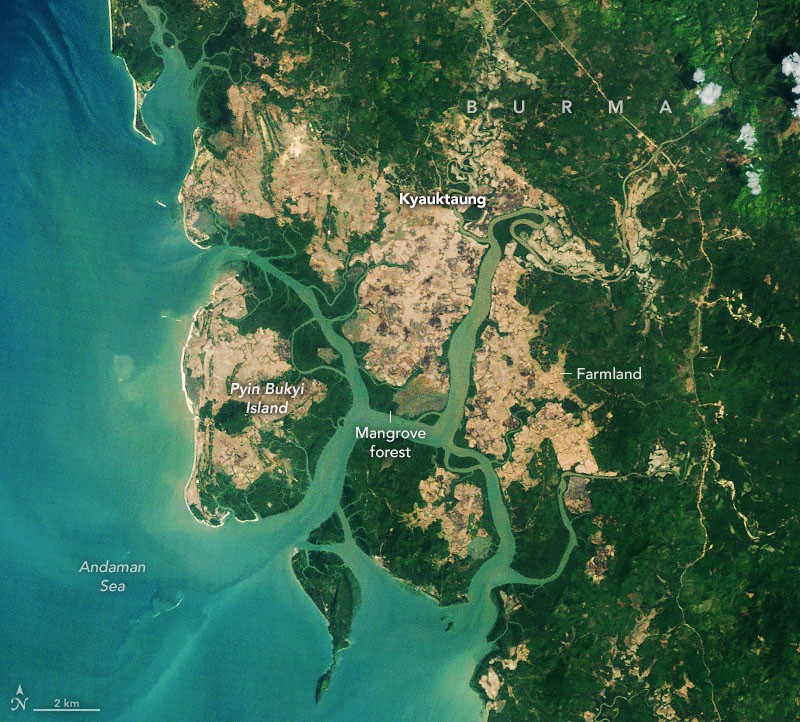
A significant turnaround was observed in Southeast Asia, particularly in Myanmar, where mangrove loss was prevalent during the 1980s and 1990s due to agricultural expansion and other human activities. However, the trend reversed around 2010, attributed to increased conservation awareness and restoration initiatives following the Indian Ocean tsunami in 2004, along with strengthened legal protections for these vital ecosystems. Despite the positive developments, Myanmar still faces challenges, having lost 28.6 percent of its mangrove area from the 1980s to 2010, though it has since regained about 10 percent.
The Ecological Importance of Mangroves
Mangrove trees, though typically small, play a crucial ecological role, sequestering up to four times more carbon than larger inland tropical forests. They provide essential protection for coastal areas against erosion and storm surges, while their unique root structures create habitats for a variety of marine species, including fish and crustaceans. Areas such as the Amazon River delta and northern Australia have witnessed successful colonization of new mudflats by mangroves, contributing to steady growth since the 1990s. Additionally, warming temperatures have allowed mangroves to expand into previously unsuitable areas, including parts of the southeastern United States.
Ongoing Risks Despite Gains
Nevertheless, certain regions have experienced greater losses than gains. The Niger Delta, for example, has seen a decline in mangrove area in West and Central Africa since 2010. In North America and southern Africa, widespread degradation has occurred due to the impacts of tropical cyclones on mangrove ecosystems. Zhang emphasized the need for ongoing conservation efforts, stating, “The global successes we’ve seen with mangroves during the past decade should not be seen as grounds for complacency.”
These developments highlight the importance of continued efforts to protect and restore mangrove forests, which are vital for both ecological health and climate resilience.
Source: NASA