Fayetteville State University Hosts FinTech & InsurTech Conference
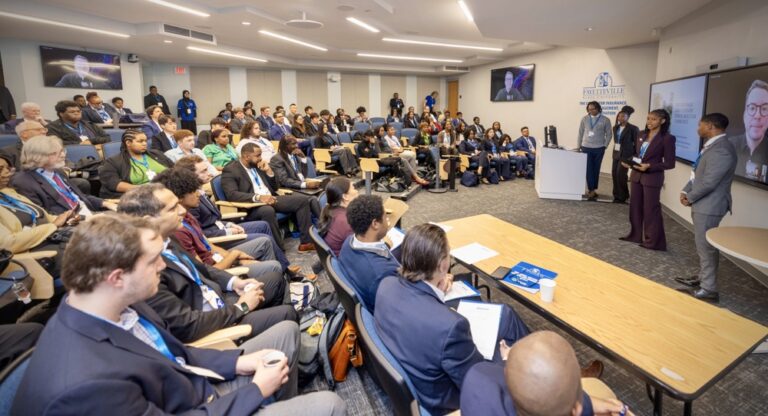
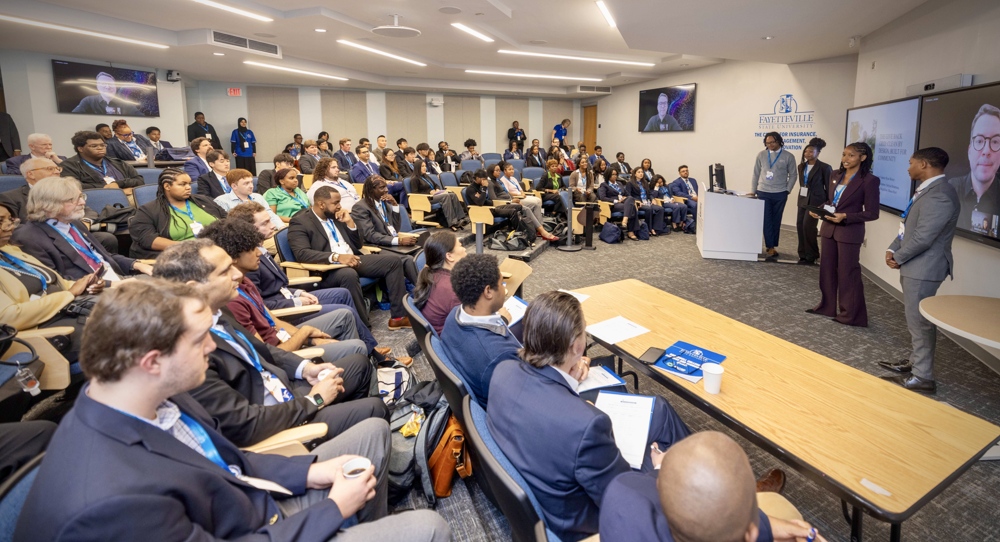
FAYETTEVILLE, N.C. – Fayetteville State University (FSU) recently gathered students and industry leaders for the third annual FinTech & InsurTech Conference on October 28-29. The event focused on the impact of artificial intelligence and technological advancements on the financial services sector, providing a platform for discussions about the future workforce.
The Broadwell College of Business and Economics at FSU organized the conference, which attracted participants including college students, industry executives, civic leaders, and state lawmakers. Attendees engaged in workshops, discussions, and competitions centered around finance and insurance.
Student Competitions and Awards
The conference featured student competitions with representation from ten colleges and universities, allowing participants to apply their academic learning while interacting with professionals in the field. FSU students achieved notable success by securing first place and a $3,000 prize in the Deloitte Case Competition, while Claflin University and Alabama A&M University finished second and third, respectively. Alabama A&M also excelled in the student pitch competition, taking the top two spots, with the University of North Carolina at Pembroke claiming third place.
Students presented innovative business solutions and defended their strategies before panels of industry professionals, bridging theoretical knowledge with real-world business challenges.
According to Burcu Adivar, Ph.D., associate dean of the Broadwell College of Business and Economics, the conference aims to connect business theory with contemporary technological practices, establishing FSU as a significant center for talent in financial and risk management.
Workshops and Keynote Address
Interactive workshops at the conference allowed students to delve into the use of artificial intelligence for market analysis and financial decision-making, utilizing FSU’s Bloomberg Lab, which features 20 terminals. Participants also received insights into insurance agency operations from representatives of the Independent Insurance Agents of North Carolina.
A fireside chat with recent graduates provided attendees with valuable perspectives on transitioning from academic life to the professional realm, complemented by a career fair that facilitated direct engagement with potential employers.
Darnell Wooten, a junior at Winston-Salem State University, remarked on the rapid technological changes within the finance and insurance sectors, noting the abundance of opportunities for students. He expressed appreciation for the chance to connect with industry professionals, enhancing his understanding of necessary preparations for his future career.
Insights on Leadership and Technology
The conference also featured a keynote address from Eric Bailey of Strategic Innovation Group, who spoke about the complexities of decision-making in an era heavily influenced by technology. Teena Piccione, the secretary of the North Carolina Department of Information Technology, discussed the transformative effects of artificial intelligence on finance and insurance. Other sessions focused on digital assets and the importance of maintaining trust as technological advancements continue to evolve.
Adivar emphasized that while AI serves as a powerful analytical tool, it does not replace the need for ethical leadership and strategic risk assessment.
Expanding Workforce Opportunities
The conference is part of broader initiatives by the Broadwell College of Business and Economics aimed at enhancing workforce readiness. Collaborations with corporations, such as MedPro Group’s support for the university’s risk management and insurance program and the federally funded HBCU STEM Scholars program, are designed to provide students with practical experiences in high-demand fields.
With its third iteration, the annual conference continues to strengthen the connection between academic learning and industry practices, enabling students to engage directly with the professionals and organizations that will shape their future careers.
Source: Fayetteville State University