Community Engages with Agroecology Education Farm
On a pleasant Wednesday evening at the Agroecology Education Farm, Rachel Raineri enjoyed a freshly brewed tea made from recently harvested herbs, including lemon balm, mint, and Thai basil. Sipping from her mug, she described the drink as “herby” and “fresh.”
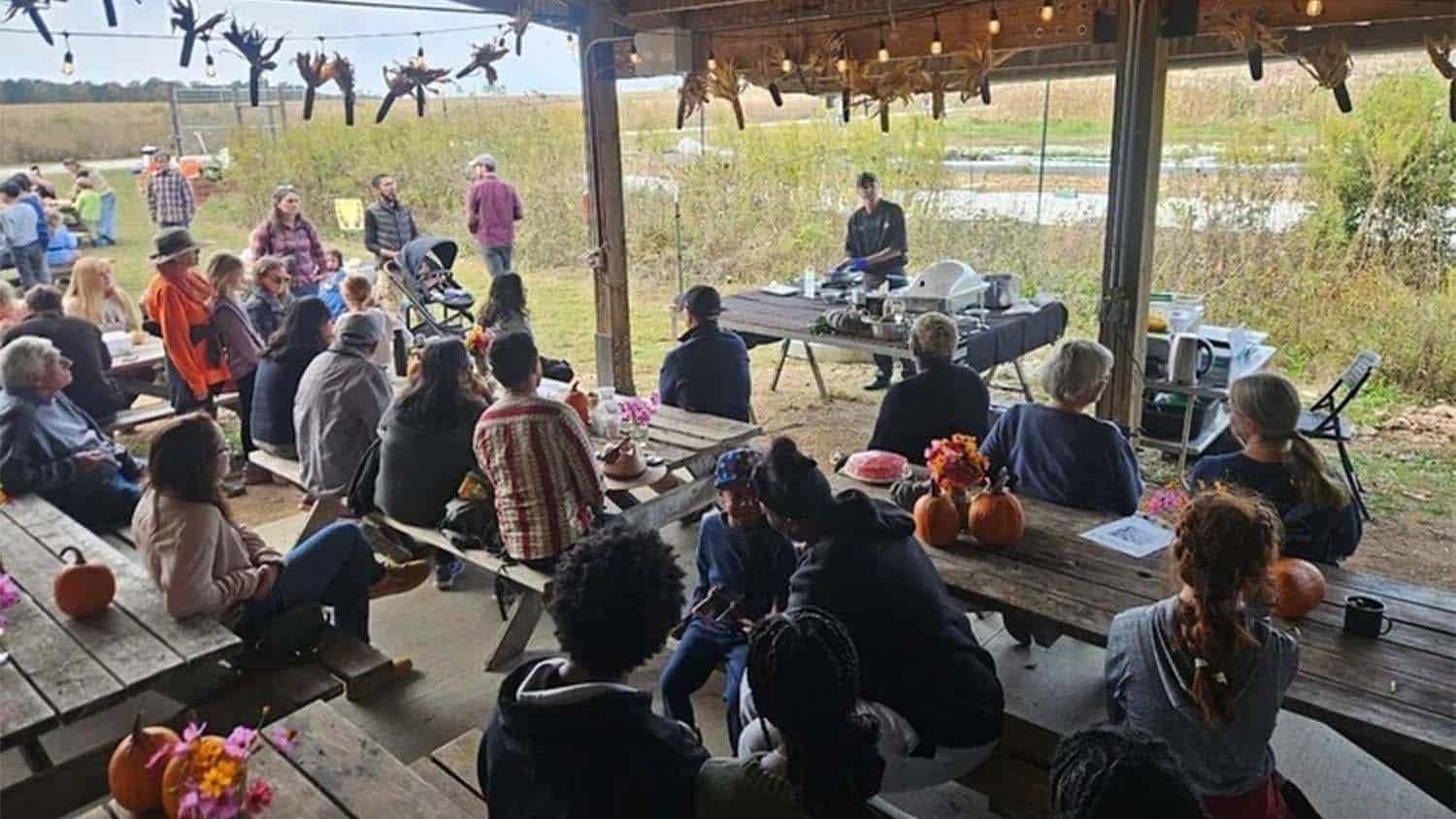
Raineri, who works as a research and development project manager at the Wilson College of Textiles, was among approximately thirty participants in a tea workshop held earlier this month. The event showcased how to create refreshing beverages from various herbs and spices. Attendees observed a collection of fresh ginger and turmeric alongside bowls filled with dried chamomile and rosehips, while a whiteboard detailed the health benefits of various herbs, including lemongrass for immune support and basil for stress relief.
“It was so nice to just go out there and see all the grasshoppers and bees and all the plants,” Raineri remarked. “Touch them, smell them, feel them. And then drink them right in the cup.”
Educational Opportunities Abound
The tea workshop is just one of many educational activities offered at the farm, which also hosts sessions on making kimchi, crafting flower-pressed bookmarks, yoga classes, and regular volunteer days. A significant event on the calendar is the Harvest Fest scheduled for October 24.
Farm manager Sara Snyder emphasized the farm’s mission of education. “I always tell people we’re an education farm, so people at NC State are our audience,” Snyder stated. “The farm exists to serve NC State, and I always want people to think of it as their farm. I’m mostly here to carry out what people are interested in seeing, learning and doing.”
Produce and Community Impact
The farm cultivates around fifty varieties of fruits and vegetables during the academic year, with most produce supplied to NC State Dining. Alongside common crops like watermelon and potatoes, the farm also grows unique items such as long red noodle pole beans, native to China. Produce not utilized by the dining halls is often directed to the Feed the Pack Food Pantry, providing much-needed resources to international students who frequent the service.
“There are a lot of international students who use Feed the Pack,” Snyder noted, mentioning how the more unusual offerings can be especially appreciated by those seeking familiar tastes from their home countries.
The Agroecology Education Farm generates over 10,000 pounds of produce annually from just 1.14 acres, utilizing a market gardening technique that allows for multiple crop rotations throughout the year. This approach maximizes space and yields without the need for large agricultural machinery.
“We manage the space very closely, so we’re able to produce a large amount in a small amount of space,” Snyder explained.
Volunteer Engagement and Learning Opportunities
Last year, the farm welcomed approximately 2,500 visitors, one-third of whom were volunteers. These individuals assist with various tasks such as harvesting, seeding, and crafting signs. Snyder acknowledged that experience is not a requirement for volunteers and mentioned that mistakes are part of the learning process.
“That’s part of an education farm, and that’s why we wouldn’t be profitable,” Snyder said. “But that’s not necessarily our purpose; our purpose is to educate.”
As preparations for the fall planting continue, volunteers are helping sow baby bok choy, kale, and carrots, while also harvesting summer crops.
Excitement Builds for Harvest Fest
Harvest Fest is anticipated as a highlight of the season, described by Snyder as “the funnest day to be at the farm.” The event will feature craft activities such as pumpkin carving and painting, a cooking demonstration by an NC State Dining chef using farm produce, and an interactive soil pit for children to explore.
“It’s a great family-friendly event, which is nice for faculty and staff who might have children and want to come out and have fun on the weekend,” Snyder noted.
In addition to Harvest Fest, the Agroecology Education Farm offers a variety of programs, including year-round yoga classes open to both the NC State community and the public. Snyder hopes that first-time visitors leave with a better understanding of sustainable agriculture and a connection to the community.
“I want them to take away community — being outside helps you connect with people, helps you connect with nature, connect with yourself,” Snyder added.
Although Raineri will be unable to attend this year’s Harvest Fest, she recalls positive experiences from her time volunteering and participating in yoga classes at the farm. “I love natural stuff, and I love the farm,” she stated. “Any time I see an event at the agroecology farm, I perk up.”
Source: NC State University