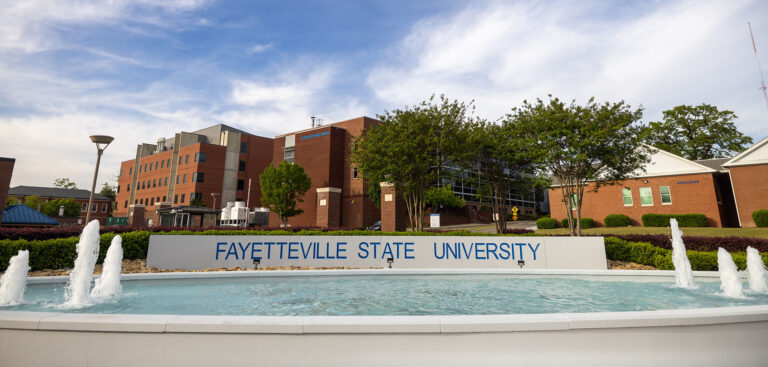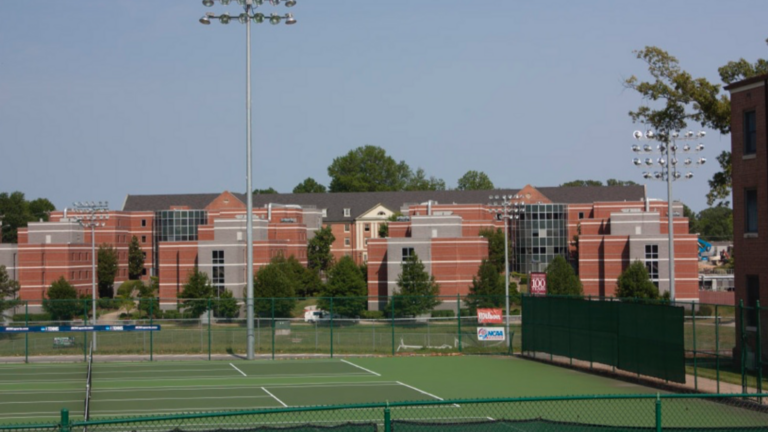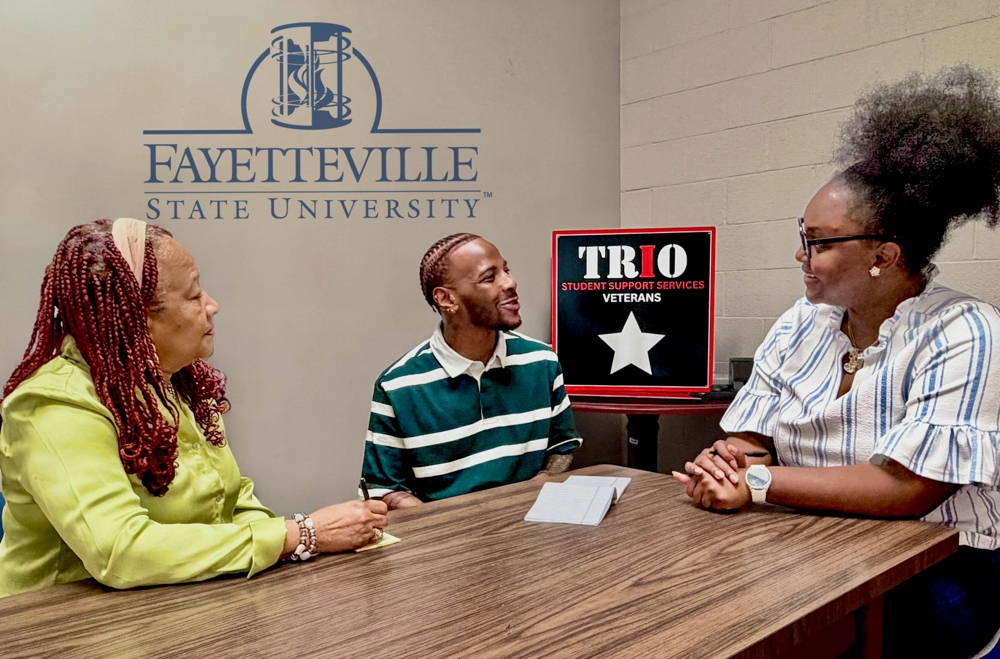
FAYETTEVILLE, N.C. – Fayetteville State University’s TRIO Student Support Services Veterans program has successfully reached its full capacity of 120 students just a year after its inception. This marks a significant achievement for the federally funded initiative, which was launched in September 2025 with a $1.3 million grant from the U.S. Department of Education.
The program aims to assist military veterans in their transition to college by offering academic support, financial literacy education, and career development resources. Since its establishment, six students have graduated, with three of them pursuing advanced degrees.
Challenges of Transitioning to Higher Education
Gabriel Harrington, a junior at FSU and a former U.S. Army service member, shared her experiences of adapting to the academic environment. After serving six years in the military, Harrington initially struggled with the transition, stating, “One of the biggest challenges was realizing that being capable and being comfortable are two different things.” She has previously earned an associate degree in health care management and a cosmetology license before deciding to pursue a bachelor’s degree in business administration at FSU.
Harrington noted that the shift from military structure to college life required her to develop independence and make decisions without a clear path. Her reflections highlight the unique challenges veterans face when entering higher education.
Leveraging Military Experience for Academic Success
LeCory Coleman, another participant in the program and a junior majoring in psychology, echoed similar sentiments. Coleman described how veterans possess valuable skills such as discipline and leadership, which may not always align with the academic framework of universities. Ka’Nijuh Tillery, the program’s academic support coordinator, emphasized the importance of recognizing and translating military experiences into educational and career opportunities. “Many already are professionals,” Tillery noted.
The program’s focus on helping veterans apply their military backgrounds to civilian life has begun to yield positive outcomes. Among the program’s inaugural graduates, three are pursuing further education, including an MBA and a law degree. Early indicators suggest the program is effectively supporting student veterans in their academic and professional journeys.
Building Community and Leadership
For veterans like Coleman, the academic journey is intertwined with personal growth and community engagement. Coleman remarked on the importance of adapting to the independence required in college and balancing various life responsibilities. He also highlighted how the program encouraged him to become more involved in campus activities. “It has encouraged me to become involved, build relationships, take on leadership opportunities, and become part of the FSU community,” he said.
Harrington also expressed the value of finding a supportive community within the program. She stated that TRIO offered her a space where she could connect with others who share similar experiences, alleviating the sense of isolation that can accompany the transition from military to civilian life.
Looking Ahead
As the TRIO SSS Veterans program moves into its second year, Fayetteville State University plans to enhance career development and networking initiatives while continuing to provide tailored support to its participants. Future programming will focus on helping veterans convert their military qualifications into civilian career paths, honing professional skills, and adapting to new workplace technologies. The program aims to gather more comprehensive data on student outcomes to better assess its long-term impact.
The TRIO Student Support Services Veterans Office is located in the Joseph L. Knuckles Building, Room 203, and can be reached by phone or email for further inquiries.
Source: Fayetteville State University