Understanding Kelvin Waves
Kelvin waves are a unique phenomenon in oceanography that are challenging to observe directly due to their vast scale and sluggish movement. Unlike conventional ocean waves that crash onto shorelines, Kelvin waves manifest in a more subtle manner. They do not break, making them less noticeable to the naked eye.
Satellite Observations
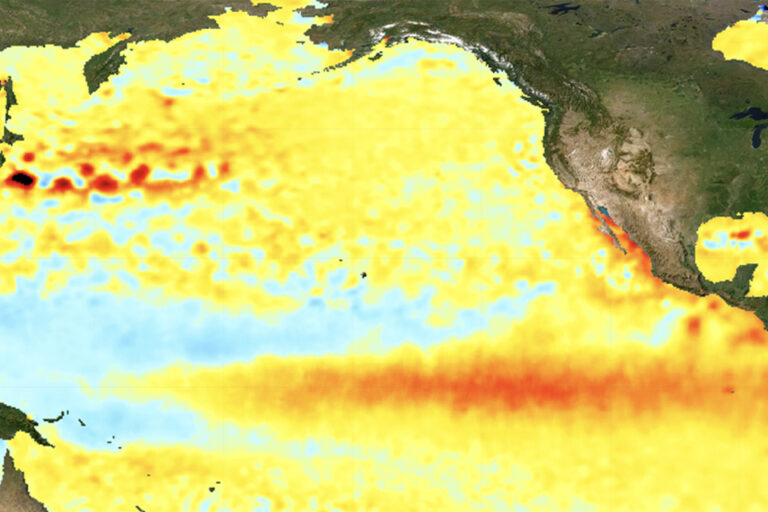
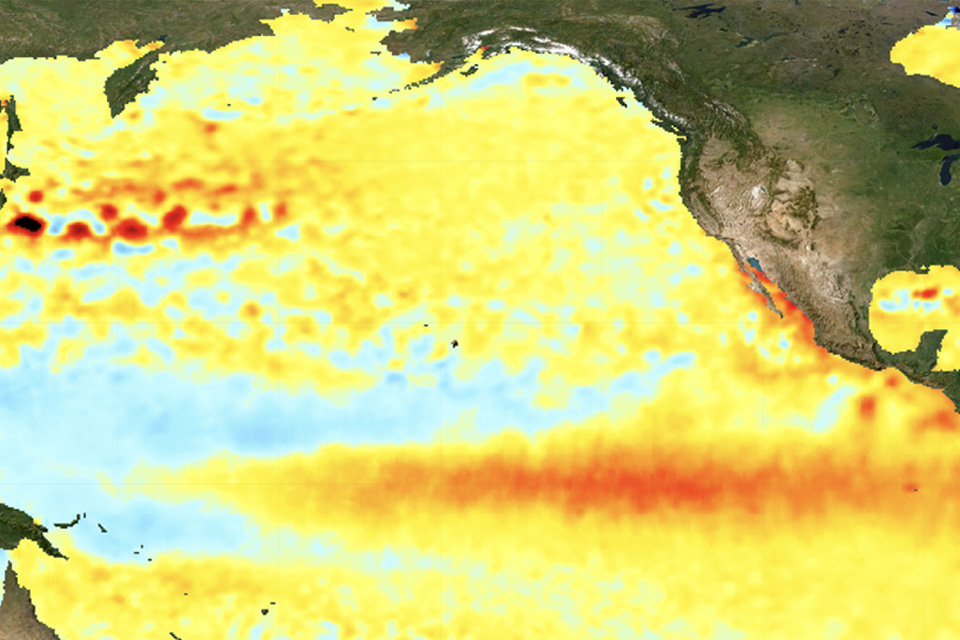
Recent satellite radar altimetry measurements have provided insight into the behavior of Kelvin waves by highlighting their impact on sea surface levels. In the visual data, variations in the ocean surface compared to long-term averages are depicted. Areas marked in yellow indicate sea surface heights that are elevated between 0 to 0.25 meters (0 to 10 inches), while regions shown in red and orange signify heights that range from 0.25 meters to at least 1 meter (10 inches to at least 40 inches). This color-coded representation illustrates the fluctuations associated with Kelvin waves.
Connection to Climate Patterns
Kelvin waves play a significant role in various climate phenomena, including El Niño and La Niña events, which are part of the El Niño-Southern Oscillation (ENSO). Their influence on ocean temperatures and currents contributes to the broader understanding of global climate dynamics.
Source: NOAA