New Authentication Method for Virtual Reality Developed
Researchers from North Carolina State University have introduced a novel password authentication system designed for virtual reality (VR) environments, enabling users to select directions instead of traditional numeric entries. This innovative technique offers the same number of combinations as a six-digit password while enhancing memorability for users.
Yuxuan Huang, the lead author and a postdoctoral researcher at NC State, stated that while passwords are crucial for user privacy and security, they often lead to forgetfulness or insecure choices. Huang explained that immersive VR settings provide a unique opportunity to utilize directional movements within the environment to create memorable passwords.
Adaptive Direction-Based Authentication Explained
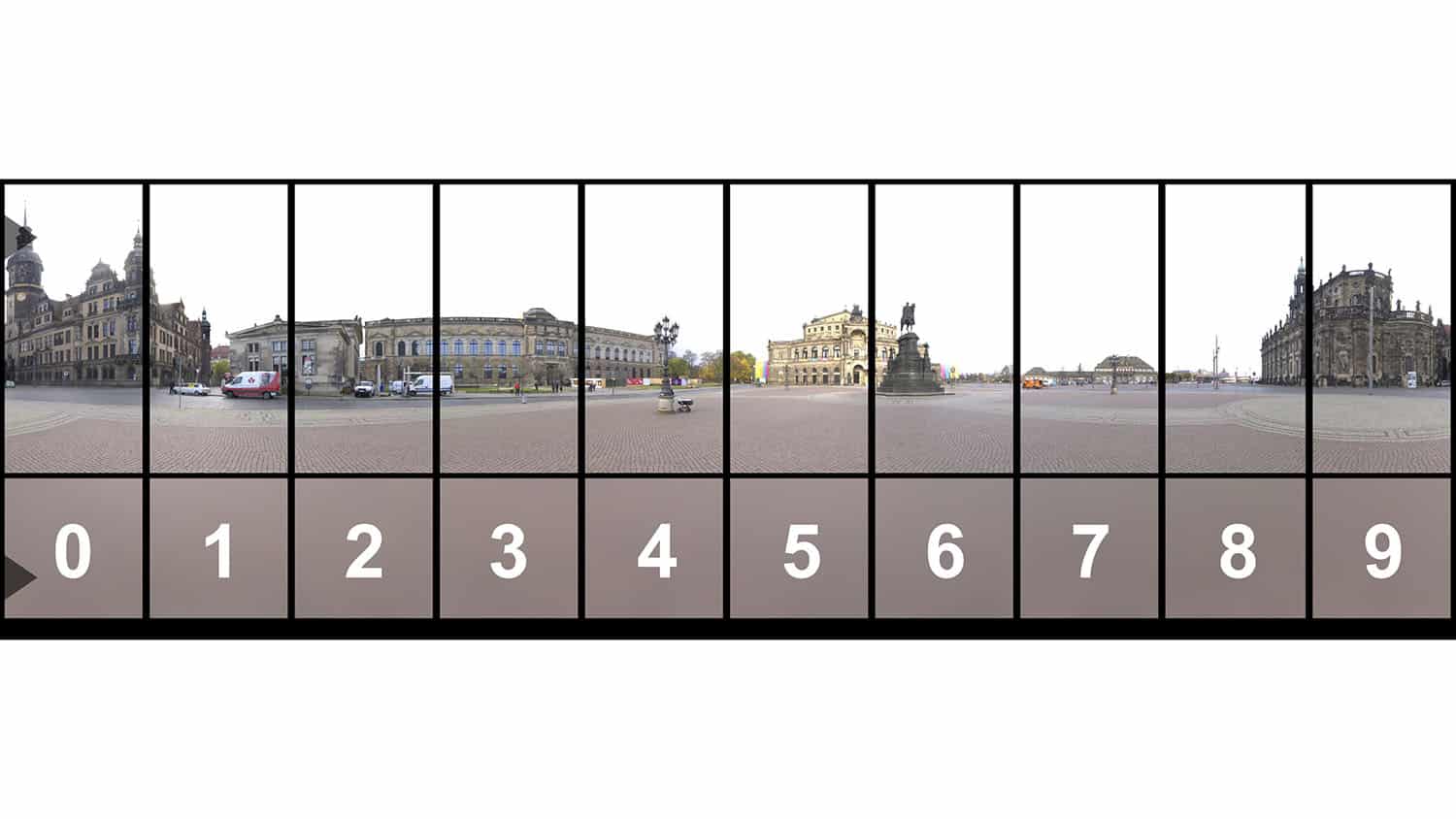
The new method, termed Adaptive Direction-Based Authentication (ADBA), involves users navigating through six distinct virtual environments sequentially. In each setting, participants select from ten potential directions, with each direction corresponding to a numeric value.
During the login process, users can either choose directions in the virtual environments, which is more memorable, or enter a conventional six-digit code, which is quicker. Qiao (Georgie) Jin, an assistant professor of computer science at NC State and co-author of the study, highlighted that this dual-functionality allows users to prioritize memorability first and speed later.
Study Participants and Findings
The research involved 66 participants, aged 18 to 74, divided into three groups. Each group utilized a different authentication method: one employed ADBA, another created a standard six-digit password, and the last group used a randomly assigned six-digit code.
The study was structured into two phases, a “low-frequency” period where participants logged in twice over 12-16 days, and a “high-frequency” period with four entries in 4-8 days. Huang noted the significance of conducting the study remotely to reflect real-life scenarios, which is vital for user experience research.
Results indicated that those using ADBA had better success at remembering their passwords compared to the other groups. Participants also reported that the ADBA method was easier to recall, confirming both objective and subjective advantages in memorability.
Efficiency Comparisons and User Preferences
While the ADBA technique took longer to enter than traditional numeric passwords, participants perceived it as more efficient. This perception stemmed from fewer instances of forgetting passwords or needing multiple attempts to log in. Jin remarked that although ADBA required about five times longer to input than a PIN, participants consistently chose the directional method, appreciating its reliability.
Huang emphasized the importance of carefully selecting the virtual environments used in ADBA, as they must provide enough distinct visual detail for users to remember their chosen directions while maintaining a level of uniformity to prevent others from guessing.
Looking Ahead
The researchers are optimistic about the implications of this technique for enhancing secure authentication in VR applications. The study’s findings will be presented at the 32nd ACM Symposium on Virtual Reality Software and Technology from November 16 to 18 in Sendai, Japan. The paper was co-authored by Tongyu Nie, Victoria Interrante, and Evan Suma Rosenberg from the University of Minnesota.
Source: NC State University