NASA to Celebrate Return of Expedition 74 Crew
NASA is set to host a public event at Space Center Houston to welcome back the Expedition 74 crew following their extensive mission aboard the International Space Station. The event, scheduled for 6 p.m. CST on November 17, will take place at the visitor center of NASA’s Johnson Space Center. Astronauts Jessica Meir, Jack Hathaway, and Chris Williams, European Space Agency (ESA) astronaut Sophie Adenot, as well as Roscosmos cosmonauts Sergey Kud-Sverchkov and Sergei Mikaev, will discuss their experiences and achievements during the mission. An awards ceremony honoring significant contributors to the mission will follow the discussion.
Media Opportunities and Crew’s Journey
Before the public event, media representatives will have the chance to conduct interviews with the astronauts. Requests for in-person interviews must be submitted to the JSC Newsroom by 5 p.m. on November 16.
The return of Williams, Kud-Sverchkov, and Mikaev to Earth occurred on July 26 after launching from the Baikonur Cosmodrome in Kazakhstan aboard the Soyuz MS-28 spacecraft on November 27, 2025. The trio completed a 241-day mission, orbiting the planet 3,856 times and covering over 102 million miles. This marked the initial spaceflight for Williams and Mikaev, while Kud-Sverchkov was on his second mission.
Meanwhile, Meir, Hathaway, and Adenot launched on February 13 aboard a Dragon spacecraft as part of NASA’s SpaceX Crew-12 mission. After spending more than seven months in space, they safely returned to Earth on October 8, splashing down in the Pacific Ocean near Los Angeles.
Scientific Research Achievements
Throughout their 237-day mission, the crew collectively traveled over 100 million miles and completed more than 3,792 orbits around Earth. They dedicated over 1,400 hours to various scientific research and technology demonstrations aboard the station. Their efforts contributed to advancements in areas such as in-space manufacturing, including metal and tissue 3D printing, and human health studies investigating the effects of long-duration spaceflight.
Research conducted by the crew encompassed a variety of topics, including blood flow studies and evaluations of piloting skills under differing gravitational conditions. They also activated a new compact exercise system and assessed life-support and environmental systems critical to future exploration missions under NASA’s Artemis program.
In addition to these scientific endeavors, the astronauts worked on pharmaceutical research aimed at crystallizing proteins for cancer treatments, developing targeted tumor therapies, and cultivating stem cells for therapeutic use. They also managed visiting spacecraft, maintained essential systems on the International Space Station, and engaged audiences globally through live educational events and stunning imagery that highlights the significance of scientific discovery and collaboration in space.
Legacy of the International Space Station
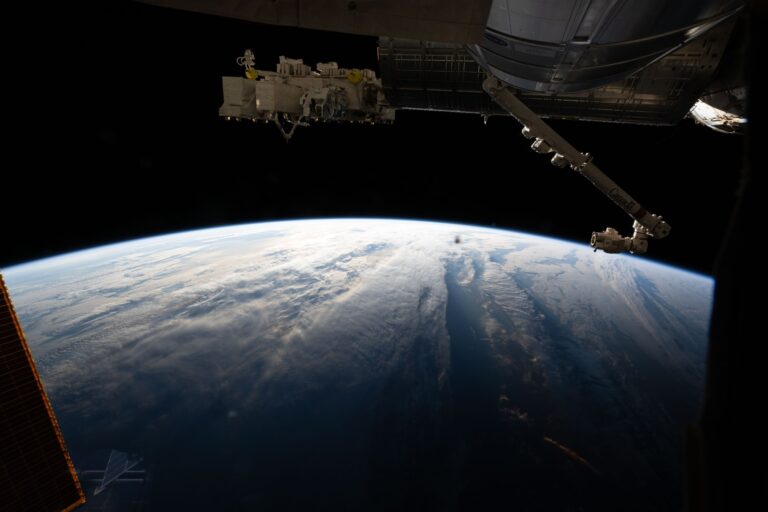
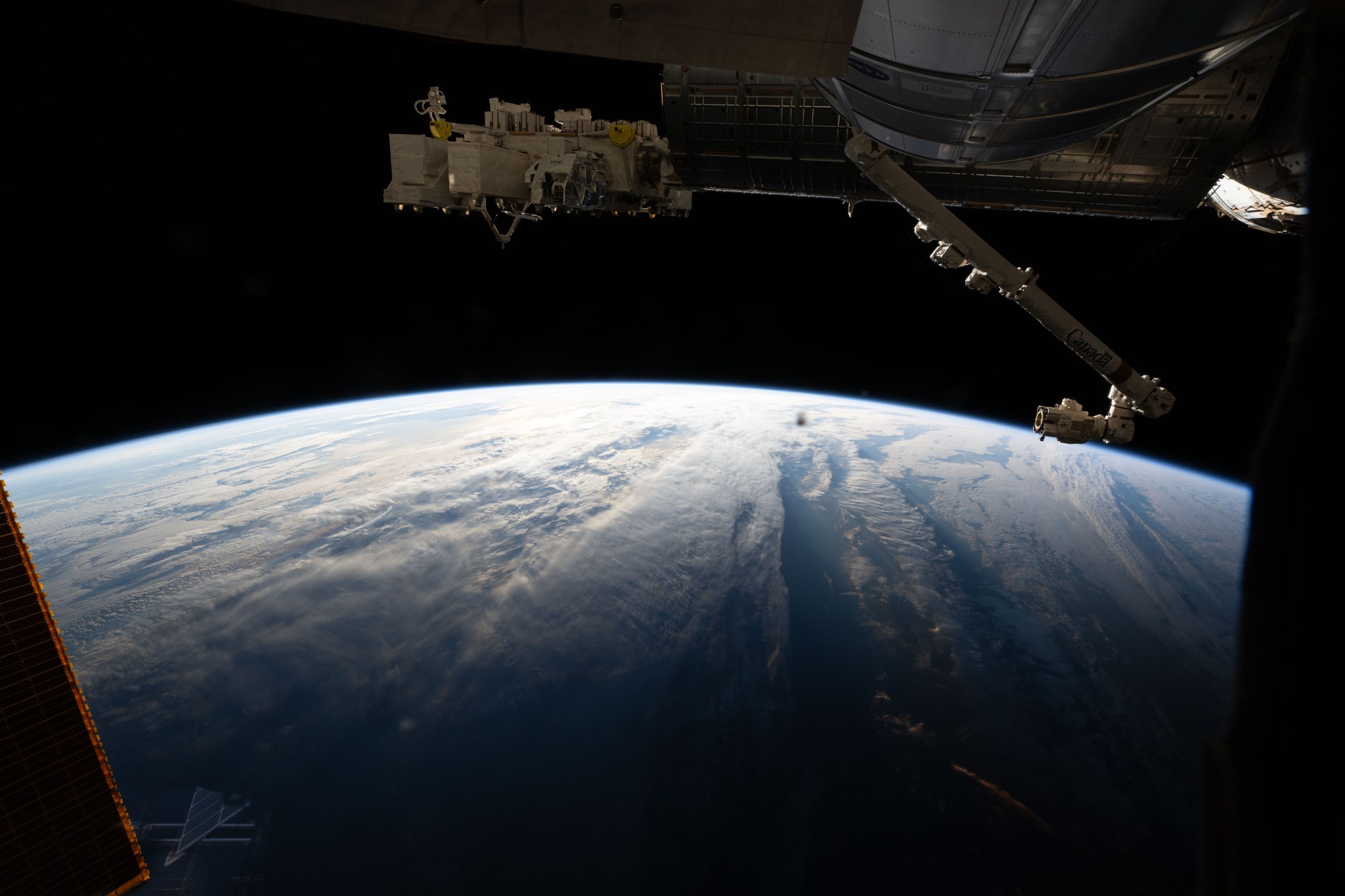
For over 26 years, the International Space Station has served as a platform for continuous human habitation, fostering scientific advancements that would be impossible on Earth. The space station plays a crucial role in helping NASA tackle challenges associated with human spaceflight, while also enhancing commercial opportunities in low Earth orbit. Furthermore, it lays the groundwork for future long-duration missions to the Moon and Mars as part of the Artemis program.
Source: NASA