NC State Launches AI Hub to Foster Collaboration
Artificial intelligence is reshaping the educational landscape at North Carolina State University, influencing student learning, research methodologies, and community engagement. In light of the rapid advancements in AI technology, questions about its appropriate use are becoming increasingly relevant.
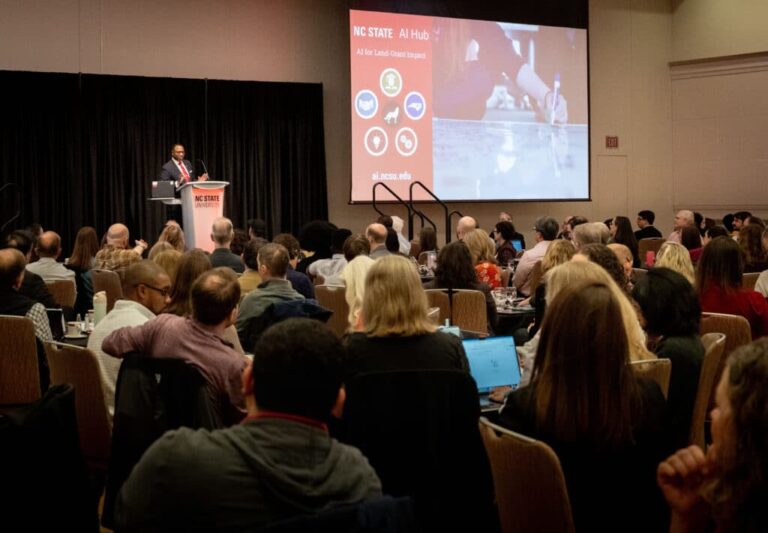
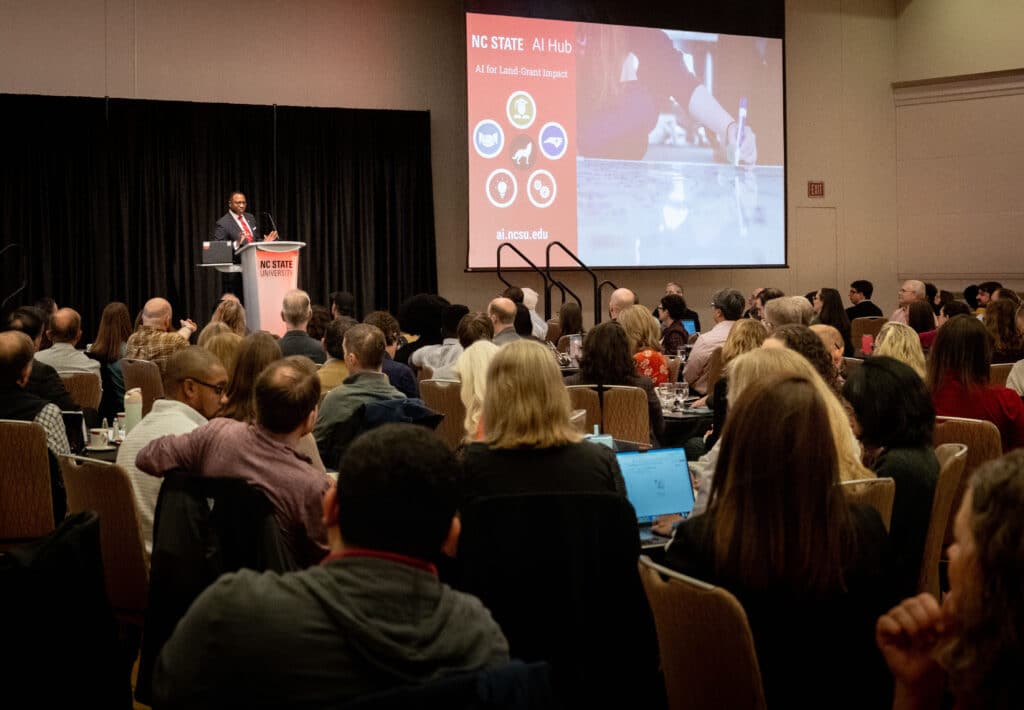
On November 2, NC State hosted its inaugural meeting for the newly established AI Hub, a university-wide initiative aimed at enhancing interdisciplinary collaboration and addressing common AI-related challenges. The hub seeks to leverage the university’s existing strengths while identifying areas for investment that promise significant benefits.
Krista Walton, vice chancellor for research and innovation, and Provost Jim Pfaendtner co-lead the initiative. Attendees included university leaders, faculty, staff, and students who gathered to explore the implications and future possibilities of AI within the institution.
Chancellor Highlights University’s Mission
During the opening session, Chancellor Kevin Howell emphasized that the AI Hub aligns with the university’s foundational goals, which include educating students, promoting discovery, and boosting North Carolina’s workforce and economy. He stated, “Our responsibility is not only to embrace emerging technologies, but to harness their potential to advance our mission and make a meaningful difference in the lives of all those we serve.”
While acknowledging some concerns regarding AI, Howell expressed confidence in the university’s capacity to utilize this technology for problem-solving.
Innovative Research Initiatives
Following Howell’s address, Vice Chancellor Walton highlighted how AI is transforming research capabilities and setting new expectations for universities. She cited NC State’s participation in the U.S. Department of Energy’s Genesis Mission, which aims to leverage AI for advancements in energy, scientific discovery, and national security. NC State is spearheading three projects that focus on utilizing AI to tackle significant scientific questions.
One project aims to assist scientists in utilizing advanced computing hardware, while another addresses the need for cybersecurity measures to protect research data. The third initiative explores cosmic phenomena through simulations involving neutron star mergers and supernovae.
Walton remarked on the growing trend among funding agencies to prioritize interdisciplinary projects that integrate AI, underscoring the hub’s role in facilitating collaboration and addressing shared needs within the university.
Building a Unified Vision
Provost Pfaendtner outlined the guiding principles of the AI Hub, which aims to unite NC State’s diverse capabilities toward common objectives. He acknowledged the rapid pace of AI development and the associated challenges, asserting the university’s commitment to helping the broader community navigate these changes responsibly.
He identified three core concepts for the hub: connecting expertise and resources, identifying institutional needs, and investing strategically to translate AI knowledge into tangible outcomes for the university and the state.
Pfaendtner also presented five platforms that will serve as a framework for collaboration across disciplines, including enhancing student experiences, promoting AI-enabled research, developing AI literacy, fostering industry partnerships, and applying AI knowledge to benefit communities.
Encouraging Open Dialogue on AI
The hub aims to promote academic freedom and facilitate discussions about the ethical implications of AI. Walton stressed the importance of involving students in these conversations, ensuring they have a solid understanding of AI’s application in their work.
As the meeting concluded, Pfaendtner reiterated the need for critical thinking and problem-solving skills as essential components of NC State’s educational mission. He emphasized, “Above all else, we want our graduates to be prepared for the world they enter and be equipped to shape the world they want to see.”
Source: NC State University