Halloween Celebrations in Space
While the International Space Station (ISS) does not receive trick-or-treaters, the astronauts aboard still embrace the Halloween festivities. Crew members often don costumes that are either creative or spooky, utilizing materials available on the station to craft their outfits.
Past Celebrations Highlighted
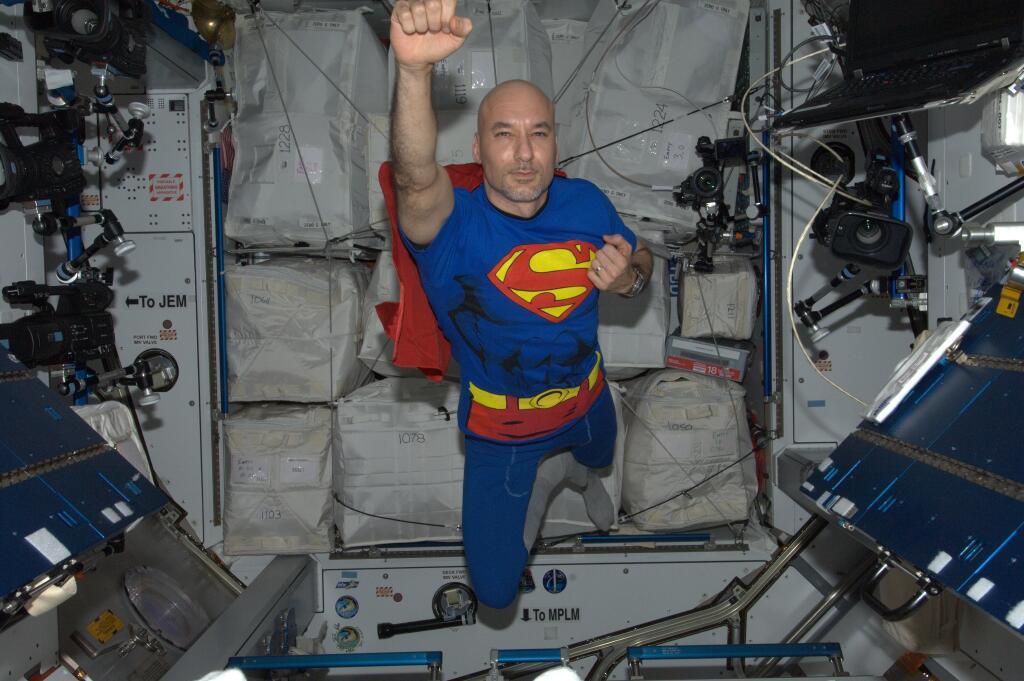
Over the years, ISS crews have showcased their Halloween spirit through various themed costumes. For instance, during Expedition 37, ESA astronaut Luca Parmitano fulfilled his dream of dressing as Superman. In 2025, a group of astronauts from Expedition 73 celebrated with imaginative costumes.
Most recently, for Halloween in 2023, astronauts Jasmin Moghbeli, Satoshi Furukawa, Loral O’Hara, and Andreas Mogensen participated in the festivities. Previous celebrations included the 2022 Expedition 68 crew, who dressed as characters from popular video games and cartoons, using stowage containers to enhance their costumes while holding makeshift trick-or-treat bags.
Team Spirit and Creativity
During Expedition 66, NASA astronaut Shane Kimbrough and his fellow crew members, including Thomas Pesquet of ESA and Akihiko Hoshide of JAXA, displayed their Halloween cards, demonstrating their camaraderie. The Expedition 61 crew in 2019, with astronauts Christina Koch and Luca Parmitano, also engaged in the holiday spirit.
Notably, during Expedition 57, Flight Engineer Sergei Prokopyev of Roscosmos dressed as Elvis Presley, while Commander Alexander Gerst of ESA took on the role of Darth Vader, and Flight Engineer Serena Auñón-Chancellor of NASA portrayed a mad scientist in a fun photo taken inside the Kibo Japanese Experiment Module.
Ongoing Scientific Endeavors
The ISS continues to serve as a crucial scientific platform, supporting research and experiments necessary for humanity’s future explorations of space. The ongoing creativity and teamwork displayed by astronauts during holiday celebrations reflect their ability to maintain morale and foster a sense of community, even while orbiting Earth.
NASA encourages interest in the station’s life and research, providing a glimpse into over 25 years of continuous human presence in space.
Source: NASA