Historic Donation for Fayetteville State University
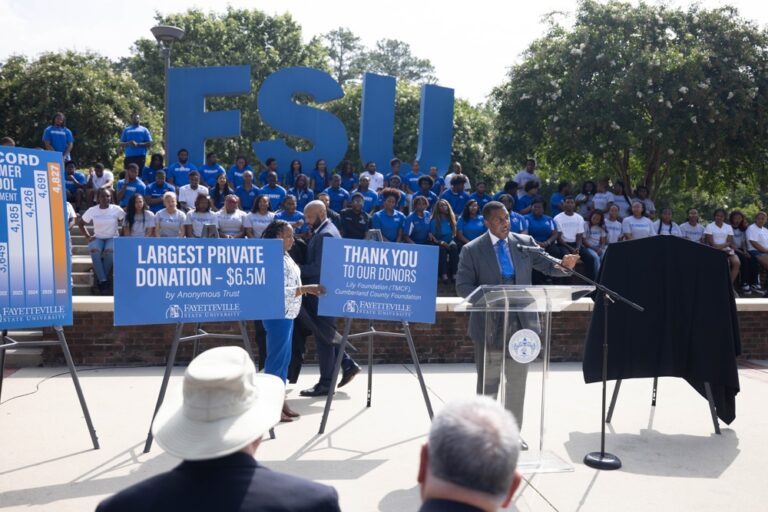
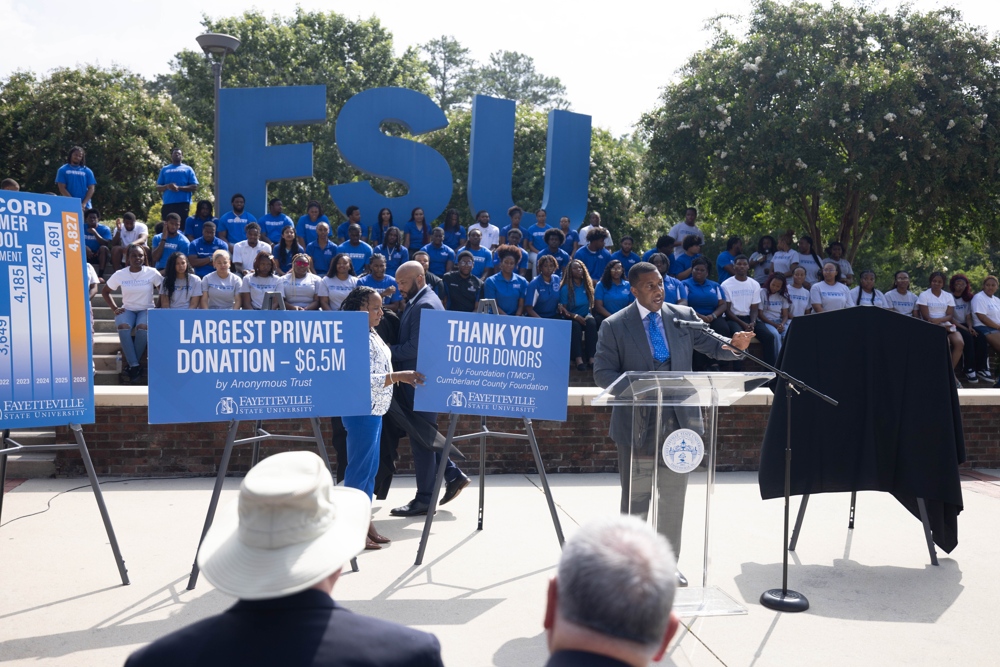
FAYETTEVILLE, N.C. — Fayetteville State University (FSU) has announced a significant $6.5 million donation from Anonymous Trust, marking the largest financial contribution in the institution’s history. Chancellor Darrell T. Allison revealed this milestone alongside a record summer enrollment of 4,827 students during a special event on campus.
The donation will cover tuition, housing, and meals for students participating in FSU’s 30-60-90 Free Summer School Program. This marks the trust’s second substantial contribution to FSU within three years, following a commitment of over $5.8 million in 2022 that supported student success initiatives. The Anonymous Trust focuses on uplifting rural and underserved communities in eastern North Carolina by investing in both grassroots organizations and larger partnerships, making it a vital ally in FSU’s three-semester model.
State Investment in Education
During the announcement, Chancellor Allison expressed appreciation for the trust’s generosity and the support from state leaders after the recent signing of North Carolina’s budget bill. This new legislation ensures a recurring annual budget allocation of $2 million to bolster the 30-60-90 initiative, forming part of a broader $16.5 million state funding package for FSU.
“Today’s announcement represents what can happen when students are given the resources and opportunity to keep moving forward,” Allison stated. He acknowledged the North Carolina General Assembly’s leadership, specifically mentioning House Speaker Destin Hall and Senate President Pro Tempore Phil Berger, along with Gov. Josh Stein, for their commitment to enhancing degree completion rates at Fayetteville State.
The additional state funding is expected to enhance FSU’s ability to offer summer opportunities in light of increased participation, reinforcing the collaboration among the university, private contributors, and state officials in supporting students to earn credits while managing educational expenses.
Impact of the 30-60-90 Initiative
“This investment allows Fayetteville State to build upon a model that has already demonstrated measurable value for our students,” Allison noted. He emphasized the responsibility to leverage these resources effectively to improve student outcomes and help more students graduate within four years.
The 30-60-90 initiative is structured around critical academic milestones that students need to achieve to stay on track for graduation. This includes reaching 30 credit hours for sophomore status, progressing to 60 for juniors, 90 for seniors, and finally 120 for degree completion.
Shun Robertson, senior vice president for Strategy and Policy at the UNC System, described the program as a proven strategy for student success that helps students maintain academic momentum, reduces time to degree, minimizes debt, and supports timely graduation.
For students facing financial challenges, summer classes can help them avoid delays caused by incomplete prerequisites or missed courses. Participants can earn up to seven credits during the summer, which significantly lowers the chances of needing an extra semester to graduate.
Student Experiences and Financial Benefits
Brooklyn Edwards, a senior nursing student, shared how the 30-60-90 program has kept her on track for graduation. “Because of the 30-60-90 summer school initiative, I’ve been able to stay on track to graduate within four years, while successfully navigating the rigorous demands of nursing school,” she explained, highlighting her focus on academic pursuits without the burden of summer tuition costs.
Psychology student Alecia O’Kelly expressed her appreciation for the continued investment from state leaders, noting its importance for students like herself.
The program has also shown significant financial advantages. Since its inception, FSU estimates that students have collectively saved over $4 million in summer loan borrowing. Furthermore, the average summer loan amounts for full-time students have decreased by approximately 75% since 2020.
The announcement comes as FSU works to enhance its four-year graduation rates, which have improved from 19% to 25% for the 2021 entering cohort. The university aims to reach a graduation rate of 50% by 2031.
“Our students are showing us that summer is an essential part of their academic journey,” remarked Baldwin, vice chancellor for strategic enrollment, commenting on the record-breaking enrollment and its implications for future degree completion.
Source: Fayetteville State University