New Insights from Hubble’s Gravitational Lensing Observations
NASA’s Hubble Space Telescope has captured a remarkable image that highlights the phenomenon of gravitational lensing, offering insights into the intricate workings of the universe. The photograph features a prominent barred spiral galaxy along with a vivid gravitational lens in the lower-right corner, showcasing how a foreground galaxy can magnify and distort the light from a more distant background galaxy.
Gravitational lensing occurs when the mass of a cosmic object, such as a galaxy, warps spacetime, bending the light that passes around it. This effect is similar to how a magnifying glass focuses light. The image illustrates a chance alignment between the foreground and background galaxies, allowing the light from the background galaxy to curve around the foreground galaxy.
Details of the Cosmic Alignment
The foreground elliptical galaxy, situated approximately 4.5 billion light-years away, emits light that began its journey toward Earth when the solar system was still forming. In contrast, the background galaxy lies nearly eight billion light-years from our planet and manifests as two arcs—one prominent to the upper left and a smaller, inverted arc to the lower right. This configuration is known as an arc-counterarc pair.
The gravitational lens effect is more pronounced with larger foreground galaxies, which can bend light more significantly. By analyzing the distortion of the background galaxy, scientists can infer the mass of the foreground galaxy, which is crucial for studying dark matter—an elusive substance that constitutes most of the universe’s mass. The visible matter alone cannot account for the degree of distortion observed, enabling researchers to estimate both the mass of the foreground galaxy and its dark matter content.
Collaboration with the Roman Space Telescope
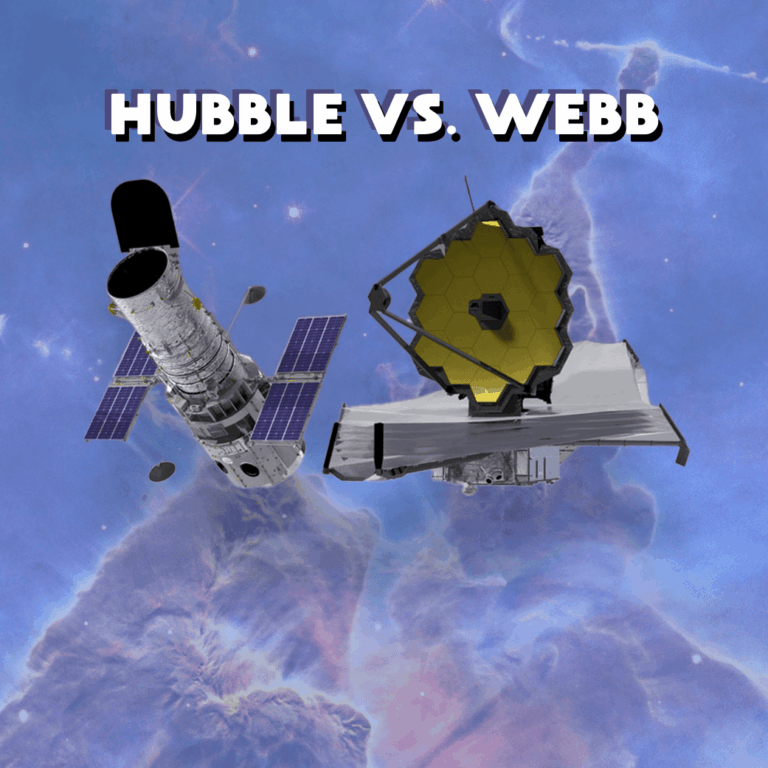
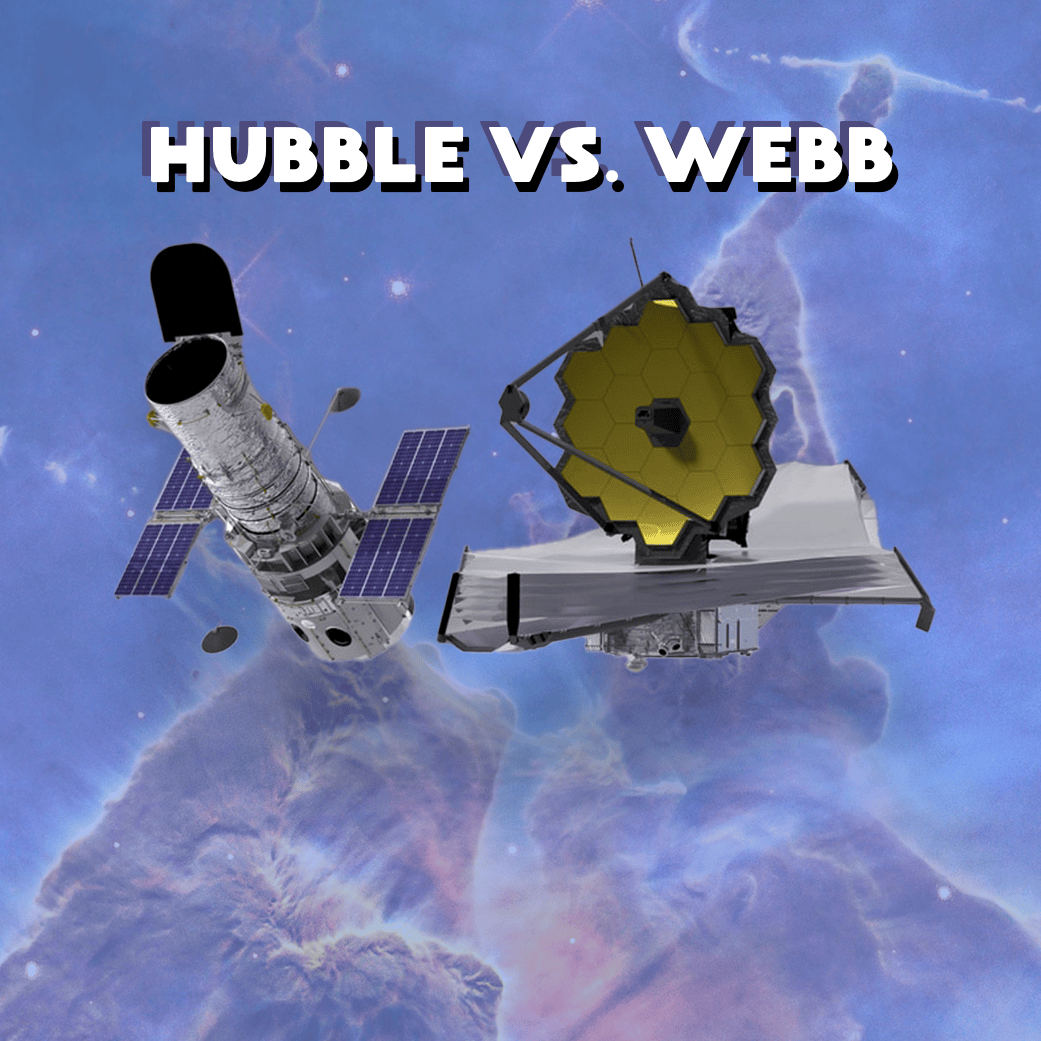
Hubble primarily observes in visible and ultraviolet light, while the upcoming Nancy Grace Roman Space Telescope will focus primarily on infrared wavelengths. Although Hubble provides detailed images of individual objects, Roman’s broader field of view allows for panoramic observations. This collaboration promises to enhance our understanding of the cosmos.
The gravitational lensing images captured by Hubble will serve as a foundation for Roman’s future observations. Hubble’s precise images will be utilized to create computer models that analyze the gravitational distortions, assisting astronomers in examining Roman’s extensive images. Furthermore, Hubble will follow up on intriguing lenses detected by Roman, creating a complementary relationship between the two observatories.
This recent discovery is part of a broader effort to utilize gravitational lensing to study dark matter and other cosmic phenomena, showcasing the ongoing contributions of the Hubble Space Telescope to our understanding of the universe.
Source: NASA