UNCW Hosts Cybersecurity Conference
The University of North Carolina Wilmington recently held its eighth annual Cybersecurity Conference, which took place on October 8-9. This event attracted professionals from government, industry, and academia to discuss the latest trends in cyber threats, maritime security, and advancements in digital defense.
Focus on Cyber Threats and Maritime Security
The two-day conference included a variety of activities such as presentations, panel discussions, technical workshops, and hands-on competitions in cybersecurity. Notable attendees included U.S. Senator Thom Tillis and Congressman David Rouzer, who emphasized the increasing significance of maritime cybersecurity and safeguarding critical infrastructure.
Participants engaged in two main tracks dedicated to emerging cybersecurity trends and maritime security. Key topics included artificial intelligence applications, cloud security, Zero Trust Architecture, and the evolving landscape of cyber threats.
Expert Insights and Collaborative Learning
The maritime cybersecurity section brought together a diverse group of experts, including representatives from the U.S. Coast Guard, Lloyd’s Register, and Booz Allen. Discussions focused on maritime cybersecurity regulations, secure design strategies informed by threats, cyber resilience, and the risks tied to interconnected information technology (IT) and operational technology (OT).
Speakers from organizations such as CISA, IBM, and Cisco provided insights into various challenges, including artificial intelligence integration, security operations, and workforce development in the cybersecurity sector.
Hands-On Experience and Skill Development
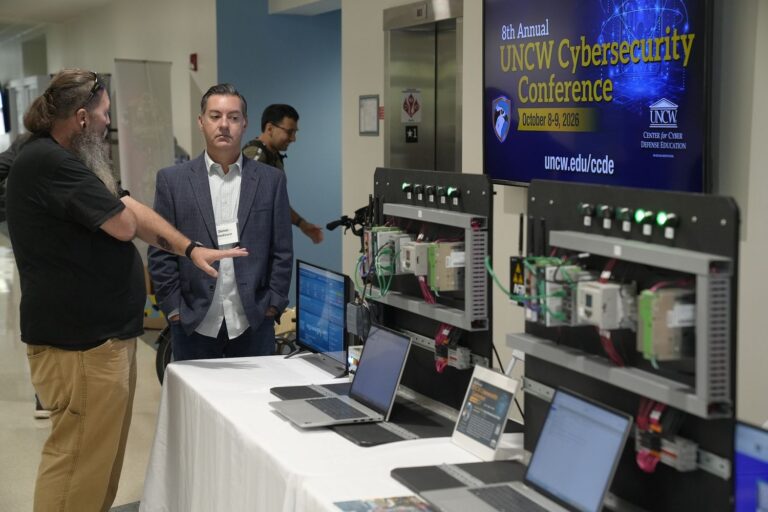
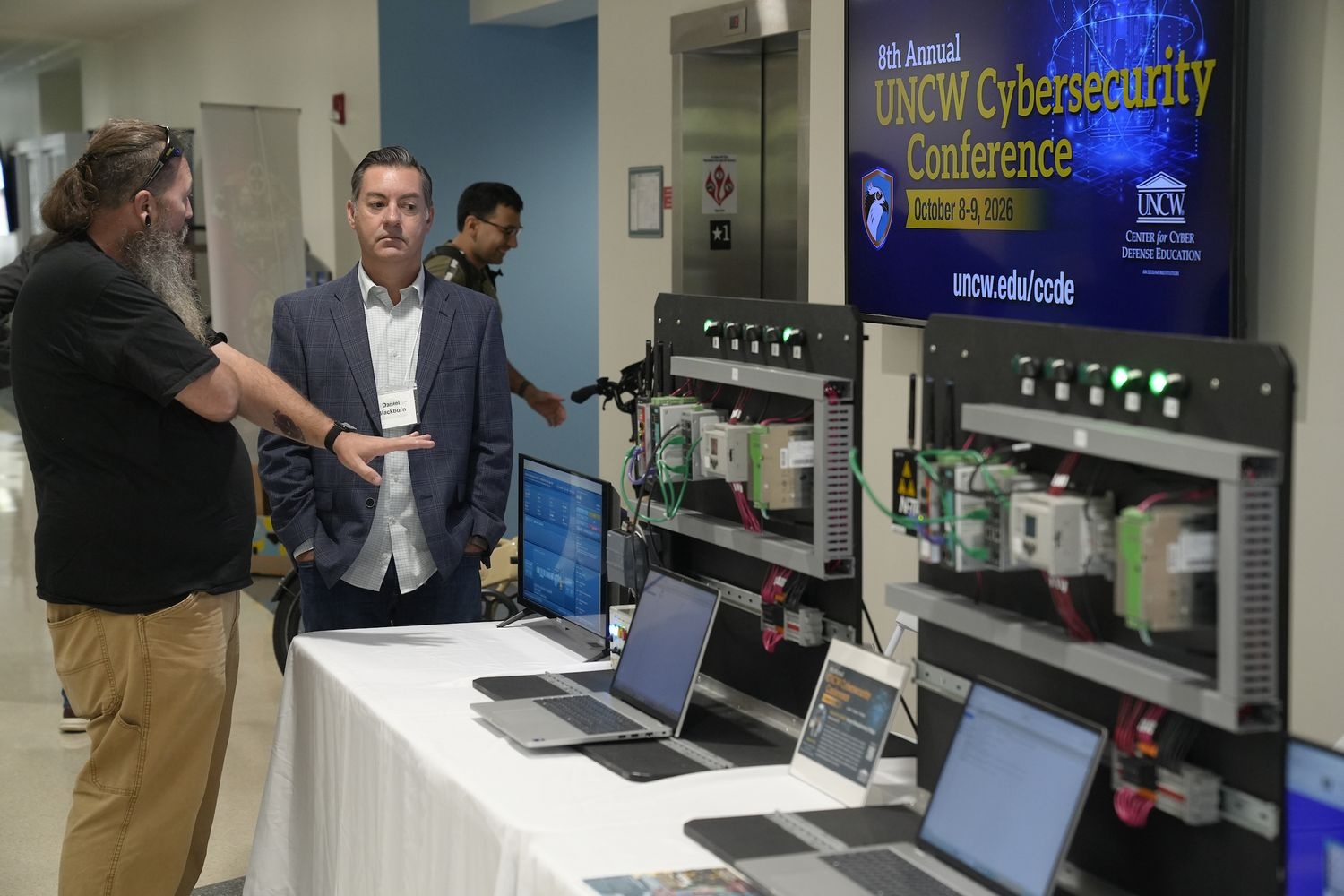
Attendees also had the chance to enhance their practical skills through competitive capture-the-flag events, interactive workshops, and demonstrations focused on incident response and industrial wireless security. A maritime tabletop exercise conducted by the North Carolina Army National Guard Cybersecurity Response Force simulated the coordination needed to handle a cyber incident impacting vessel operations.
Commitment to Cybersecurity Education
Ulku Clark, a professor of cybersecurity and information systems at UNCW, highlighted the growing interdependence of information and operational technologies, noting that cybersecurity threats can extend beyond data breaches to affect physical safety and critical infrastructure continuity. Clark pointed out the increasing demand for professionals skilled in both areas, a combination that remains scarce in the workforce.
The conference underscored UNCW’s dedication to strengthening cybersecurity education, applied research, and workforce development through cross-disciplinary collaboration between the Cameron School of Business and the College of Science and Engineering. Through its Center for Cyber Defense Education and the Maritime Cybersecurity Applied Research, Technology and Education Center (MCARTEC), UNCW is fostering partnerships that align academic insights with the cybersecurity challenges faced by various sectors. The university’s designation as a National Center of Academic Excellence in Cyber Defense Education (CAE-CD) by the National Security Agency and the Department of Homeland Security further affirms its commitment to preparing future leaders in cyber defense.
Source: UNC Wilmington