Virginia Tucker Honored with Historical Marker
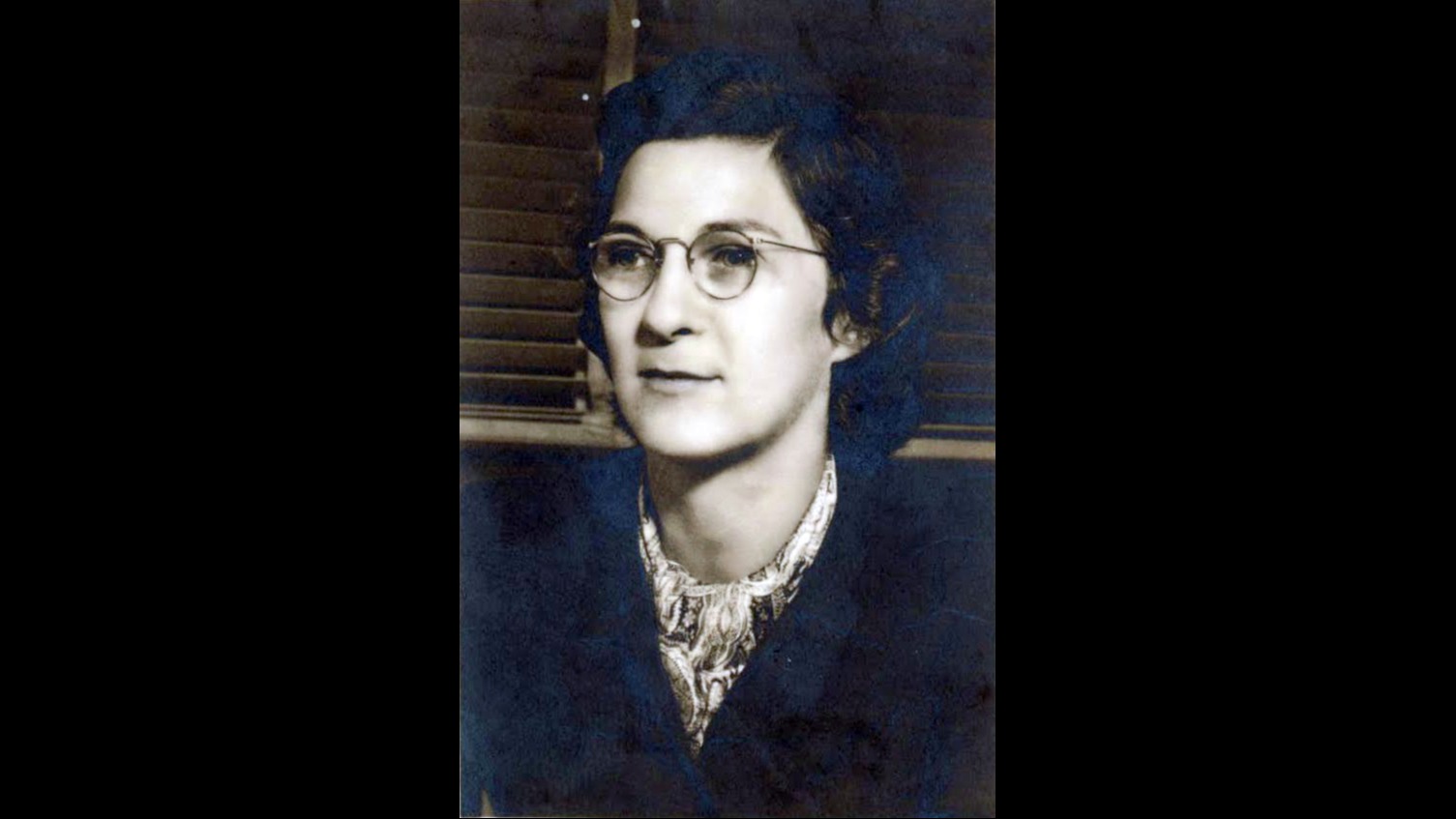
A notable figure in mathematics and aeronautical engineering, Virginia Tucker, will soon receive recognition through a North Carolina Highway Historical Marker. This initiative is part of the N.C. Historical Marker Program under the N.C. Department of Natural and Cultural Resources.
Ceremony Scheduled for October 5
A commemorative event celebrating Tucker’s life and contributions is set for Monday, October 5, at the Organ Hall of the School of Music at UNC Greensboro from 10 to 11 a.m. This will be followed by the unveiling of the historical marker at the intersection of Market Street and Gray Drive in Greensboro.
Early Life and Education
Virginia Tucker was born in Hertford, North Carolina, in 1909. She graduated with a mathematics degree and a minor in education from the North Carolina College for Women, which is now known as UNC Greensboro, in 1930. Following her graduation, she taught mathematics at Perquimans High School for four years before venturing into aeronautical research.
Pioneering Role at NACA
In 1935, Tucker secured a position at the Langley Memorial Aeronautical Laboratory of the National Advisory Committee for Aeronautics (NACA), having achieved a remarkable score on the Civil Service exam. She was among the first five women employed as human computers, where she conducted intricate mathematical calculations that were vital for research on aircraft performance, stability, and safety.
Contributions During World War II
During World War II, Tucker played a significant role in recruiting and training women to fulfill the increasing need for mathematicians in the field of aeronautical research. She traveled to various colleges and universities across the South, encouraging women to pursue careers in science. Her efforts at UNC Greensboro notably inspired many mathematics graduates to join the workforce at the Langley laboratory.
Leadership at Langley
By 1946, Tucker had advanced to the position of Overall Supervisor for Computing at Langley, where she oversaw more than 400 human computers, becoming the lab’s highest-ranking female employee. She was instrumental in establishing the computing division as a respected analytical unit crucial to aeronautical research. Furthermore, she played a significant role in mentoring African American women mathematicians, whose contributions were later highlighted in the narrative of the “Hidden Figures.”
Later Career and Legacy
In 1948, Tucker relocated to California to work for Northrop Aircraft as an engineer and aerodynamicist. Two years later, she was a founding member of the Society of Women Engineers, which aims to create more professional opportunities for women in engineering. As an early officer, she championed mentorship, professional growth, and equitable access to engineering careers, including supporting the organization’s stance against segregation.
After 17 years with Northrop, Tucker returned to North Carolina in 1965, where she took on the role of Supervisor of Instruction and Evaluation in Perquimans County. In this position, she helped enhance teaching standards, improve curriculum, and motivate students to achieve academic success.
Tucker retired in 1974 and passed away in 1985. Her extensive work in mathematics, aeronautics, engineering, and education significantly advanced opportunities for women in scientific and technical fields and contributed to the progress of American aviation.
Source: N.C. Department of Natural and Cultural Resources. Photo: N.C. Department of Natural and Cultural Resources.