Nasa’s Hubble Captures Stunning Spiral Galaxy
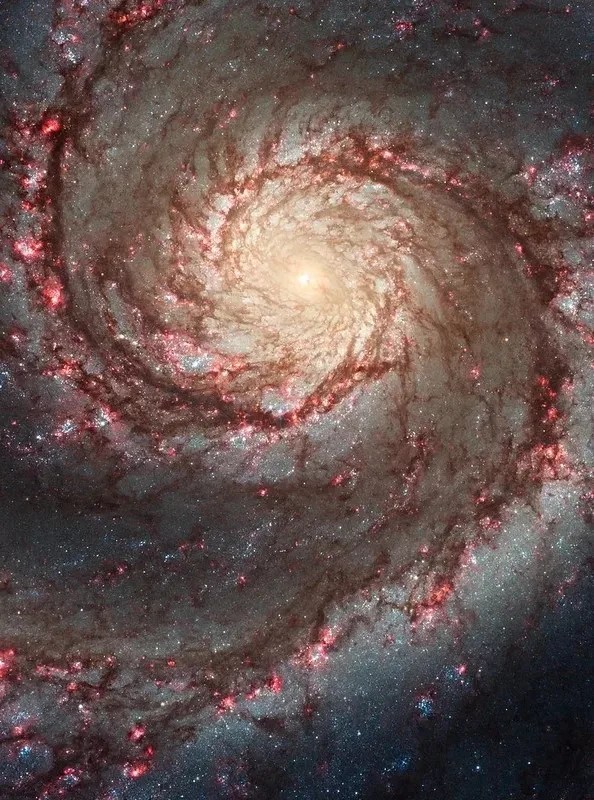
The Hubble Space Telescope has recently provided a breathtaking image of the edge-on spiral galaxy NGC 1827. Located approximately 37 million light-years away in the constellation Columba, this intermediate spiral galaxy showcases prominent rusty-brown dust lanes that stretch across its length. The image features a backdrop of distant galaxies along with a few foreground stars, which are identifiable due to their characteristic diffraction spikes.
Details of the Observation
This image was taken as part of a broader survey aimed at examining 260 satellite galaxies surrounding 22 Milky Way-like host galaxies within a 32 million light-year radius from Earth. To date, Hubble has successfully observed 111 of these satellite galaxies, with an additional 149 orbits required to complete the survey, one orbit dedicated to each remaining galaxy.
Utilizing Hubble’s Advanced Camera for Surveys, the captured image highlights bright-blue regions within the galaxy’s disk, interspersed with dark dust lanes indicative of potential new star formation. Additionally, a bright foreground star is positioned just left of the galaxy’s central bulge, creating four diffraction spikes due to the optical effects of Hubble’s secondary mirror supports.
Significance of Low-Mass Galaxies
The focus on low-mass galaxies, such as those included in this Hubble program, presents an opportunity to evaluate cosmological models on a smaller scale. These models often face challenges in aligning with observational data. The information gathered by Hubble will enhance our understanding of the characteristics of low-mass galaxies within Milky Way-like systems and assist researchers in refining existing cosmological theories.
NASA’s Commitment to Exploration
This latest observation underscores NASA’s ongoing commitment to expanding our knowledge of the universe through the Hubble Space Telescope. Since its launch in 1990, Hubble has significantly transformed scientific comprehension of celestial phenomena and continues to be a vital tool for astronomers and researchers alike.
For more information on Hubble’s discoveries and ongoing missions, media inquiries can be directed to Claire Andreoli at NASA’s Goddard Space Flight Center.
Source: NASA