NASA Develops New Battery Technology for Lunar Missions
NASA is advancing battery technology for lunar exploration, focusing on the harsh conditions of the Moon’s South Pole, where temperatures can drop to a frigid minus 328 degrees Fahrenheit (minus 200 degrees Celsius). Researchers are working on the Solid Power for Extreme Environment Adaptability and Resilience in Space (SPEARS) project, which aims to create batteries capable of functioning in these extreme cold conditions.
Traditional batteries, such as those found in everyday devices, struggle in cold weather, which can lead to malfunction. For lunar missions, reliable batteries are essential, as they will need to power everything from emergency kits for astronauts to rovers exploring shadowy craters, all while ensuring safety from fire hazards. Donald Dornbusch, the principal investigator for SPEARS at NASA’s Glenn Research Center, emphasized the importance of developing batteries that can operate safely in extreme environments.
Innovative Battery Design
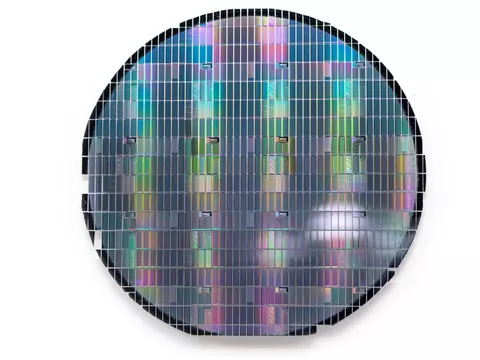
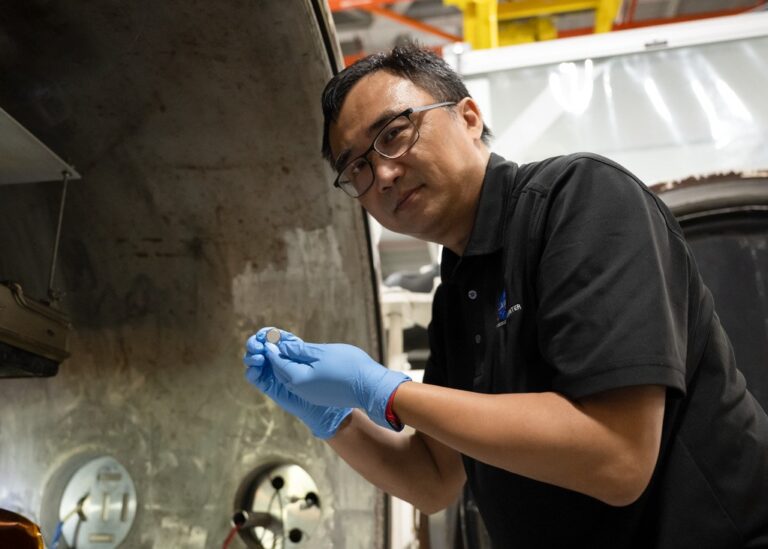
The SPEARS project tackles the limitations of conventional lithium-ion batteries, which depend on liquid electrolytes that can freeze or evaporate under extreme conditions. Instead, SPEARS batteries utilize solid ceramic or polymer-based materials, allowing them to function effectively in both high and low temperatures. Recent thermal vacuum tests at NASA’s Langley Research Center demonstrated that prototype batteries could operate between 176 degrees Fahrenheit (80 degrees Celsius) and minus 76 degrees Fahrenheit (minus 60 degrees Celsius), with some performance maintained down to minus 112 degrees Fahrenheit (minus 80 degrees Celsius).
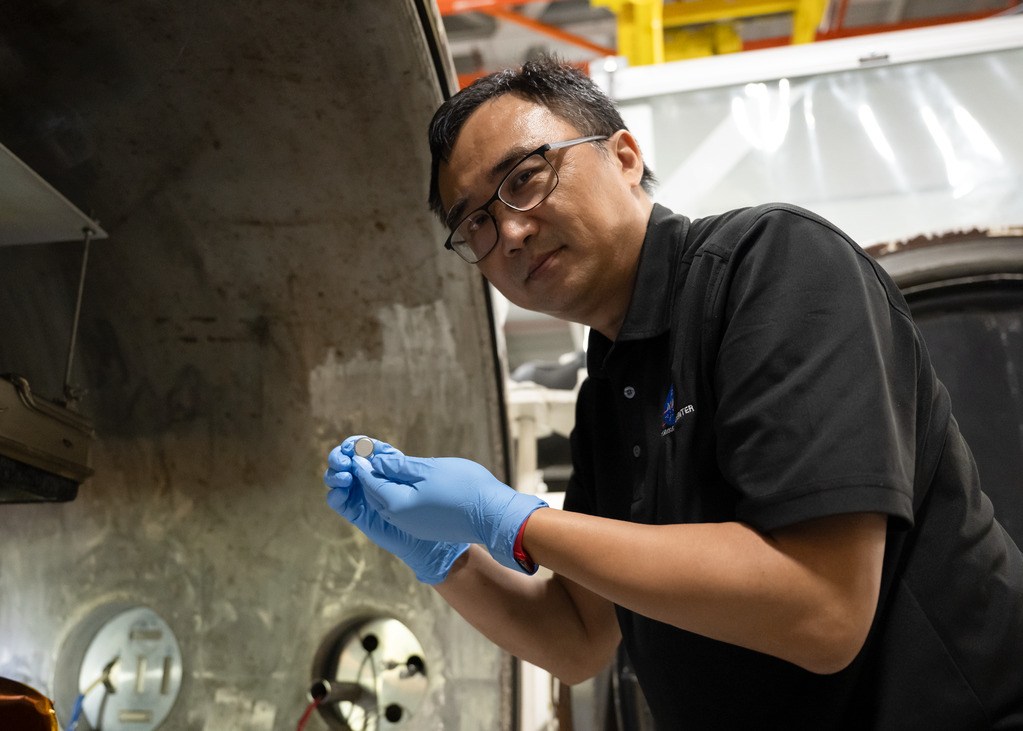
Yi Lin, the testing and research lead for SPEARS, expressed confidence in the technology’s potential to further enhance battery performance and possibly extend its operational temperature range. The batteries have shown resilience against extreme temperature fluctuations, and they can recover from sub-zero conditions with the aid of small heaters, minimizing the need for heavy thermal management systems.
Broad Applications Beyond Space
The solid-state batteries developed through the SPEARS project have versatile applications, ranging from tools used on the Moon to emergency power supplies for astronauts and scientific instruments. Lin noted that the battery chemistry can be tailored for various uses, similar to how different devices utilize different battery technologies.
While the primary focus of SPEARS is space exploration, the technology has potential applications on Earth as well. Ji Su, a polymer materials scientist and task lead at NASA Langley, highlighted the wide market for solid-state batteries in sectors such as automotive, communication devices, and other portable power needs.
The SPEARS initiative was launched in 2026 with support from NASA’s Advanced Research and Technology division. As the project progresses, it may transition towards commercial partnerships, with NASA’s Ames Research Center working on developing test hardware and electronics for future spaceflight testing.
Source: NASA