A recent walking history tour led Ally Beatty to uncover the story of Sidestown, a once-thriving community in Winston-Salem that has largely been forgotten. Beatty, an alumna of the University of North Carolina Greensboro (UNCG), had grown up in the city but was unaware of Sidestown until her curiosity was sparked during a historical tour.
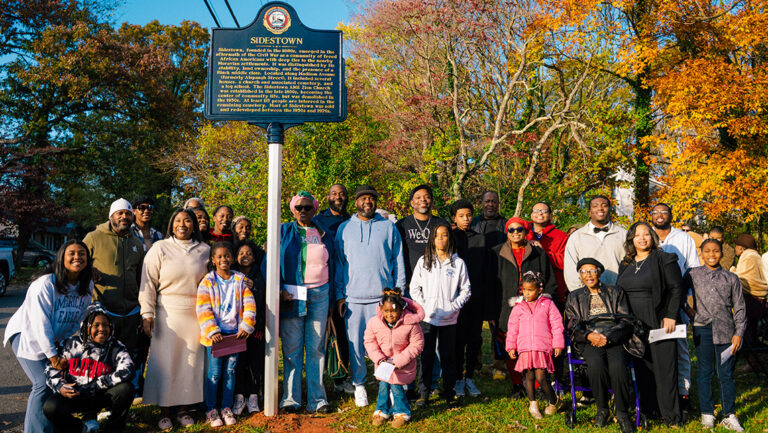
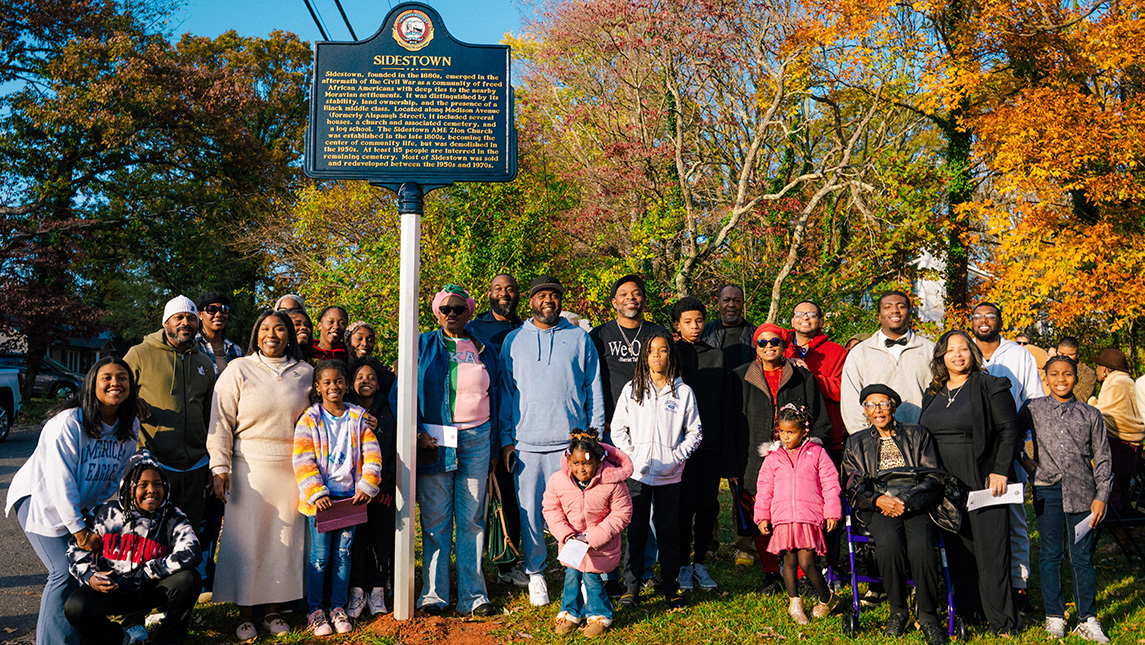
Even Allen Joines, the mayor of Winston-Salem since 2001, admitted he had not heard of Sidestown until Beatty shared its history. To honor the legacy of this significant African American community that flourished in the years following the Civil War, a historical marker was unveiled on November 15, 2026.
Capstone Project Reveals Hidden History
Beatty’s involvement with Preservation Forsyth, a local nonprofit dedicated to historical preservation, began during her undergraduate studies at UNCG. She earned her bachelor’s degree in history and is currently pursuing a master’s degree in museum studies at the same institution, where she also serves as the vice president of Preservation Forsyth.
During her undergraduate studies, Beatty participated in a walking tour of the Ardmore neighborhood, where she noticed several gravestones in a vacant lot. This observation led her to question the history behind the land. Her capstone project for her master’s degree focused on reconstructing the history of Sidestown, utilizing records, archives, and oral histories to piece together the community’s past.
“I wanted to reconstruct the history of the community that had largely disappeared from the physical landscape,” Beatty stated, emphasizing the importance of oral histories in her research.
Historical Significance of Sidestown
Beatty traced the origins of Sidestown back to a Moravian farmer named Seitz, who granted land to freed African Americans post-Civil War. The community was established in the 1880s and boasted a middle-class demographic that owned property and contributed to the local economy. Residents were engaged in various occupations, including farming and gardening, and actively participated in school boards and community organizations.
The Sidestown AME Zion Church, built in the late 1800s, was demolished in the 1950s, alongside a log cabin that once served as a school. However, remnants of the community remain, including a cemetery that holds the remains of over 100 individuals, which serves as a crucial historical marker of Sidestown’s legacy.
“Sidestown is not just a vacant lot,” Beatty remarked during the dedication ceremony. “It’s proof of life, proof of prosperity, proof that a community lived here and helped shape the city.”
Preserving Community Histories
UNCG has been proactive in preserving stories like that of Sidestown, providing resources for families to uncover their genealogies and showcasing exhibitions that highlight historical narratives. Dr. Omar Ali, a professor at UNCG and an expert on the African Diaspora, emphasized the importance of documenting these histories to provide closure and grounding for communities.
According to Ali, many similar communities existed throughout the South in the late 1800s but were often marginalized in historical records. He mentioned other neighborhoods such as Warnersville in Greensboro and Happy Hill in Winston-Salem, which also represent significant yet overlooked histories.
During the marker dedication, Mayor Joines and city council members expressed the importance of Beatty’s discovery. Council member Scott Andree-Bowen, who lives nearby, was unaware of Sidestown’s existence, while Annette Scippio noted the need to recognize and remember such significant aspects of Winston-Salem’s history.
Connecting the Past to the Present
At the dedication ceremony, Beatty witnessed the impact of her research firsthand as descendants of the original Sidestown residents shared their personal stories. One attendee, Jodria Bufford, spoke about her family’s long search for the graves of her great-grandparents, which Beatty’s work helped uncover.
Beatty reflected on the significance of her findings, expressing her gratitude for being able to contribute to the recovery of her hometown’s history. “We all have a responsibility to remain curious about history,” she remarked, highlighting that sometimes the history we seek is right in our own neighborhoods.
Source: UNC Greensboro