NASA Observes Stellar Merger with Webb Telescope
In December 2025, data gathered by NASA’s James Webb Space Telescope provided critical insights into a rare event involving the merger of a binary star system, informally named Bao, located in the Andromeda galaxy. This observation marked a significant breakthrough in understanding stellar mergers.
Researchers discovered that a star with a mass slightly less than that of the Sun spiraled into a supergiant star, leading to their merger. This newly formed star, referred to as Bao, was the result of extensive monitoring and analysis supported by observations from both ground- and space-based telescopes. Viraj Karambelkar, a NASA Hubble Fellow at Columbia University, noted the difficulty in predicting stellar mergers, stating that the unusual activity observed in 2023 prompted ongoing surveillance of the system. The eruption occurred in 2025, with Webb capturing data just 47 days after the peak brightness of the event, marking the earliest follow-up observation of its kind.
Details of the Stellar Event
Prior to the merger, the stars had orbited each other peacefully for thousands of years. However, the smaller star’s interaction with the supergiant star’s surface was rapid, occurring after only seven orbital cycles, compared to thousands of cycles seen in other binary star mergers. Nadia Blagorodnova, a co-author and associate professor at the University of Barcelona, expressed surprise at the quick rise in brightness of the stars.
As the smaller star interacted with the larger star’s outer layers, it created a gradual brightening effect, which was clearly documented in the observations of Bao. This process is part of a complex phase known as common envelope evolution, where one star engulfs its companion. The research team highlighted that while Webb’s findings confirmed the merger, other outcomes are possible in different systems, where both stars may survive the interaction.
Research Methodology and Findings
The research team utilized Webb’s mid-infrared data, along with other observational data across various wavelengths, to reconstruct the event surrounding Bao. The primary star prior to the eruption was significantly larger than the Sun, with a mass seven times greater and a brightness 18,000 times that of our star. This led to the nickname “Big Bao” for the primary star. Meanwhile, the smaller star, dubbed “Little Bao,” was estimated to be about 0.7 times the mass of the Sun.
The analysis suggested that while there was potential energy for the smaller star to escape post-merger, it ultimately fell into the core of the larger star, leading to a dramatic release of energy akin to an explosion within a living star. Future observations will help determine the characteristics of the newly formed star, Bao.
Implications for Future Research
The findings related to Bao, formally designated as AT 2025abao, offer a new framework for studying stellar mergers in real-time, contrasting with traditional methods that require reverse engineering historical events. This research comes as NASA’s Nancy Grace Roman Space Telescope prepares to conduct extensive surveys, which are expected to uncover a significant number of similar transient astronomical events in the future.
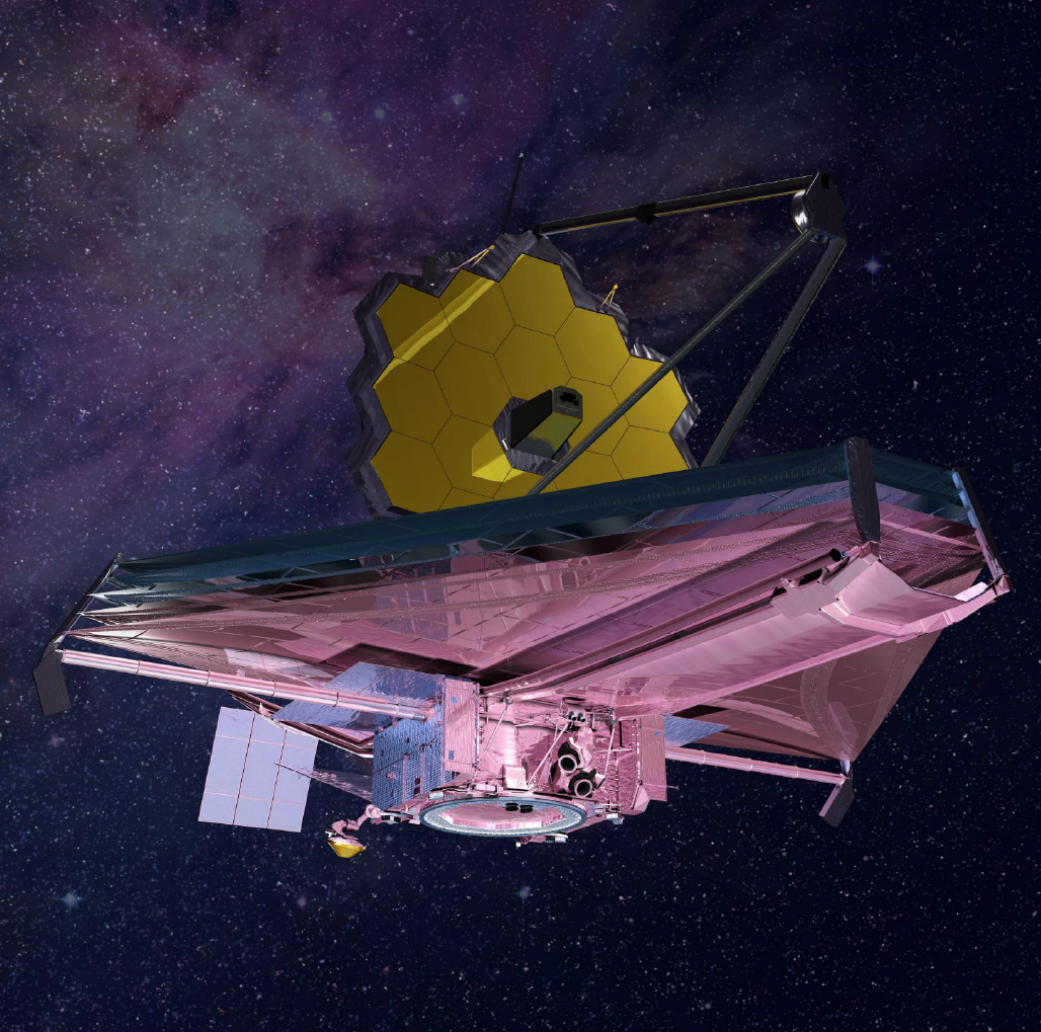
The James Webb Space Telescope continues to play a vital role in astronomical research, delving into various phenomena across the universe, including the formation and evolution of stars and galaxies. The observatory represents a collaborative effort led by NASA, alongside the European Space Agency and the Canadian Space Agency.
Source: NASA