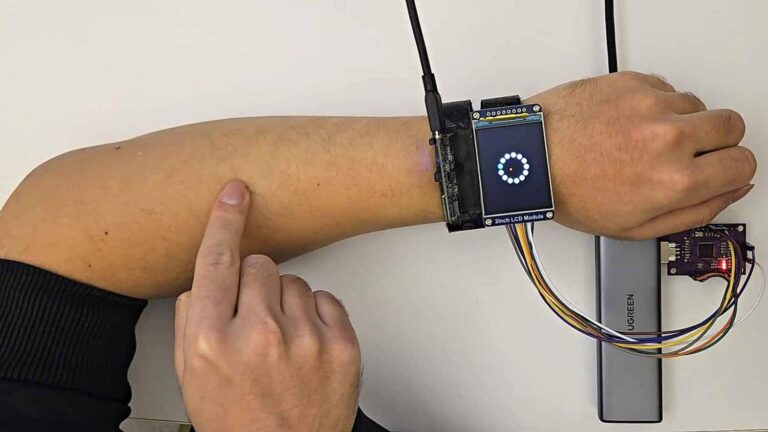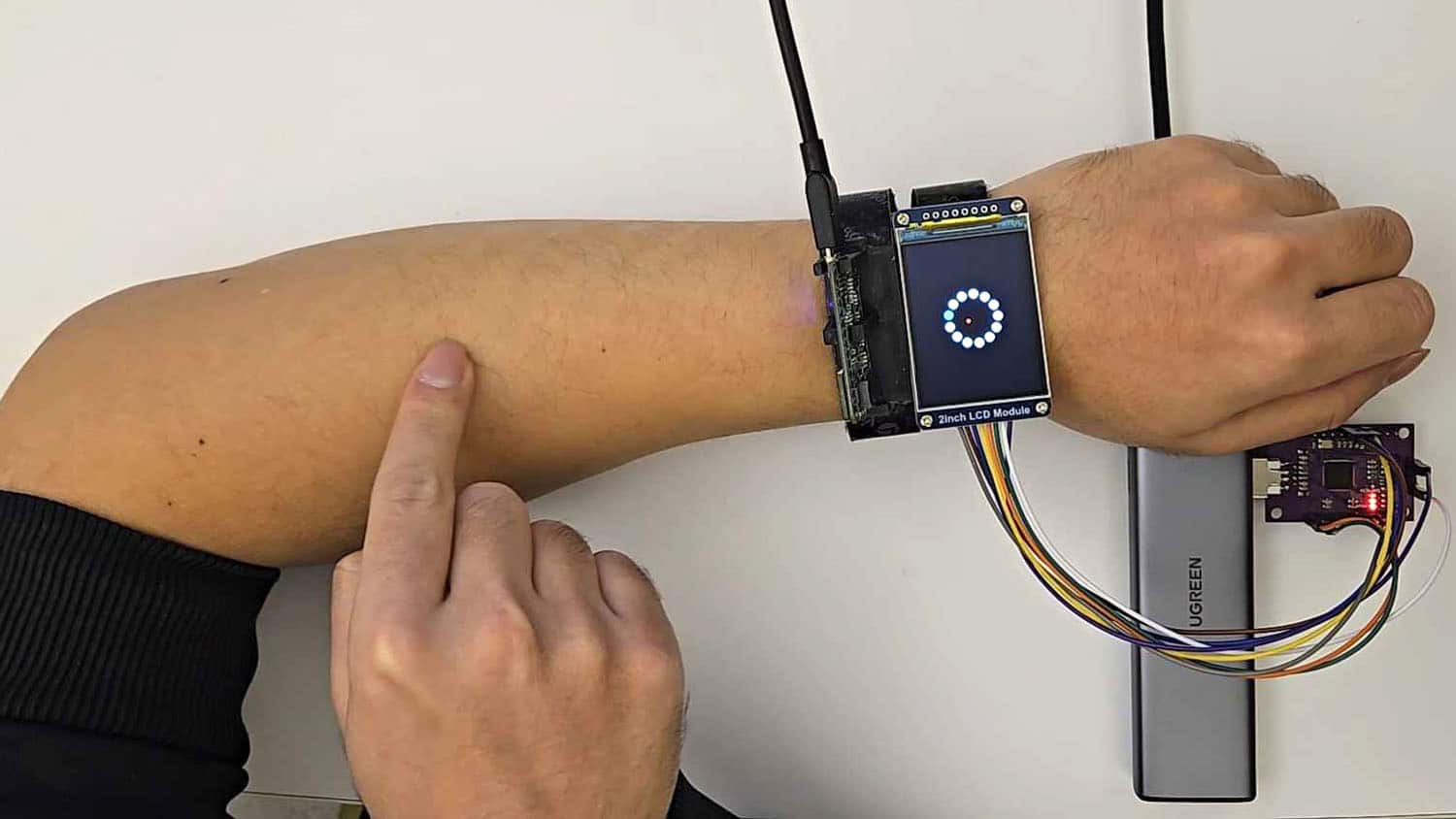
Researchers at North Carolina State University have created a new technology that transforms a smartwatch user’s forearm into a functional trackpad. This innovative system enables users to engage in actions such as scrolling, zooming, and clicking icons by utilizing a radar mechanism that detects finger movements and pressure on the skin of the forearm. The technology provides a level of interaction similar to that found on laptop trackpads.
Innovative Wearable Technology
According to Chenhan Xu, an assistant professor of computer science at NC State and the corresponding author of a study detailing this development, the compact screens on smartwatches are often inadequate for the touch interactions typically performed on larger devices like smartphones and laptops. Xu emphasized the goal of creating a small wearable technology that enhances user control over their smartwatches.
The newly developed technology, named EpiPad, converts the skin adjacent to the smartwatch into an interactive trackpad. Yuliang Fu, a Ph.D. student and lead author of the study, explained that the EpiPad employs a compact millimeter-wave radar attached to a wristband that detects the subtle impressions left by fingertips pressing against the skin, allowing it to track multiple fingers and the pressure applied by each.
Calibration and Design
When first using the EpiPad, individuals must perform a brief series of standard gestures to calibrate the device to their unique touch patterns, a process that takes less than four minutes. The current prototype resembles a wristband with an attached circuit board but has the potential to be integrated into regular smartwatch designs in a more refined form. The sensor array responsible for monitoring touch and pressure measures approximately 5 millimeters by 4 millimeters.
In a series of proof-of-concept tests involving 20 participants, the researchers evaluated EpiPad’s performance in terms of accuracy and user-friendliness. They specifically looked at how well the system tracked movements, recognized gestures, and identified varying levels of pressure. EpiPad demonstrated strong performance across all evaluated metrics.
Performance Evaluation
Fu noted that participants were asked to perform tasks using three different input methods: a traditional touchscreen, a tilt cursor, and the EpiPad. The results indicated that EpiPad surpassed the other methods in terms of both accuracy and efficiency.
Xu further explained that this technology could allow future smartwatches, as well as other devices like AI glasses, to utilize the wearer’s skin as a comprehensive touch surface. He stated that the essential components of the EpiPad, particularly the radar sensor array, are relatively low-cost, with the potential for prices to decrease further if produced on a larger scale. “We’re talking about less than $10,” he added.
Future Prospects
The researchers expressed interest in collaborating with industry partners to explore how EpiPad can be integrated into emerging devices. As wearable electronics continue to shrink in size, an efficient and dependable method for user interaction is likely to become increasingly valuable.
The findings of the study, titled “EpiPad: Enabling Multi-Finger and Force-Sensitive Skin Interface for Smartwatches,” were presented at the UbiComp/ISWC conference held from October 13 to 15 in Shanghai. The paper was co-authored by Rakshita Ranganath, a Ph.D. student, and Huining Li, an assistant professor of computer science, both from NC State.
Source: NC State University