Nuclear Engineering Careers and Opportunities
Nuclear engineers are responsible for designing and overseeing systems that enable the safe utilization of nuclear energy and radiation. These professionals can find employment in both private industries and government sectors, engaging in various fields such as nuclear power generation, medical treatment and imaging, as well as aerospace initiatives.
According to the Bureau of Labor Statistics, the typical annual salary for nuclear engineers is approximately $133,970.
NC State’s Unique Program
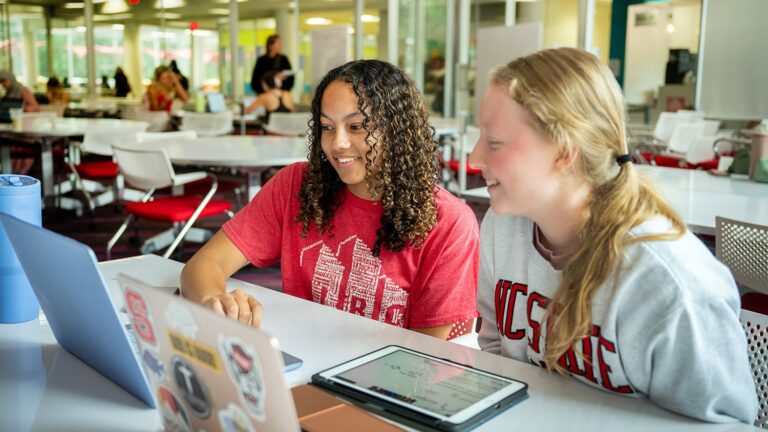
North Carolina State University hosts the only nuclear engineering program in the state and the first of its kind in the nation. The Department of Nuclear Engineering offers a Bachelor of Science degree, an accelerated master’s program, and a highly regarded graduate program. NC State is frequently recognized for providing an excellent value in higher education.
Ethan Newhouse, a recent graduate and current Ph.D. candidate, aims to address the country’s energy challenges through nuclear energy, which he views as a sustainable solution. After earning his B.S. in nuclear engineering and a minor in mathematics in 2023, he continued his studies at NC State, where he is engaged in research focused on developing safer semiconductor manufacturing processes.
Research and Safety Initiatives
Newhouse is particularly interested in demonstrating the safety of nuclear energy compared to other energy sources. “I want to show the public that nuclear energy is super safe compared to any other form,” he stated, emphasizing his commitment to changing perceptions about nuclear power.
Transitioning from undergraduate studies to a Ph.D. program posed challenges, yet Newhouse continued to pursue his passion for music by participating in various ensembles at NC State, which are open to all students regardless of their major.
Choosing Nuclear Engineering
Newhouse’s journey to nuclear engineering began seven years ago when he initially enrolled at NC State as an environmental science major. He later realized that specializing in nuclear engineering would empower him to tackle significant issues like the energy crisis and climate change more effectively. His high school experience, particularly an AP Earth Science class, inspired him to switch majors.
During his time in the program, Newhouse took diverse courses, including physics, calculus, and reactor design, which laid the groundwork for his advanced studies. He particularly enjoyed Applied Differential Equations II, a subject he found crucial for his future coursework in nuclear engineering.
Guidance and Personal Growth
As he progressed through his studies, Newhouse faced uncertainty about which nuclear engineering concentration to pursue. His involvement in a pre-college summer program provided him with mentorship from faculty members like Lisa Marshall, who encouraged him to consider a Ph.D. path, highlighting the opportunities it could present.
Throughout his undergraduate experience, Newhouse balanced his academic responsibilities with extracurricular activities, including serving as vice president of the American Nuclear Society and participating in music ensembles. He expressed appreciation for the camaraderie in the bands, which significantly enhanced his college experience and school spirit.
Advice for Future Engineers
Newhouse advises engineering students to manage their course loads wisely to allow time for self-care and personal interests. He cautions against taking excessively heavy credit hours in pursuit of graduating early, suggesting that extending one’s studies can be beneficial.
He also encourages newcomers to immerse themselves in campus traditions and activities, emphasizing the importance of engaging with the university community to enhance their college experience.
As a graduate student, Newhouse has adapted to a more self-directed schedule, which differs significantly from the structured environment of undergraduate studies. He acknowledges the necessity of balancing his research commitments with musical pursuits, noting how these activities provide a much-needed respite from his academic workload.
Source: NC State University